
The Physics of Viral Growth: Maximizing Diffusion Speed in Strategic Social Networks
On Maximizing Diffusion Speed Over Social Networks With Strategic Users
This paper investigates the "Diffusion Speed Maximization" problem in game-based social network models, where strategic users adopt innovations based on payoff incentives. The authors propose near-optimal polynomial-time seeding algorithms (PaS/PrPaS) tailored for various network topologies (Erdős-Rényi, planted partition, and geometric graphs), achieving significant reductions in diffusion time.
TL;DR
Most marketing models treat "going viral" like a virus (epidemic model). This paper argues that for technology and behavior, users are strategic actors who only switch if the benefit outweighs the cost. By minimizing "Energy Barriers" in the network via smart partitioning, the authors propose an algorithm that accelerates diffusion 3-5x faster than traditional degree-based methods.
Background: Beyond the "Infection" Metaphor
In classic influence maximization, a single "contact" might infect a neighbor. But in a Game-Based Model, adoption is a coordination game. You likely won't switch to a new social media platform or messaging app unless a significant portion of your friends do. This creates a "bottleneck" effect: the innovation might eventually conquer the world, but it could take 1,000 years to cross a single "slow" community.
The authors' central insight is that we shouldn't just look for "influencers" (nodes with high degrees); we need to identify and bridge the bottlenecks between clusters.
Methodology: The "Energy Barrier" Approach
The paper shifts the focus from "how many nodes can we reach" to "how fast can we reach the equilibrium." Using the theory of Meta-stability, the authors define the Diffusion Exponent (). This is effectively the "mountain pass" that the diffusion process must climb to move from a state where no one uses the tech to a state where everyone does.
The PaS (Partitioning and Seeding) Framework
The proposed solution follows a two-step logic:
- Partitioning: Break the social graph into clusters. In geometric graphs (like planar maps), the "border nodes" between clusters are the primary points of failure for diffusion.
- Seeding: Allocate seeds to clusters. The authors prove that the overall diffusion time is governed by the slowest cluster. Therefore, the algorithm greedily puts seeds where they will do the most to lower the highest remaining energy barrier.
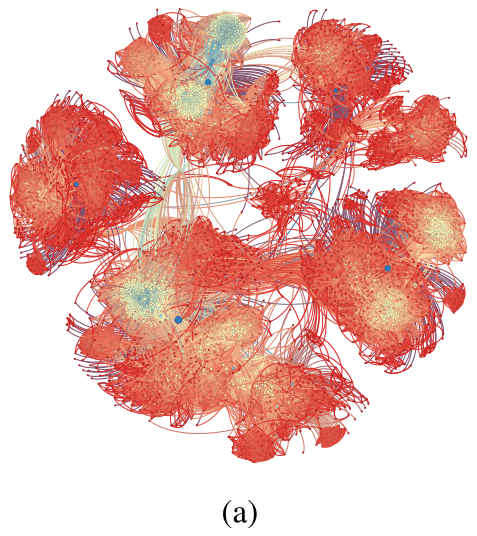 Figure 1: Comparison of network types (PPf-acebook vs. PLf-acebook) and how clustering impacts diffusions logic.
Key Insights: Why "High Degree" Seeding Fails
One of the most provocative findings is that Degree-based seeding (targeting the most connected people) often performs the worst in strategic models.
- The Logic: Highly connected nodes are often well-embedded in their own clusters. Seeding them helps that cluster, but if that cluster was already well-connected, the innovation would have spread there quickly anyway.
- The Alternative: Random seeding or cluster-balanced seeding (PrPaS) ensures that all "pockets" of the network start moving simultaneously, preventing one isolated community from stalling the global progress.
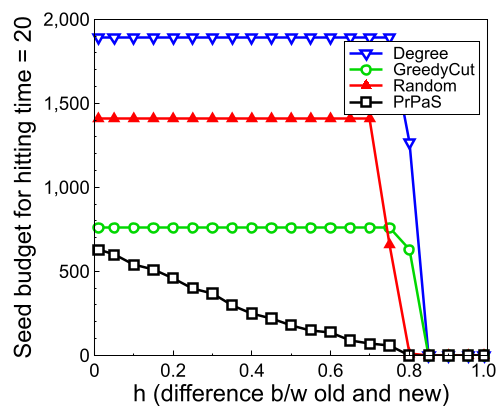 Figure 2: The clear superiority of PrPaS against Random and Degree-based benchmarks in reaching target adoption thresholds.
Experiments & Phase Transitions
The research demonstrates a Phase Transition. Up to a certain budget, seeding does very little. But once you hit a "critical mass" of seeds that break the inter-cluster dependencies, the hitting time (time to full adoption) drops off a cliff.
In tests on real Facebook data:
- PrPaS (the authors' practical algorithm) reached the adoption threshold with significantly fewer seeds than any other method.
- The "Degree" method required almost double the budget to achieve the same diffusion speed in clustered environments.
Conclusion: A New Playbook for Innovation
If you are launching a product where users need to coordinate (like a new payment system), stop looking for the "KOL" with a million followers. Instead:
- Map the communities (clusters).
- Seed the edges and ensure every community has a "trigger" presence.
- Focus on the most isolated clusters first, as they are the ones that will bottleneck your global growth.
Limitations: The model assumes a "Logit Dynamics" (rationality with some noise), which might not capture the emotional or irrational "hype" cycles seen in some consumer trends. Future work should look at how these barriers change when the innovation itself evolves over time.