
TrCIM: Scaling Positive Influence in Competitive Social Networks through Trust-Based Pruning
Maximizing positive influence in competitive social networks: A trust-based solution
This paper proposes a trust-based solution for Maximizing Competitive Influence (CIM) in social networks by introducing the TrCID (Trust-based Competitive Influence Diffusion) model and the TrCIM algorithm. The method leverages trust evaluation through generalized network flows to estimate influence probabilities, achieving significantly higher seed detection efficiency while maintaining competitive influence spread compared to SOTA greedy algorithms.
Executive Summary (TL;DR)
In the hyper-competitive landscape of Online Social Networks (OSNs), information doesn't spread in a vacuum—it competes with opposing views. This paper introduces TrCIM, a framework designed to maximize positive influence by integrating trust evaluation into a dynamic diffusion model. By replacing slow Monte-Carlo simulations with a savvy heuristic pruning method, the authors achieve a 300% performance boost over traditional heuristics and a massive leap in computational efficiency, making it viable for large-scale networks like Sina Weibo and Epinions.
Problem & Motivation: Beyond Simple Information Cascades
Most classical Influence Maximization (IM) models (like the Independent Cascade or Linear Threshold models) treat information spread as a single-player game. However, real-world OSNs are battlefields where positive opinions (e.g., brand loyalty) compete with negative ones (e.g., criticism).
The authors identify three critical gaps in prior SOTA:
- Neglecting Trust: Most models use static probabilities; they don't account for the confidence user A has in user B.
- Static Nature: They ignore that trust and influence decay over time.
- Scalability Bottleneck: The standard Greedy algorithm relies on Monte-Carlo (MC) simulations, which are too slow for networks with millions of nodes.
Methodology: The TrCID Model and TrCIM Algorithm
1. The TrCID Diffusion Model
Instead of assuming influence probabilities are fixed, the authors propose the Trust-based Competitive Influence Diffusion (TrCID) model. It incorporates:
- Trust Evaluation: Using generalized network flows (treating trust like a fluid), the model calculates trust degrees between indirectly linked nodes.
- Time Decay: A leakage function () is introduced to simulate how influence wanes as time passes.
 Fig 1: Illustrating the gap between direct measurable data and indirect trust-based influence.
2. TrCIM: Pruning for Efficiency
The core innovation is how the algorithm selects "seed" users. Rather than simulating the whole network (MC simulations), TrCIM avoids the bottleneck by calculating a positive marginal gain. For every non-seed user, it estimates their value by subtracting the "influence loss" (overlaps) they would have with the existing seed set.
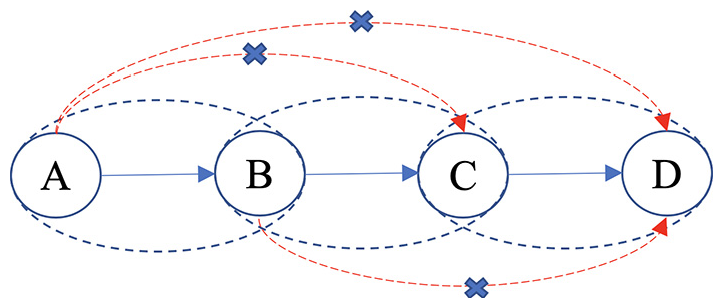 Fig 2: The Solution Framework encompassing modelling, estimation, and discovery.
Experiments & Results: Effectiveness Meets Speed
The authors benchmarked TrCIM against Random, Positive Degree, Greedy, and TMID algorithms across four major datasets.
Performance Comparison
- Spread Magnitude: TrCIM consistently outperformed heuristic methods. In Sina Weibo and Epinions datasets, it performed 300% better than random selection and 25% better than the hybrid TMID model.
- Running Time: On synthetic datasets, while the standard Greedy algorithm struggled to scale, TrCIM completed the task in under 5 minutes.
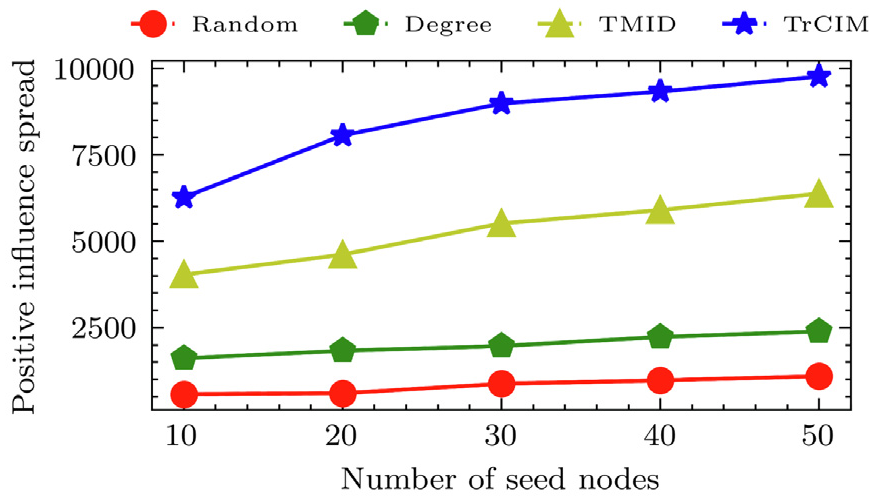 Fig 3: Comparison of influence spread over various seed set sizes (Budget k).
The "Trust" Factor
The "Overlap Ratio" experiments (Fig 8 in the paper) proved that models ignoring trust decay (like standard CLT) produce vastly different (and likely inaccurate) results compared to the TrCID model. This suggests that Trust is not just a feature, but a fundamental requirement for accurate influence modeling.
Critical Analysis & Conclusion
Takeaway
TrCIM represents a significant shift from "purely mathematical" graph theory toward a "sociology-inspired" mathematical approach. By quantifying trust and time-decay, the model mirrors real human behavior more closely than its predecessors.
Limitations
- Dynamic Topology: The paper assumes a relatively static graph structure; however, OSN links appear and disappear rapidly in real life.
- Distrust Complexity: While the model uses distrust for negative influence, the nuances of "coordinated negativity" (e.g., bot attacks) might require even more complex modeling.
Future Work
The next frontier for this research lies in dynamic network robustness. As social networks evolve, maintaining the influence of a seed set becomes harder—devising algorithms that can adapt the seed set in real-time as the network topology shifts will be the "Holy Grail" of CIM.