
mClerk: Bridging the Digital Divide via SMS-Based Visual Crowdsourcing
mClerk: Enabling Mobile Crowdsourcing in Developing Regions
The paper introduces mClerk, a mobile crowdsourcing platform designed for low-income workers in developing regions. It enables the digitization of local-language (Kannada) documents by sending small bitmapped images of words via the Nokia Smart Messaging (SM) protocol over ordinary SMS, allowing users with low-end feature phones to participate in paid microtasking.
TL;DR
mClerk is a groundbreaking system that enables low-income workers in developing regions to earn money by digitizing local-language documents using low-end feature phones. By hacking a legacy SMS protocol to send images and using English transliteration to bypass font limitations, the authors created a viral, economically viable platform that achieved 90.1% accuracy in document digitization.
Context & Motivation: The Technology Gap
While global crowdsourcing was promised as a "great equalizer" for employment, the reality is starkly different. Platforms like Mechanical Turk require stable internet and PCs—luxuries unavailable to the bottom billion. Prior attempts like txteagle focused on text, but current digitization needs are visual (scanned forms).
The authors identified two specific barriers:
- Hardware/Access: Data plans are expensive; feature phones are ubiquitous but "dumb."
- Language/Localization: Mobile phones often lack font support for local scripts (like Kannada), making native typing impossible.
Methodology: High-Tech Results from Low-Tech Tools
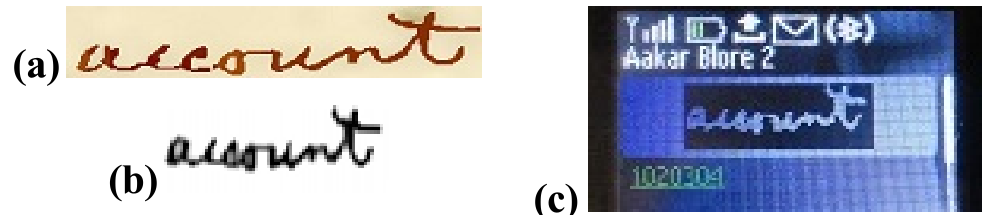
The "magic" of mClerk lies in its use of the Nokia Smart Messaging (SM) protocol. This allowed the researchers to send small, binarized images (74x28 pixels) as concatenated binary SMS messages.
The Transliteration Hack
Since users couldn't type in Kannada characters, mClerk asked them to type the phonetic English transliteration.
- The Problem: "Namma" and "Nammaa" are the same word to a person, but different strings to a computer.
- The Solution: The system converts all responses back to the local script via API and compares the resulting characters. This increased the match rate by 25% compared to raw string matching.
Experiments: Viral Growth and Social Dynamics
The system was deployed for 5 weeks in semi-urban India. The growth was organic and "viral," spreading from 10 core users (drivers, guards) to 239 users via a referral system that rewarded users with 10% of their friends' earnings.
Performance Metrics
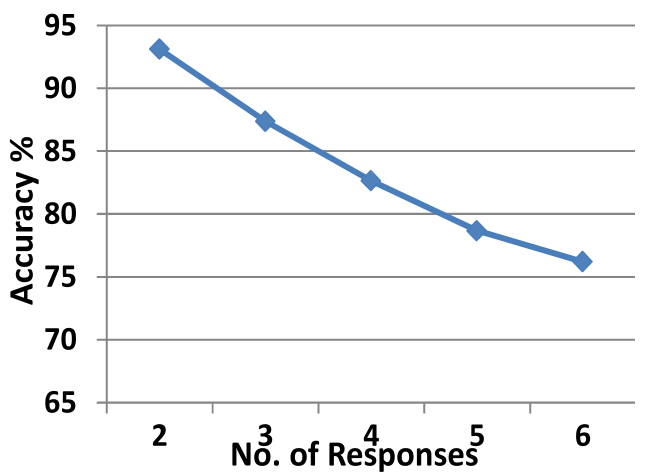
- Accuracy: 90.1% (Lower than professional clerks at 97%, but highly cost-effective).
- Latency: Median digitization time per word was 3.8 minutes.
- Economics: Workers could earn an 8% boost to their monthly income during "time pass" moments (waiting for the bus, etc.).
Deep Insight: Social Over Automation
One of the most profound takeaways is the Social Ecosystem. The authors found that usage was not purely driven by money; it was "Time Pass." Users competed for spots on a daily SMS Leaderboard, turning work into a social game. Interestingly, usage dropped by 53% when pay was reduced in Phase 2, showing that while social factors drive engagement, fair compensation remains the bedrock of participation.
Critical Analysis & Conclusion
Limitations:
- The system is heavily dependent on SMS pricing (users needed "Free SMS" packs).
- The accuracy of 90.1% is impressive but requires further verification layers (like "trusted worker" weights) to be production-ready for legal or medical documents.
Future Outlook: mClerk proves that "innovation" doesn't always mean "newer hardware." By understanding the constraints of the local environment—SMS dominance, lack of font support, and strong social ties—the authors created a bridge to the global economy for those previously left behind. As we move into an AI-driven era, such human-in-the-loop systems remain vital for generating high-quality datasets in low-resource languages.