
Measuring the Echo Chamber: Quantifying Authenticity in Social Media Discussions
9944_Measurement of Online Discussion Authenticity within Online Social Media.
The paper introduces a framework for measuring "Online Discussion Authenticity" by evaluating the similarity of participating accounts to known abusers and legitimate users. Leveraging similarity functions and k-nearest neighbors (KNN), the authors quantify authenticity at both the account and topic levels, demonstrating high performance on Twitter and Arabic Honeypot datasets.
TL;DR
Researchers have developed a new framework to distinguish between genuine public interest and coordinated manipulation (crowdturfing). By measuring how closely social media accounts resemble known abusers through linguistic and behavioral kernels, this method can "score" the authenticity of an entire discussion topic, revealing when a loud minority of bots or trolls is hijacking the narrative.
Problem & Motivation: The Rise of the Professional Manipulator
Social media is the modern town square, but it’s increasingly plagued by crowdturfing—coordinated campaigns where organizations pay for fake accounts to simulate "grassroots" support.
The technical challenge isn't just finding a single bot; it’s determining if a topic (like a political debate or a product launch) is being artificially inflated. Existing methods often struggle because sophisticated abusers are no longer simple scripts; they use realistic profiles and varied content. The authors' insight was to stop looking for a "binary" bot label and instead place every account on a continuous authenticity scale based on their similarity to known legitimate versus abusive actors.
Methodology: The Authenticity Architecture
The proposed framework follows a sophisticated pipeline: from data collection and topic modeling (using Latent Dirichlet Allocation) to account classification and aggregation.
1. Similarity Functions (The Feature Kernels)
The heart of the system lies in how we compare two accounts. The authors tested five dimensions:
- Bag-of-words: Comparing the vocabulary used.
- Common-posts: Measuring overlapping content (Jaccard similarity).
- Topic-distribution: Analyzing if accounts post about the same underlying themes.
- Behavioral/Profile properties: Metadata-based features like posting frequency or bio details.
2. The Authenticity Metric
Using a K-Nearest Neighbors (KNN) approach, the system calculates an acc-auth(x) score ranging from -0.5 (definitely an abuser) to 0.5 (definitely legitimate).
3. Aggregation Logic
The framework differentiates between Author-level and Post-level authenticity. This is crucial: if 10 accounts post once (authentic) but 1 abuser posts 100 times (unauthentic), the "Post-level" metric will correctly flag the discussion as highly manipulated.
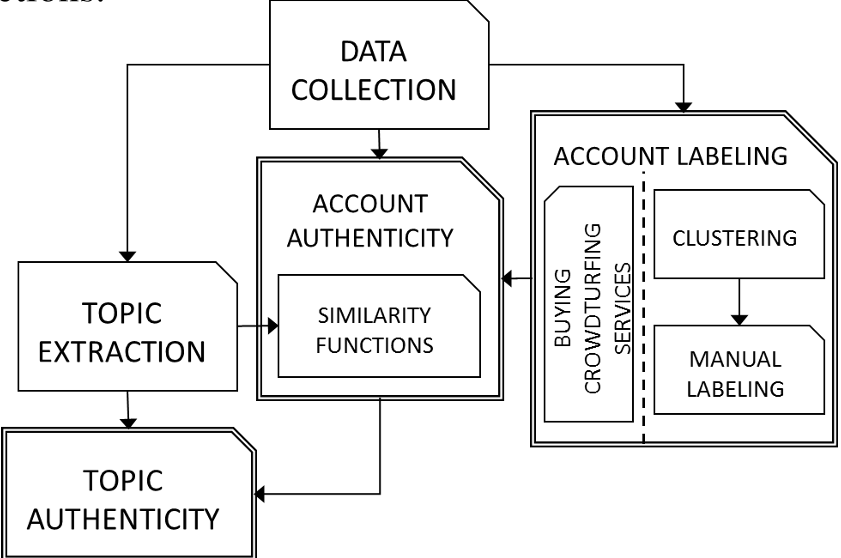 Figure 1: The architecture of the proposed authenticity estimation pipeline.
Experiments & Results: Simplicity Wins
The researchers evaluated their approach across three datasets, including a "Honeypot" dataset of known abusers.
Key Findings:
- Bag-of-words was the surprise MVP. Despite being a relatively simple text-based approach, it outperformed complex behavioral modeling. This suggests that abusers, even when trying to hide, often share a "linguistic DNA" or a specific script-like vocabulary.
- Crowdturfing Detection: The system successfully identified topics promoted by "simple bots" from crowdturfing platforms, which were significantly easier to cluster than "organic" participants.
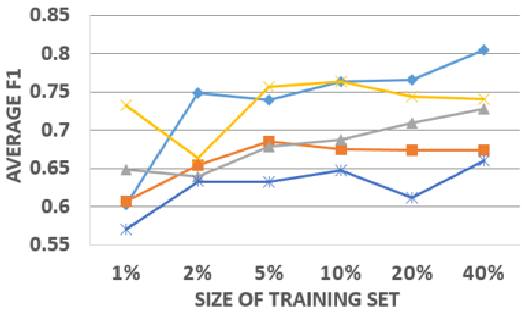 Figure 3: Donut charts visualizing authenticity. Notice how in Topic 4, the outer ring (posts) is heavily dominated by abusers compared to the inner ring (accounts).
Critical Analysis & Conclusion
This work provides a vital tool for platform moderators. By moving the focus from Individual Accounts to Discussion Authenticity, we gain a "macro" view of platform health.
Takeaway: The most profound finding is the "disproportional influence" of abusers. The visualization in Figure 3 clearly shows that a tiny fraction of accounts can generate the vast majority of noise in a discussion.
Limitations & Future Work: While the Bag-of-words approach is powerful, it is vulnerable to adversarial attacks, such as abusers using LLMs to vary their linguistic style. The authors suggest that the next frontier is applying this multi-layered similarity approach across different social networks (e.g., cross-platform manipulation tracking) to catch the most sophisticated propaganda machines.