
EMT: Extracting Social Trust from the World's Oldest Social Network
On Measuring Email-Based Social Network Trust
The paper introduces Email Trust (EMT), a decentralized trust evaluation model that leverages statistical features of email interactions to quantify social trust. By analyzing email exchange frequency, directionality, and temporal consistency, the system automates the establishment of a "social graph" without requiring manual user ratings, utilizing common platforms like Gmail as a testing bed.
TL;DR
Email Trust (EMT) is a novel framework that transforms your daily email habits into a quantifiable "trust score." By analyzing the frequency, reciprocity, and timing of your correspondence, EMT creates an automated social graph that mirrors real-life relationships without requiring manual endorsements or centralized authorities.
Context and Motivation
While modern social networks like Facebook and LinkedIn dominate the conversation, the authors argue that Email is actually the most robust social graph in existence. It is structured, persistent, and reflects serious social activity.
Current trust mechanisms like PGP (Pretty Good Privacy) are "manual"—you have to sign keys and assign trust values yourself. This leads to friction and stagnation. The researchers at Arizona State University asked: Can we use the statistical fingerprints of our inbox to calculate trust automatically?
Methodology: The Math of Reciprocity
The core of EMT lies in the Tier-1 Trust Checking formula. The system doesn't just count how many emails you receive (which could be spam); it focuses on Outgoing Emails and Evenness.
The Interaction Factor (γ)
The model introduces a factor that rewards balanced communication. If User A sends 100 emails and User B replies with 100, the trust is maximized. If communication is one-sided, the trust score drops.
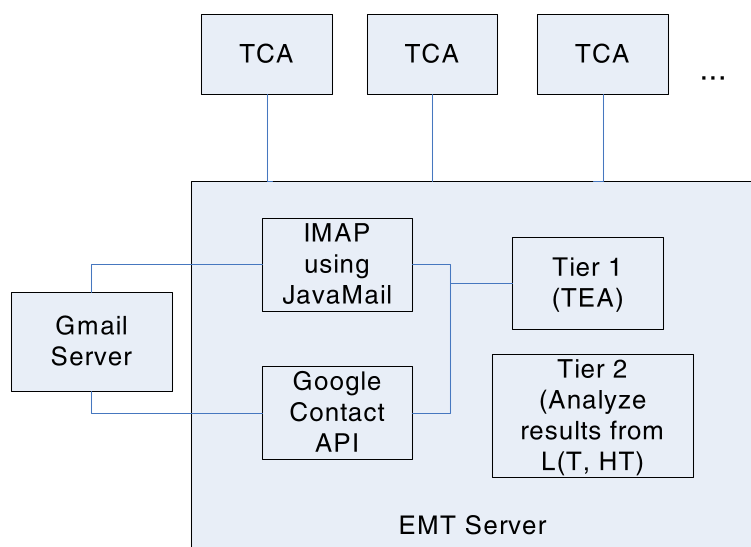 Fig 1. The EMT system architecture interacting with Google APIs.
The final trust score is calculated using: where is the number of exchanges and is the directionality factor. The system also applies a Temporal Decay—recent emails are weighted more heavily than interactions from two years ago, simulating how human relationships fade or strengthen over time.
Experimental Validation
Using a testbed of Gmail accounts (some containing over 7,000 emails), the researchers compared two versions of their algorithm:
- Aggressive: Based purely on reciprocity.
- Conservative: Weighing outgoing emails more heavily to prevent "trust spam."
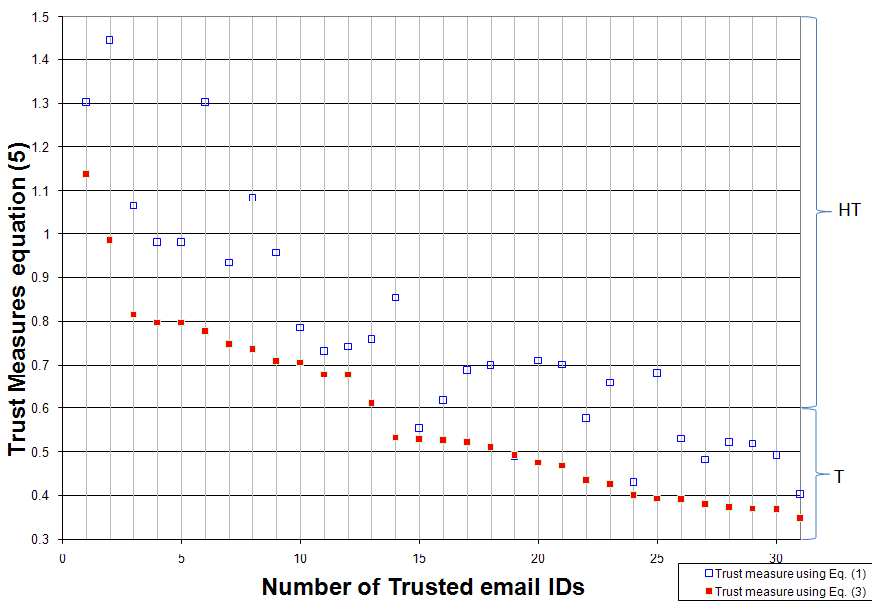 Fig 2. Comparative results showing how different weighting schemes (Eq 1 vs Eq 3) categorize trust levels.
Key Insights:
- The 0.45 Threshold: In practical testing, a normalized score above 0.45 consistently identified high-trust contacts (family, close colleagues), while scores around 0.3 identified general acquaintances.
- Performance: Real-time checking takes about 2-3 seconds, leading the authors to suggest a "Trust Proxy" server that pre-calculates these scores for instant verification during digital handshakes.
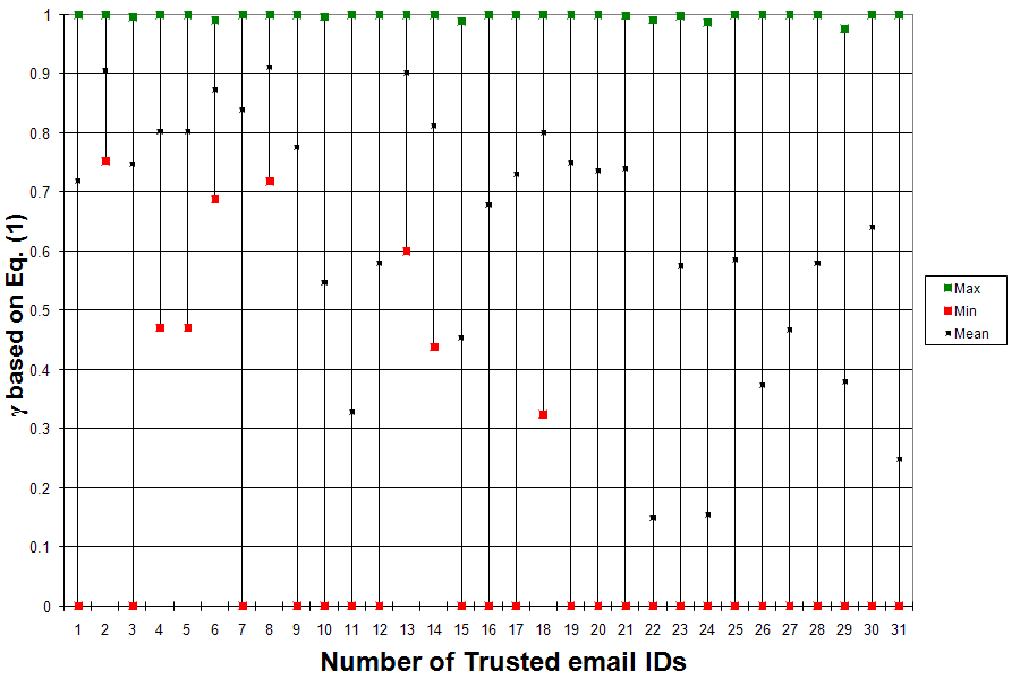 Fig 3. Analysis of γ variance, showing that high-trust relationships exhibit more consistent interaction patterns.
Critical Analysis & Conclusion
The beauty of EMT is its minimalist inductive bias: it assumes that if you talk to someone often and they talk back, you trust them.
Limitations:
- Privacy Paradox: To calculate trust, the server needs to "see" your metadata. The authors propose a "Proxy" system, but this creates a new central point of failure.
- Alias Issue: Users often have multiple emails. Without sequence alignment to merge these identities, the trust graph remains fragmented.
Future Outlook: In an era of AI-generated content and phishing, EMT offers a path toward "Identity-based Cryptography" where we can verify a stranger's reputation based on their proximity to our trusted network. It moves us away from who you are to how you behave.