
Beyond the Follower Count: A Multi-Level Interaction Model for True Social Influence
16367_Measuring influence in social networks using a network amplification score - an analysis using cloud computing.
This paper introduces a novel influence measurement framework for social media users, specifically targeting Twitter (X). It proposes an integrated score based on multi-level interactions—Tweets, Retweets, Replies, and Mentions—to accurately quantify user impact beyond simple follower counts.
TL;DR
Follower counts are a vanity metric. This paper proposes a robust influence scoring mechanism that moves beyond surface-level numbers to analyze the cascading interactions of Tweets, Retweets, and Mentions. By leveraging degree centrality in a directed graph, the authors provide a more granular view of who actually moves the needle on social media.
Background: The Follower Paradox
In the early days of social media research, "Influence = Follower Count." However, we now know that a user with a million followers who receives zero replies is effectively shouting into a void. Existing tools like Klout or Twitalyzer attempted to solve this, but often lacked transparency in their mathematical foundations. This work seeks to formalize influence as a measurable flow of information through a network.
Problem & Motivation
The core issue is that influence is dynamic and multi-layered. A single tweet can trigger a chain reaction: User A tweets, User B replies, User C retweets User B, and User D mentions User A.
Current models often overlook these "second-degree" or "third-degree" impacts. The motivation here is to build a system that rewards the propagation capacity—the ability of a user's content to travel deep into the network.
Methodology: The Propagation Equations
The authors transition from simple counts to a graph-theoretic approach. They define influence through an expanded version of Degree Centrality ().
The Core Formula
The influence score is derived from the sum of all activities originating from or directed toward a user node:
Visualizing the Cascade
The model accounts for different interaction "degrees." For instance, if User A initiates a thread, the model calculates the outdegree (actions taken) and indegree (actions received) across the entire propagation tree.
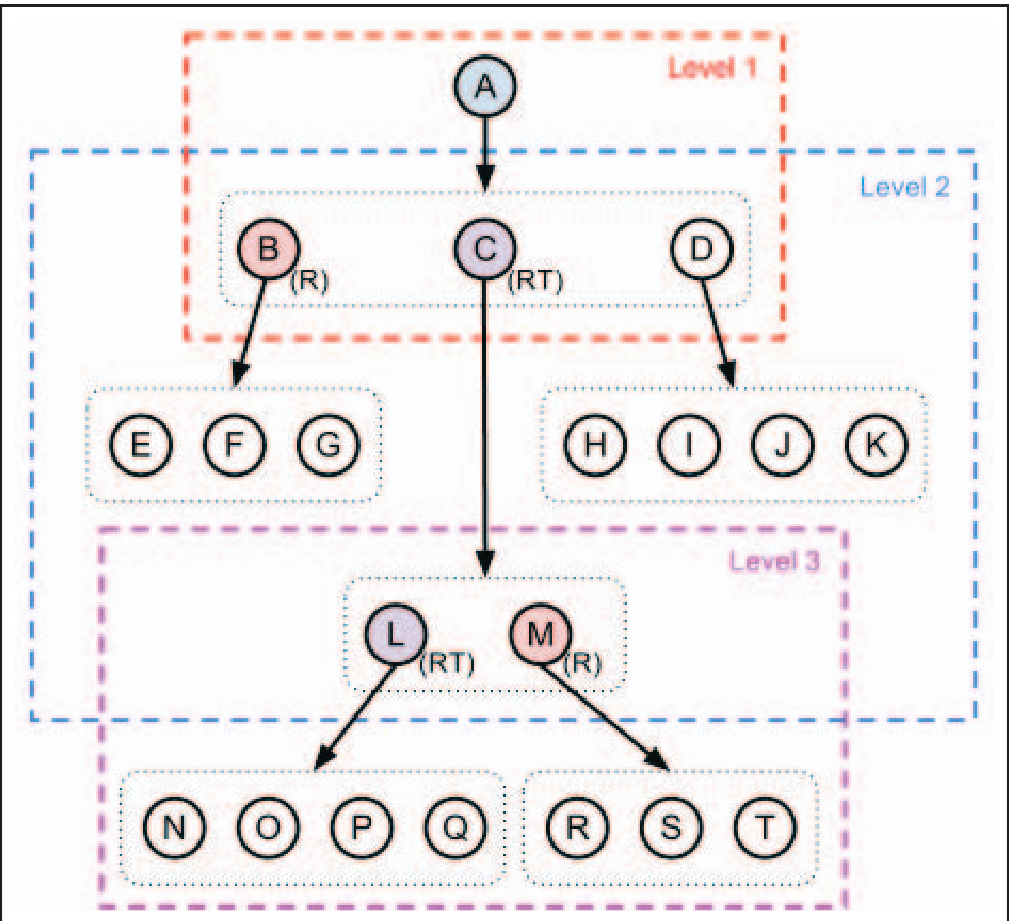 Figure 1: Visualization of interaction nodes showing how influence flows from a primary user through various engagement tiers.
As demonstrated in the paper's calculation: This methodology ensures that if your "repliers" are also influential, your own score increases proportionally.
Experiments & Results
The authors tested their model against high-profile Twitter accounts. Interestingly, the results don't always align with the highest follower counts.
| User | Our Score | Klout [16] | Peer Index [17] |
|---|---|---|---|
| Tim O'Reilly | 86 | 69 | 94 |
| Bill Gates | 81 | 79 | 93 |
| Larry King | 78 | 63 | 78 |
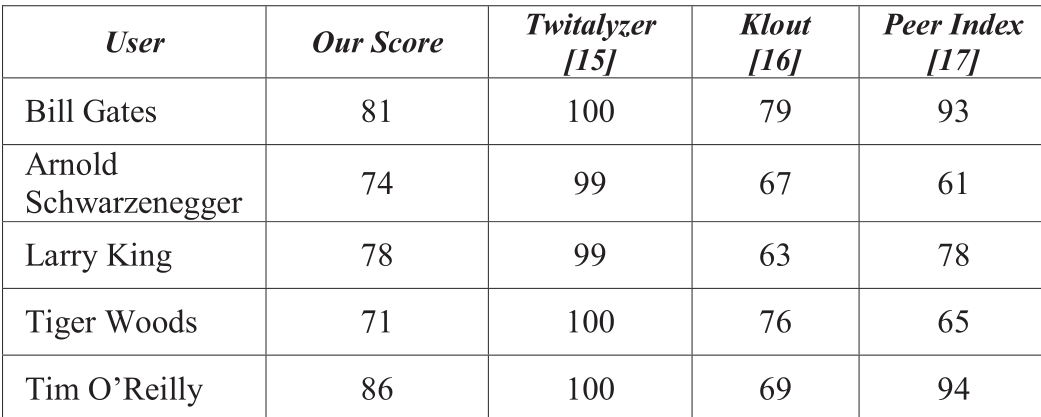 Table 1: Comparing the proposed score against industry standards.
Key Finding: Tim O'Reilly, despite having fewer followers than Bill Gates, scored higher (86 vs 81). This is due to the high "interaction density" of his audience—his followers are more likely to participate in high-value interactions (replies and retweets) rather than just passive following.
Critical Analysis & Conclusion
Takeaway
The research confirms that Interaction Centrality is a better predictor of influence than audience size. For marketers and researchers, this suggests that the "Micro-influencer" with high engagement is often more valuable than the "Celebrity" with a stagnant follower base.
Limitations
- Weighting Subjectivity: The paper treats different interactions with specific weights, but does not fully account for the sentiment of the interaction (e.g., a "mention" in a negative context still boosts the score).
- Platform Specificity: The model is heavily tuned to Twitter's architecture and might require significant re-calibration for platform-specific behaviors on TikTok or Instagram.
Future Work
The next logical step is integrating Natural Language Processing (NLP) to weight interactions based on sentiment and topic relevance, ensuring that "influence" is categorized by domain expertise (e.g., Tech vs. Politics).