
Persistence and Emergence: Deciphering the "Memory" of Dynamic Social Networks
Measuring Temporal Paerns in Dynamic Social Networks
This paper introduces two novel dynamic metrics, Persistence and Emergence, designed to measure temporal evolution patterns of agents in dynamic social networks. By leveraging human cognitive principles of Primacy and Recency effects, the authors implement three aggregation models (Average, Linear, and Exponential) to achieve SOTA-level predictive accuracy for future network activities across diverse datasets including Enron and DBLP.
TL;DR
Static snapshots of social networks are like still photos; they tell you who is there, but not where they are going. This paper introduces a robust mathematical framework to measure the "pulse" of dynamic networks using two metrics: Persistence (how steady an actor is) and Emergence (how fast an actor is changing). By incorporating human cognitive biases—specifically our tendency to remember the first and most recent events most vividly—the authors prove we can predict an agent's future importance with surprising accuracy.
Background: Why Static Metrics Fail
In the real world, relationships atrophize or grow. A sudden spike in communication might indicate a new "bot" in a network, while a slow decline might signal an account's departure. Standard metrics like Degree Centrality effectively describe a single moment but lack the temporal context to distinguish between a "rising star" and a "fading elite."
The authors' core insight is that network evolution mimics human memory. We are governed by:
- Primacy Effect: The tendency for initial information to dominate our perception.
- Recency Effect: The tendency to remember the most recent data more clearly.
Methodology: The "How" of Temporal Aggregation
The authors define two high-level dynamic classes:
- Persistence (): A cumulative measure of an agent's activity over time, calculated using an aggregation function.
- Emergence (): The normalized rate of change in persistence, highlighting "burstiness" and radical shifts in behavior.
To operationalize these, they tested three aggregation models:
- Average: All timesteps in a window have equal weight.
- Linear: Weights increase linearly toward the present.
- Exponential: Uses a "transmission parameter" () to provide a smooth, decaying memory of the past.
The Engine Under the Hood: Exponential Aggregation
The Exponential model is the most sophisticated, defined recursively as: This allows for computational complexity, making it ideal for real-time anomaly detection in massive datasets.
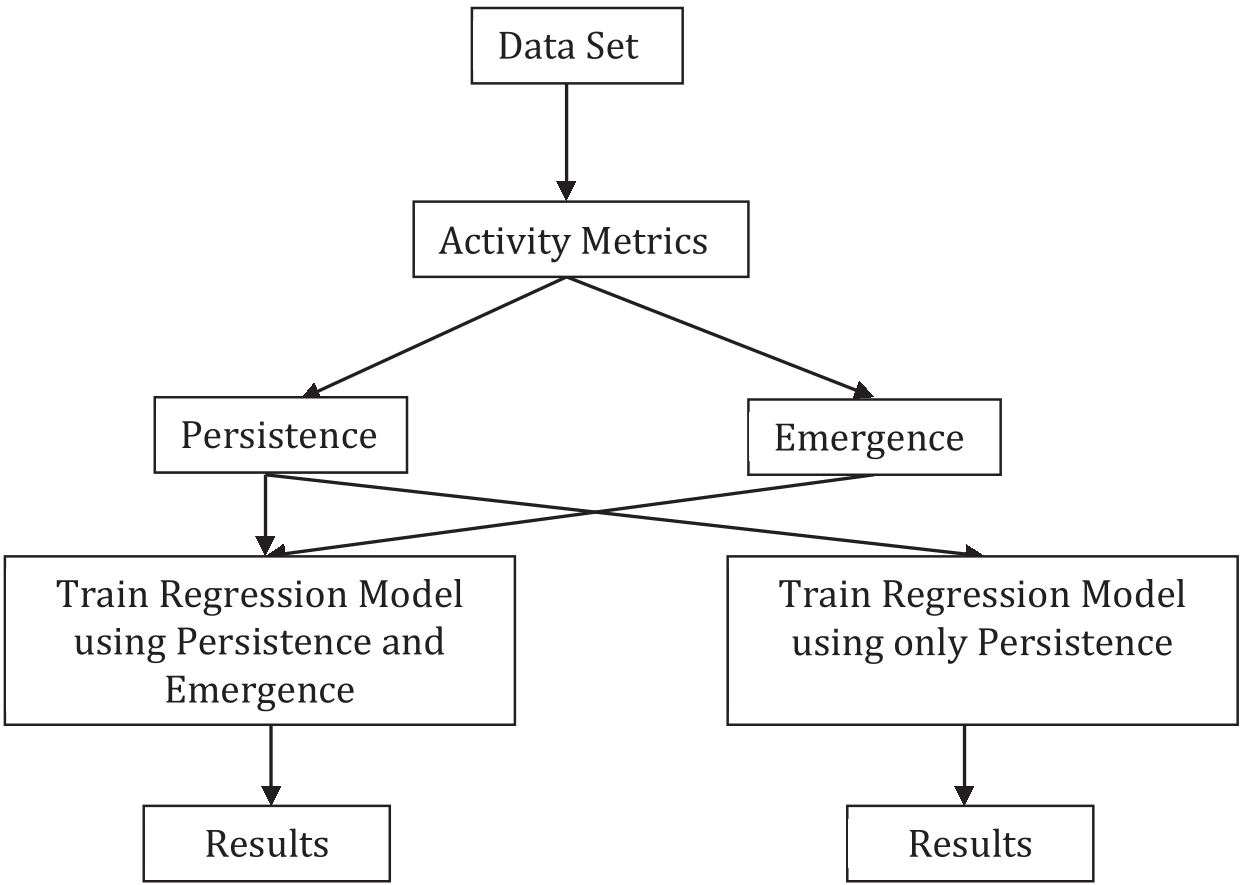 Figure 1: The workflow from raw network snapshots to dynamic metric generation and Lasso regression prediction.
Experimental Validation
Using datasets ranging from the Enron Email Corpus to DBLP Co-authorship, the authors used Lasso regression to see if and at time could predict activity at .
Key Result: The "U-Shaped" Error Curve
One of the most profound findings is that there is an optimal window of history. If you look at too little history, your metrics are too "noisy"; if you look at too much, you drown out current trends.
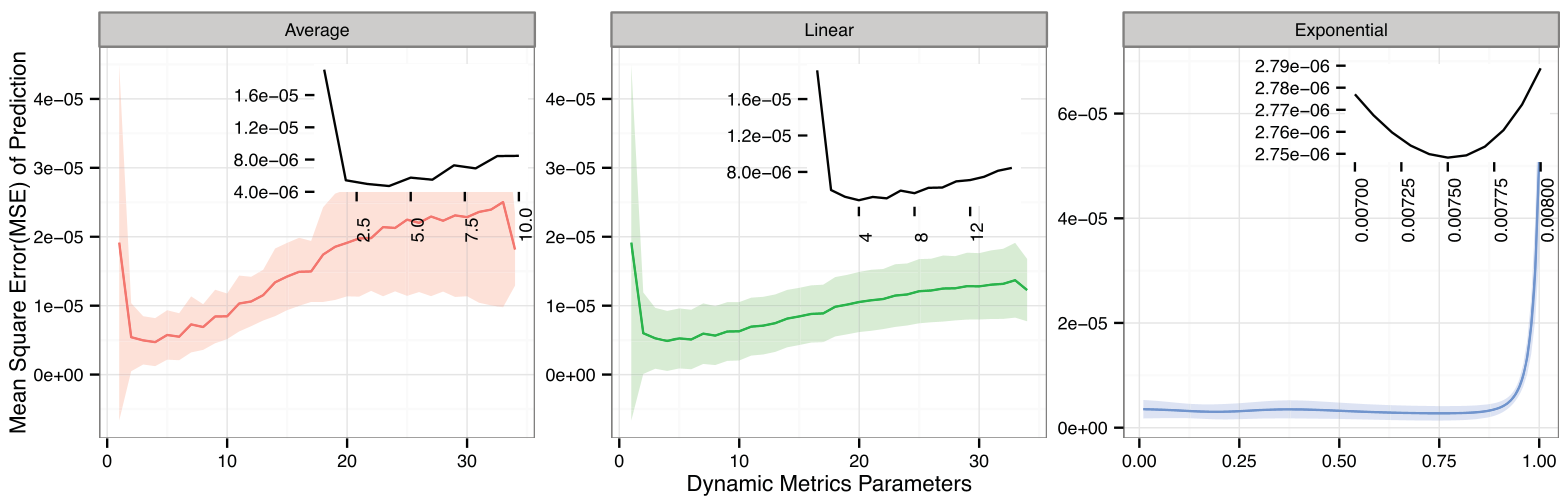 Figure 2: MSE comparison. Note the distinct minimum points indicating the "intrinsic temporal invariants" of each network type.
The Exponential model consistently achieved the lowest Mean Square Error (MSE) and the tightest confidence intervals across all datasets.
Critical Analysis & Conclusion
Takeaway
Social networks aren't just collections of links; they are temporal entities. This paper successfully bridges cognitive psychology and graph theory. The discovery of Temporal Invariants—specific timeframes (e.g., 3-5 months for Arab Spring data) that hold the most predictive power—suggests that every social system has its own "memory span."
Limitations
The model assumes a degree of behavioral consistency. While it excels at predicting trends, "Black Swan" events or truly sporadic human behavior may still evade these metrics. Additionally, the current model uses fixed parameters (, ) that do not yet adapt in real-time to shifting network velocities.
Future Outlook
This work paves the way for advanced Recommender Systems that prioritize not just "important" users, but "emerging" ones. It also serves as a scalable foundation for Real-time Cybersecurity, identifying bots and intrusions via subtle shifts in persistence and emergence that static monitors would miss.