
Beyond Popularity: How CredRank Unmasks Coordinated Misinformation
Measuring User Credibility in Social Media
The paper introduces CredRank, a behavioral analysis algorithm designed to measure user credibility in social media by detecting coordinated online behaviors. It successfully differentiates between independent users and groups acting in concert, such as political bots or organized rumor-spreaders, through hierarchical clustering.
TL;DR
In the digital wild west of social media, "popular" does not mean "credible." This paper introduces CredRank, an algorithm that measures user credibility by analyzing behavioral correlation. By identifying clusters of users who act in perfect synchronization—like political botnets or coordinated reviewers—CredRank can downplay their influence and amplify truly independent voices.
Academic Context: This work is a foundational pivot from identity-based or popularity-based trust to behavior-based credibility analysis in social sensing.
The "Popularity" Trap
Most users determine what to trust based on social proof: the number of retweets, likes, or followers. However, the authors argue that these metrics are the most vulnerable to manipulation. During events like the Arab Spring or Hurricane Sandy, coordinated groups used organized tweeting and mass-reporting to suppress information or spread rumors.
The primary challenge is Anonymity. When we don't know the source, and the profile is a blank slate, how do we judge the message? The authors' insight is simple: Truth is independent, but lies are often coordinated.
Methodology: The CredRank Algorithm
The core of CredRank is identifying Coordinated Collective Behavior. If two users behave exactly the same way (e.g., voting for the same obscure products at the same time), the probability that they are independent agents decreases.
1. Similarity Calculation
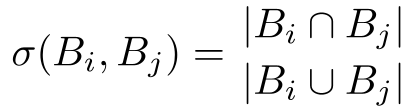
The algorithm first measures the pairwise similarity of behavior () between users and :
Usually, Jaccard’s Coefficient is used to quantify this overlap:
2. Clustering and Weighting
Once similarities are mapped, users are grouped into clusters (). The critical innovation is the weighting mechanism. Instead of "one person, one vote," CredRank assigns a weight to the cluster based on its size, and then distributes that weight among members:
By using the square root of the cluster size, the algorithm ensures that a coordinated group of 100 people does not have 100 times the influence of a single independent user. It effectively "taxes" lack of independence.
Experimental Proof: The U.S. Senate
To validate this, the authors applied CredRank to U.S. Senate voting records. Why? Because modern political parties are the ultimate "coordinated groups."

The results showed high correlation (high eigenvalues), proving that political votes are rarely independent events. By applying CredRank, the algorithm could group senators into just 6 clusters and still replicate the outcome of votes with high accuracy. This demonstrates that if these were social media "reviewers," their collective weight should be drastically reduced to find the "independent" signal.
Critical Insight & Future Outlook
The Takeaway: Credibility is a function of Individuality. In an era of GenAI and automated botnets, the ability to detect "behavioral echoes" is more important than checking a blue "verified" badge.
Limitations:
- Computational Cost: Pairwise similarity for millions of Twitter users is , which is expensive for real-time systems.
- False Positives: Sometimes, high correlation is organic (e.g., fans of a sports team reacting to a goal). The algorithm needs to distinguish between "organic consensus" and "malicious coordination."
Future Directions: Integrating this behavioral model with Network Topology (who follows whom) and Content Analysis (NLP) will likely form the next generation of misinformation detection systems.
Editor's Note: This paper provides a robust mathematical framework for what we intuitively know: if something sounds like a script, it likely is.