
Beyond View Counts: Measuring YouTube Influence with Triangular Fuzzy Numbers
Measuring User Influence Based on Multiple Metrics on YouTube
The paper proposes a triangular fuzzy number-based method to measure user influence on social media, specifically YouTube. It synthesizes multiple metrics (views, comments, and likes) using the TOPSIS (Technique for Order Preference by Similarity to an Ideal Solution) algorithm, providing a comprehensive and graph-free ranking system.
TL;DR
In the world of social media, "influence" is often reduced to a single number—be it followers or total views. This paper introduces a more sophisticated, graph-free approach using Triangular Fuzzy Numbers and the TOPSIS algorithm. By synthesizing views, comments, and likes, the authors provide a comprehensive ranking system that accurately captures user impact on platforms like YouTube where complete interaction networks are often invisible.
Background & Motivation: The Multi-Metric Dilemma
In online social networks, measuring influence usually follows two paths:
- Attribute-based: Simple counts like retweets or followers. These are easy to calculate but often "one-dimensional."
- Graph-based: Algorithms like PageRank that look at who follows whom. These are powerful but "data-hungry"—on YouTube, you can't easily see the "viewing graph" or the "liking graph" because that data is private to the platform.
The authors recognize that influence is fuzzy. There is no exact threshold that makes a user "highly influential." Furthermore, relying solely on total views (the status quo) ignores the depth of audience engagement found in comments and likes.
Methodology: Fuzziness and Synthesis
The core of the paper's innovation lies in its two-step process:
1. Representing Influence as a Fuzzy Number
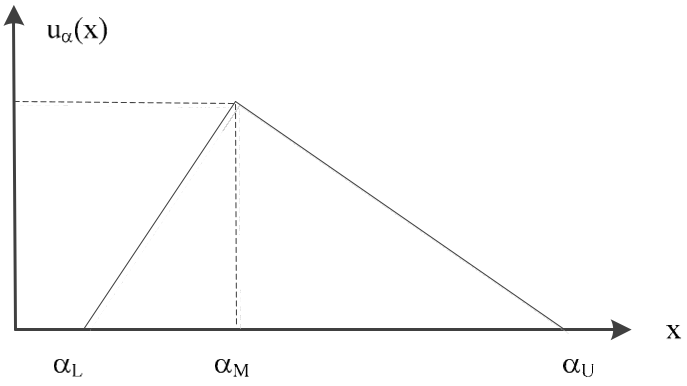
Instead of a single scalar value, each metric for a user is represented as a Triangular Fuzzy Number (TFN). For a specific user and metric (e.g., view counts):
- Lower Bound (): The minimum views among all their videos.
- Most Possible Value (): The average views per video.
- Upper Bound (): The maximum views of their top video.
This captures the variability and potential of a creator's content, rather than just an aggregate sum.
2. Synthesizing Metrics with TOPSIS
To merge views, likes, and comments into one score, the authors use TOPSIS. The logic is elegant: it identifies a "Positive Ideal Solution" (the best hypothetical user in all categories) and ranks real users based on their geometric distance to this ideal. This allows different units (millions of views vs. thousands of comments) to be normalized and weighted fairly.
Experimental Results
The study analyzed 12,194 YouTube users and over 17 million videos.
Validating the "Fuzzy-View"
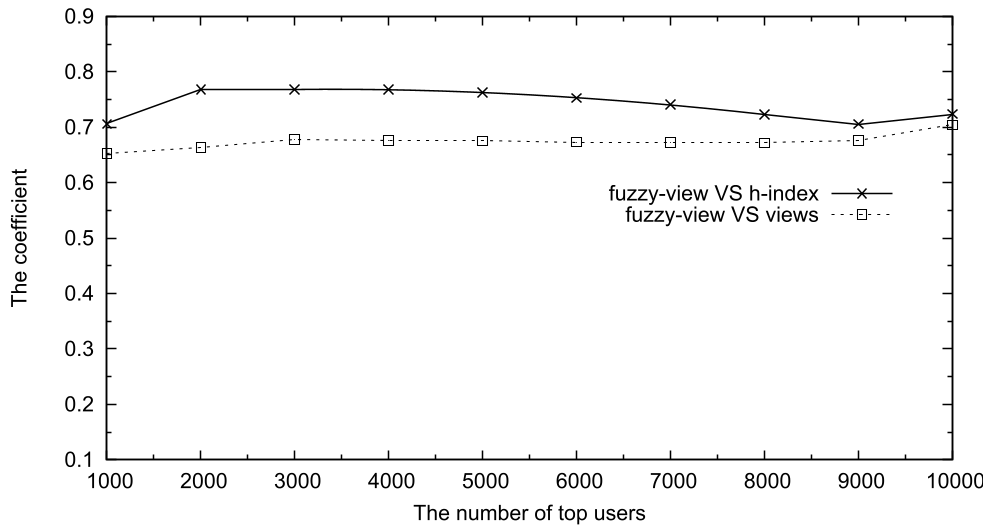
When the authors used their method on only view counts (Fuzzy-view), they found it highly correlated with the h-index (Pearson coefficient ~0.70). This proves the fuzzy logic is a mathematically sound way to model traditional impact metrics.
The Power of Synthesis
When switching to Fuzzy-synthesis (combining views, likes, and comments), the rankings changed drastically.
- Case Study: Creators like officialpsy (Psy) and justinbiebervevo jumped to the top of the synthesized rankings. While they might not lead in raw comment volume compared to gaming channels like PewDiePie, their massive view-to-engagement ratio across their catalog makes them more "efficiently" influential.
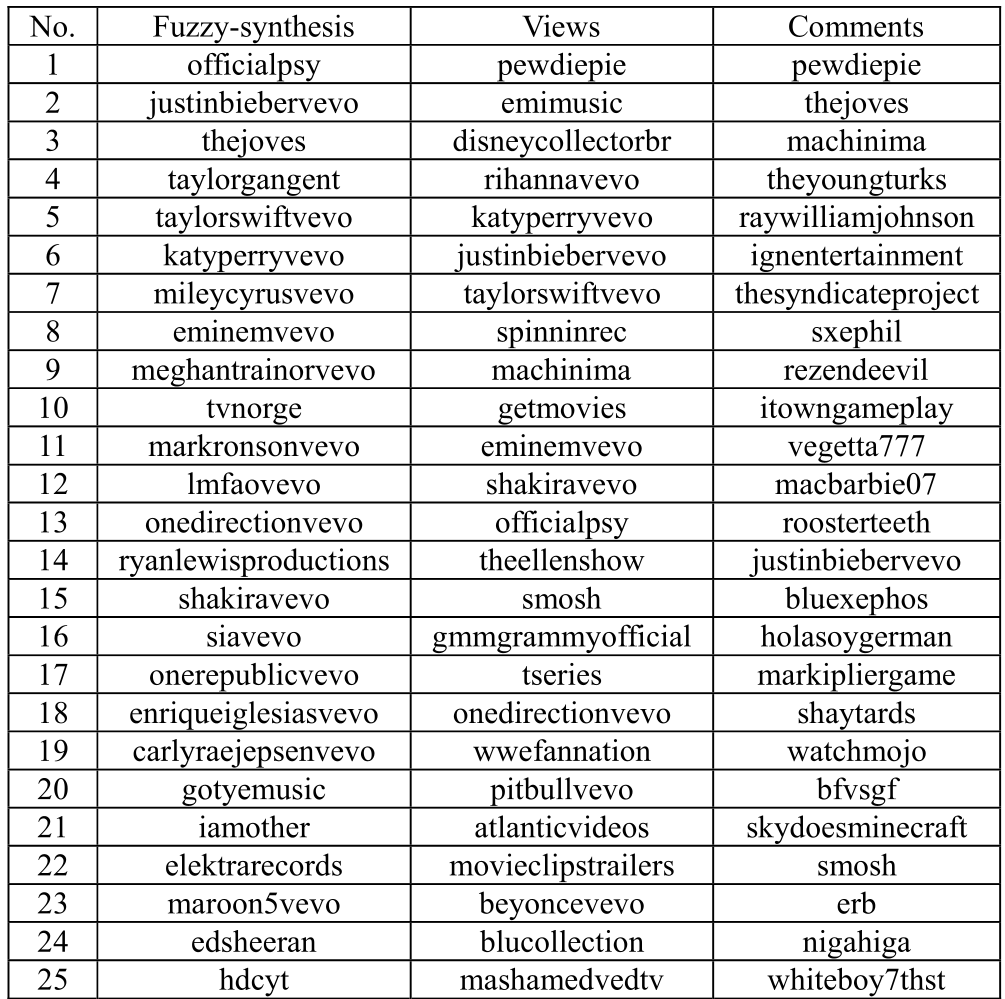
The correlation between synthesized influence and single metrics is moderate (ranging from 0.29 to 0.78 depending on the sample size), which confirms that the synthesized score provides new information that single-metric counts miss.
Critical Insight & Conclusion
This paper effectively argues against the "Million Follower Fallacy" by providing a mathematical framework that values consistency (average) and peak performance (upper bound) across multiple engagement vectors.
Takeaway for Researchers: If you are working on social recommendation or viral marketing, don't just look at the totals. Using fuzzy numbers allows you to account for the inherent "noise" and "burstiness" of social media data without needing a complete map of the social graph.
Limitations: The current model assumes equal weights (1/3) for views, likes, and comments. Future work could incorporate dynamic weighting to reflect that a "comment" might represent a higher level of influence than a simple "view."