
Decoding Social Status: How "Interaction Prestige" Governs Peer Choices in Social Networks
Measuring User Prestige and Interaction Preference on Social Network Site
This paper introduces "Interaction Prestige," a novel metric to measure user influence on social networking sites (SNS) like Xiaonei.com. By applying K-means clustering to communication features, the study identifies distinct user archetypes—"outgoing," "reciprocal," and "incoming"—and demonstrates their correlation with virtual, social, and structural prestige.
TL;DR
Researchers have moved beyond "fakeable" profile descriptions to quantify social status through actual behavior. By analyzing communication logs on Xiaonei.com, this study defines Interaction Prestige—a behavioral metric that classifies users into "Outgoing," "Reciprocal," and "Incoming" types. The findings reveal a stark reality: users are magnetically drawn to those with higher prestige and the opposite gender.
The Problem: The Veneer of Social Profiles
In the early days of Social Network Sites (SNS), prestige was often measured by what users said about themselves—their interests, books, and music tastes. However, as sociologists have noted, these are "conventional signals" that are easily manipulated to craft a desired persona.
The core challenge addressed here is: How do we measure a user's true prestige using data that is hard to fake? The answer lies in the flow of interaction—who initiates, who responds, and who is sought after.
Methodology: Mapping the Interaction Flow
The author identifies four fundamental "atoms" of interaction on a user's wall:
- In-Visit (A): Being chosen (someone posts on your wall).
- Out-Reply (B): Responding to a choice.
- Out-Visit (C): Choosing others.
- In-Reply (D): Being responded to.
By transforming these into a normalized feature vector and applying a K-means clustering algorithm, the researchers identified three (and later four) distinct user types:
- Outgoing (C1): High "out-visit" volume; the social initiators.
- Reciprocal (C2): Balanced interaction; the steady communicators.
- Incoming (C3/S4): High "in-visit" volume; the prestigious targets.
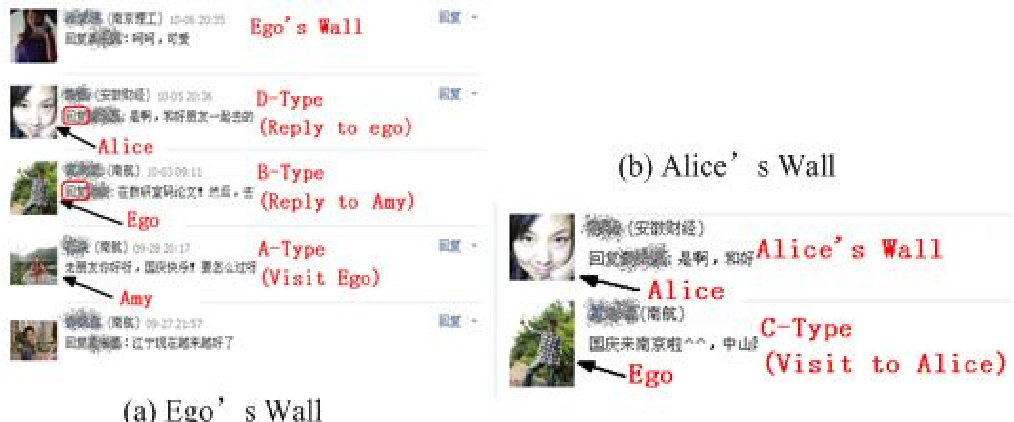 Figure 1: The localized interaction model showing the four types of message flows.
The Multi-Dimensional Nature of Prestige
The study brilliantly validates "Interaction Prestige" by correlating it with three other layers of social standing:
- Virtual Prestige: Measured by "page views." High-prestige clusters showed significantly higher view counts.
- Social Prestige: Manual inspection revealed that the high-prestige S4 group contained "Campus Celebrities," "Teaching Assistants," and "Counselors"—people with real-world authority.
- Structural Prestige: A positive correlation was found with network metrics like Indegree and Proximity Prestige.
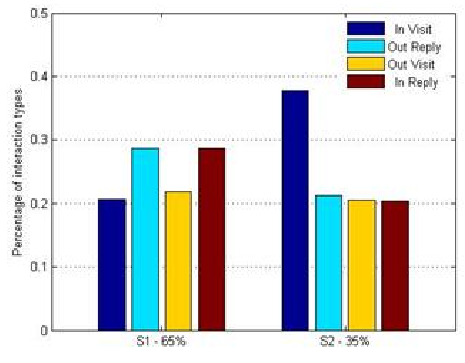 Figure 2: K-means clustering results showing the emergence of distinct user archetypes across different sample sizes.
Key Insight: "Opposites Attract" and the Prestige Magnet
Perhaps the most compelling part of the study is the Chi-Square test for independence. By analyzing interaction frequencies between gender-coded prestige groups (e.g., M1-M4, F1-F4), the author found:
- Gender Preference: Users overwhelmingly prefer interacting with the opposite gender (significant "Effect Size" of 0.58).
- Prestige Preference: Low-prestige users (M1) show an increasing interest in high-prestige partners (F4). However, high-prestige users (F4) tend to preserve their status by interacting mostly with other high-prestige users (M4).
| Cluster Type | Characerization | Social Logic |
|---|---|---|
| Incoming (S4) | High In-Visit / Low Response | High Prestige / "Popular Stars" |
| Reciprocal (C2) | Balanced In/Out | Social Glue / Reciprocity |
| Outgoing (C1) | High Out-Visit | Social Seekers / Extroverts |
Critical Analysis & Future Outlook
Takeaway: This research proves that "Prestige" isn't just a number; it is a structural force that dictates the direction of information and attention in a network.
Limitations:
- The data is specific to the "Wall" feature of Xiaonei.com. Modern platforms (like TikTok or Instagram) rely more on algorithmic feeds than wall posts.
- The study treats all "choices" (posts) as positive, ignoring potential negative interactions/flaming.
Future Directions: As social networks evolve into the "Metaverse" or decentralized platforms, applying these interaction-based prestige metrics could help in identifying early-stage influencers or "hidden" authoritative figures (like TAs or mentors) who don't necessarily have the highest follower counts but possess high "Social Prestige."