
MRQC: Reimagining Quantum Computing with Mechanical Sound Waves
Mechanical Resonator-based Quantum Computing
The paper introduces a novel Hybrid Mechanical Resonator-based Quantum Computing (MRQC) architecture merging a superconducting transmon qubit with a High-overtone Bulk Acoustic Wave Resonator (HBAR). This platform leverages the transmon as a central processing unit and multiple mechanical modes as high-coherence quantum memory, successfully implementing a universal gate set and complex algorithms like the Quantum Fourier Transform (QFT).
TL;DR
Researchers at ETH Zürich have demonstrated a Mechanical Resonator-based Quantum Computing (MRQC) platform. By coupling a superconducting transmon qubit to a crystal resonator (HBAR), they've turned "sound waves" into high-fidelity qubits. This hybrid architecture successfully runs complex algorithms like the Quantum Fourier Transform (QFT), proving that mechanical systems can serve as compact, high-performance Quantum RAM.
Background: The Scalability Bottleneck
In the race for a useful quantum computer, superconducting circuits are leaders, but they are "bulky." Each qubit usually requires its own control and readout lines, and traditional 3D electromagnetic cavities used for memories are physically massive.
The authors of this paper ask: What if we could store quantum information in the vibrations of a crystal? Mechanical resonators (HBARs) support hundreds of highly coherent modes in a footprint smaller than a single traditional cavity. This paper shifts the paradigm by treating these mechanical modes as the primary computational qubits, with the transmon qubit acting as a "flying" CPU that mediates gates between them.
Methodology: Engineering Universal Gates with Sound
The heart of the MRQC platform is the BAR device. It consists of a transmon qubit sapphire chip flipped onto a bulk acoustic wave resonator.
The Controlled-Phase () Breakthrough
To perform universal computation, you need two-qubit gates. The authors developed a remarkably elegant gate. Unlike previous methods that required jumping to the transmon's higher energy levels (the state), this protocol uses:
- Two off-resonant interactions: The qubit and phonon mode "talk" without exchanging energy, but they shift each other's phases.
- A central Z-rotation: A simple phase shift applied to the qubit midway.
By tuning the detuning () and the interaction time (), the system returns to its original population states but with a specific, controllable quantum phase accumulated.
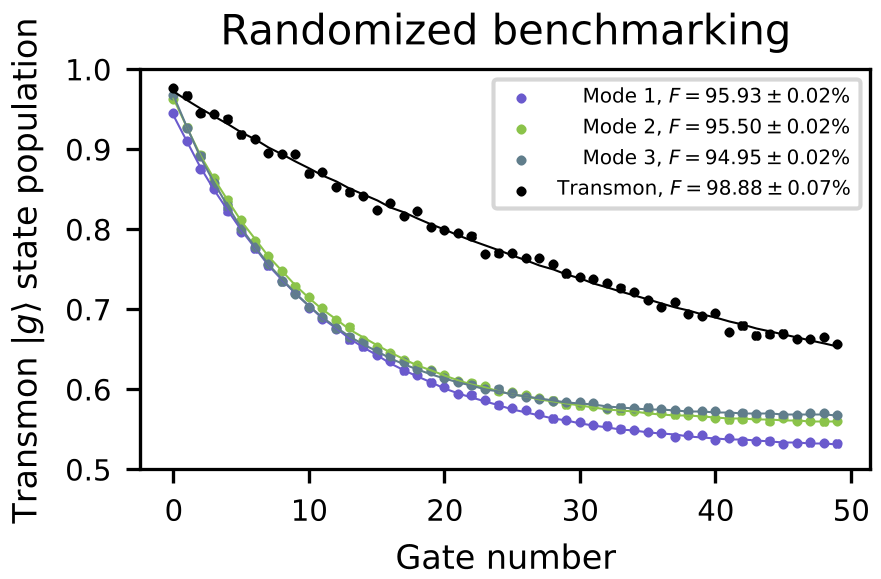 Figure 1: The BAR device (A) and the equivalence between standard circuits and the MRQC "CPU-RAM" architecture (B).
Putting Sound to Work: QFT and Period Finding
The ultimate test of any quantum hardware is running algorithms. The team implemented the Quantum Fourier Transform (QFT) on three mechanical modes.
The sequence is a tour-de-force of quantum orchestration:
- Swap: Move an excitation from a phonon mode to the transmon.
- Interact: Perform Hadamard and gates.
- Reset & Repeat: Use the "idle" time of the phonon modes to store information during middle-of-the-circuit measurements.
They achieved a QFT fidelity of 54.8%. While this might seem modest compared to pure superconducting systems, it is a significant milestone for a hybrid mechanical system, limited primarily by the transmon's decoherence rather than the mechanical modes themselves.
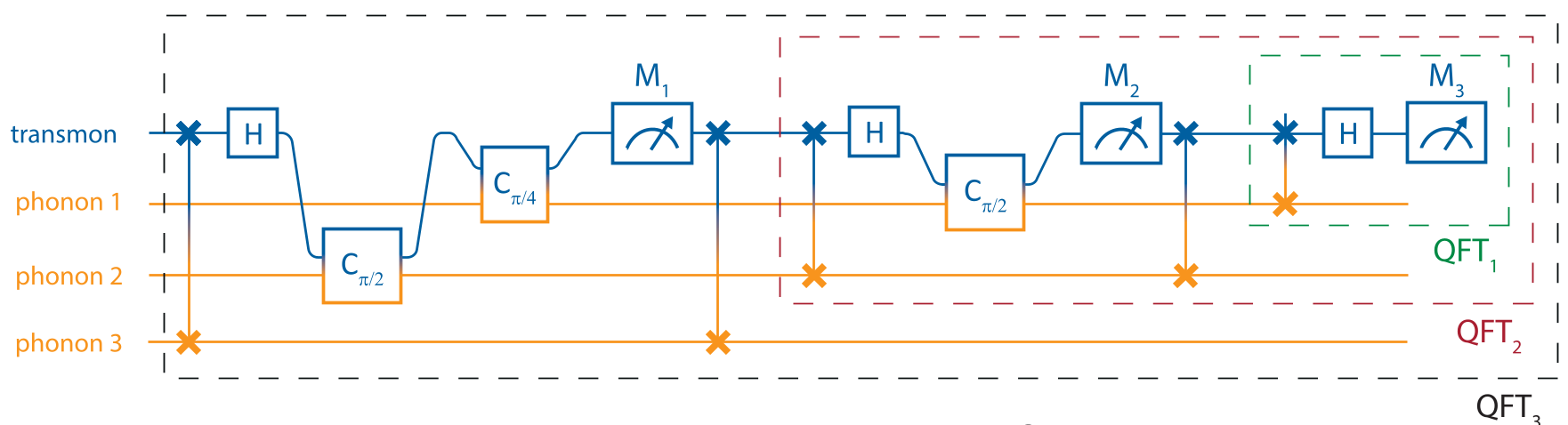 Figure 2: (A) The QFT sequence and (B) the reconstructed process matrix showing strong agreement with the ideal Fourier transform.
Experimental Results & Performance
- Single-Qubit Fidelity: ~95.5%, mainly limited by the efficiency of the SWAP operations between sound and electricity.
- Two-Qubit () Fidelity: 89.2% (no-SPAM).
- Mechanical Longevity: Mechanical modes showed relaxation times () up to 196 s, significantly outlasting the transmon CPU (s).
Critical Insight: The "Quantum RAM" Future
The real value of this work isn't just in the fidelities—it's in the connectivity. In this architecture, the transmon qubit can be tuned to interact with any of the high-overtone modes of the resonator. This provides a "Random Access" capability where the central qubit routes information and executes gates across a dense memory bank.
Limitations: The current setup is limited by the speed of the AC Stark-shift and the coupling strength (). Furthermore, reading out the state of a phonon requires swapping it back to the transmon, which introduces decay.
Future Outlook: The authors suggest moving to a coplanar circuit platform. This would allow for flux-tuning, which is much faster than the AC Stark-shift used here, potentially enabling the control of hundreds of phonon modes within a single device.
Conclusion
This paper proves that mechanical resonators are no longer just "interesting physics experiments"—they are viable components for a universal quantum computer. By treating sound as a resource, we can build quantum computers that are more compact, better connected, and architecturally closer to the CPU-RAM structures that made classical computing so successful.