
Mechanisms for Multi-Level Marketing: Beyond the Pyramid Scheme
Mechanisms for multi-level marketing
This paper establishes a theoretical framework for multi-level marketing (MLM) reward mechanisms in social networks. It formally characterizes the widely used "geometric reward mechanisms" and proposes new mechanisms designed to be resilient against false-name manipulations (Sybil attacks).
TL;DR
Viral marketing relies on "word-of-mouth," but how do we reward users for referrals without creating a system that can be gamed by fake accounts? This paper provides the first formal axiomatic characterization of Geometric Reward Mechanisms (the engine behind MLM and Pyramid schemes) and introduces new, "Sybil-proof" mechanisms that prevent users from profiting by splitting their identities.
Problem & Motivation: The Referral Tree Paradox
In a social network, if Alice recruits Bob, and Bob recruits Charlie, Alice is an indirect referrer for Charlie. Rewarding Alice for Charlie's purchase is essential to attract "trendsetters" who start viral waves. However, once you reward indirect referrals, you open the door to Sybil Attacks (False-name manipulations).
The authors identify a critical gap: while information spreading has been studied extensively, the incentive design of the rewards themselves lacked a rigorous foundation. The goal is to create a mechanism where the seller's budget is respected, rewards are potentially unbounded for high-performers, and—most importantly—no user can get more money by creating 10 "fake" versions of themselves.
Methodology: The Geometry of Incentives
The paper first looks at the Geometric Mechanism, where Alice gets a fraction of the price for a purchase made levels below her.
1. Characterizing the Standards
The authors prove that any mechanism satisfying these three properties must be geometric:
- Additivity (ADD): Merging two referral trees results in a reward equal to the sum of their individual rewards.
- Child Dependence (CD): The reward of a parent is a function of the rewards of its children.
- Depth Level Dependence (DLD): Reward depends only on how many levels deep a referral is.
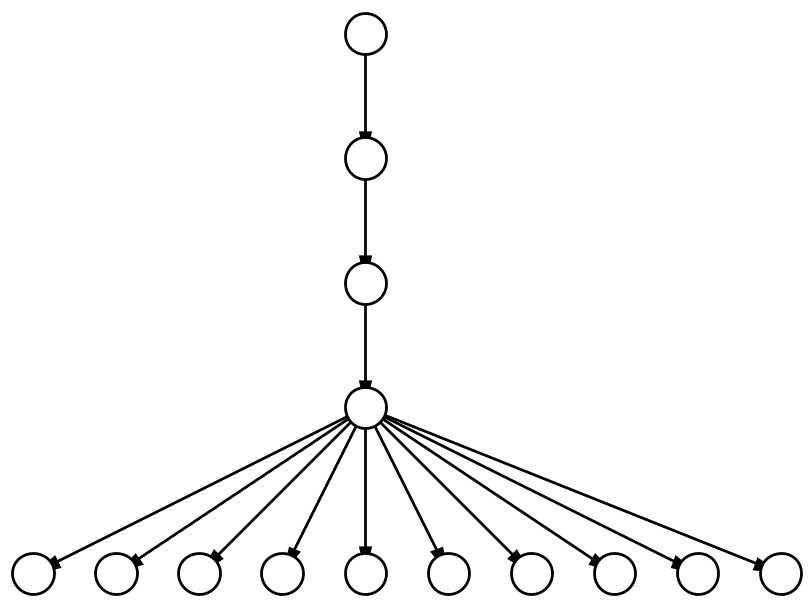 Figure 1: A standardized T(n, m) tree used to prove the geometric progression of rewards.
2. Defeating Sybil Attacks
The core innovation is addressing "Splits." A user "splits" by creating replicas to intercept rewards.
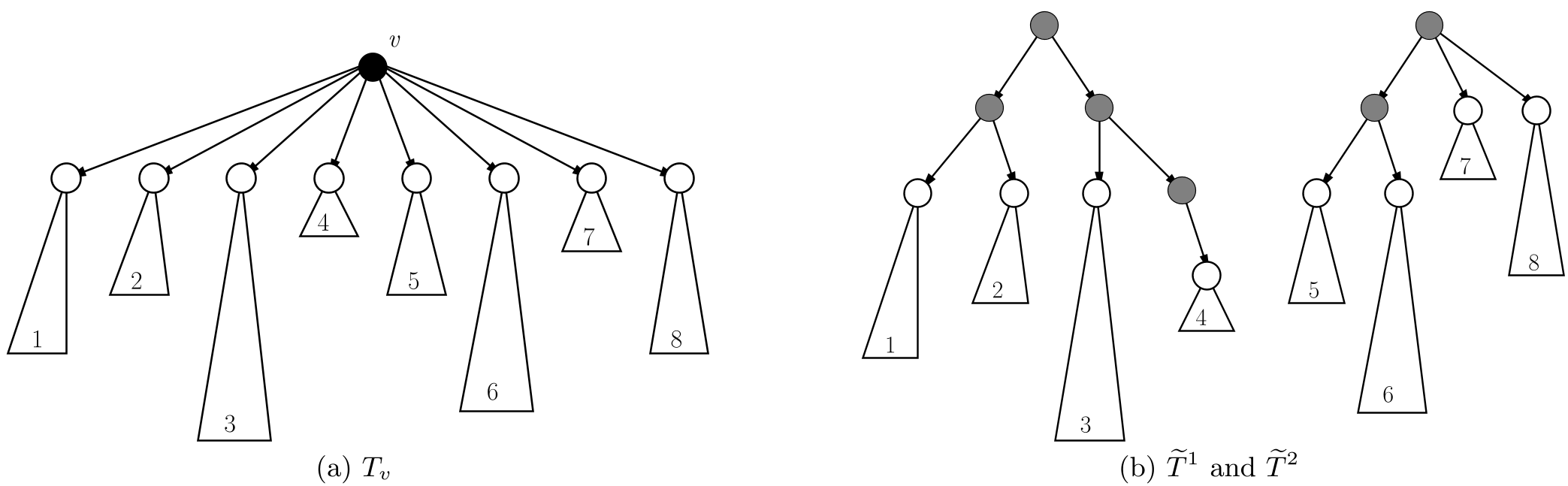 Figure 2: Visualizing a "Split" where a single node creates multiple replicas to manipulate the referral structure.
To counter this, the authors propose two distinct mechanisms:
- Msplit: A complex mechanism where a node is only rewarded for descendants that fit into a "virtual perfect binary tree." If a user tries to split, they fail to increase the reward because the mechanism only "sees" a specific structure.
- Mlocal: A simpler, more practical approach. It rewards a node for all subtrees except the largest one. This removes the incentive to concentrate or split referrals to maximize gain from a single "power-line."
Experiments & Results: Resilience Analysis
The paper is primarily theoretical, offering rigorous proofs of resilience:
- Impossibility Results: They show that no mechanism can be split-proof while also guaranteeing a user a fixed fraction of their least-performing child's reward.
- Budget Constraint: The authors prove through a complex "Deficits and Surpluses" accounting method that will never exceed the seller's budget, even under arbitrary tree structures.
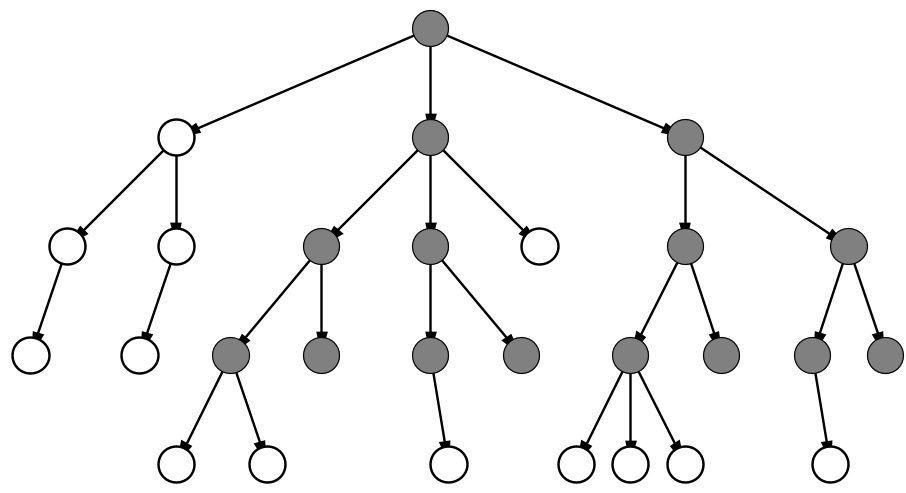 Figure 3: The concept of "Visibility" in Msplit—only gray nodes contribute to the root's reward.
Critical Insight & Conclusion
The fundamental takeaway is that transparency and intuitiveness often conflict with security. The geometric mechanism is widely used because it is easy to explain, but it is fundamentally "broken" in an anonymous digital world where identities are cheap.
Limitations: The mechanism is mathematically robust but would be a nightmare for a marketing department to explain to real users ("You only get paid if your friends form a perfect binary tree!").
Future Outlook: The mechanism (ignoring the largest subtree) offers a much more viable path for real-world affiliate systems. As social networks become the primary layer for commerce, integrating these "Sybil-proof" rewards into smart contracts could finally make viral marketing both effective and un-hackable.