
Deciphering Political Crises: A Text Mining Approach to Media Bias
Media coverage in times of political crisis: A text mining approach
2012-04-21
Summary
Problem
Method
Results
Takeaways
Abstract
This paper presents a text mining framework to analyze media coverage during Belgium's 541-day government formation crisis. Using a custom-built expert system and the Pattern mining module, the authors analyzed 68,000 online news articles to quantify media bias and sentiment dynamics across political parties and major newspapers.
## TL;DR
Researchers from the University of Antwerp developed an automated framework to analyze 68,000 news articles during Belgium's record-breaking 541-day political deadlock. By comparing coverage frequency and sentiment against actual election results, the study provides objective evidence of how different newspapers "gatekeep" information and frame political actors.
## Background: The Objectivity Gap in Political Science
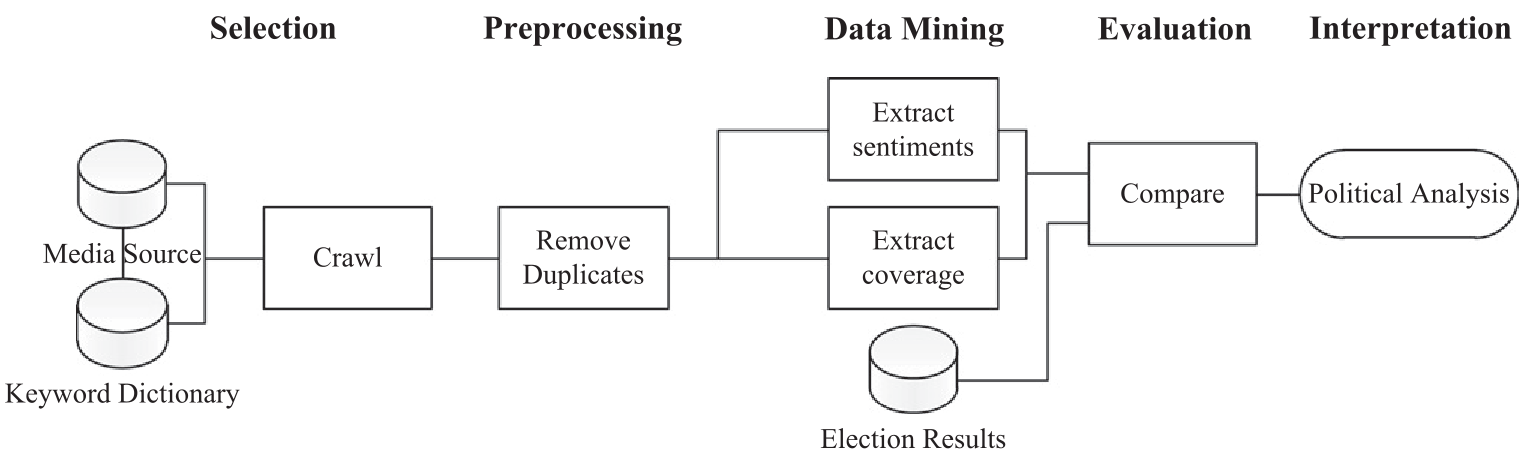
In 2011, Belgium became the world record holder for the longest period without a government. During such crises, accusations of media favoritism are common, but proving them is notoriously difficult. Traditional manual analysis is too slow and biased. This paper bridges the gap by treating news as high-dimensional data, using **Knowledge Discovery in Databases (KDD)** to uncover patterns in how the Flemish press shaped public perception.
## Methodology: Measuring the "Statement Bias"
The authors argue that "bias" isn't just about what is said, but what is *not* said. They define three distinct metrics:
1. **Gatekeeping Bias**: The selective exclusion of topics.
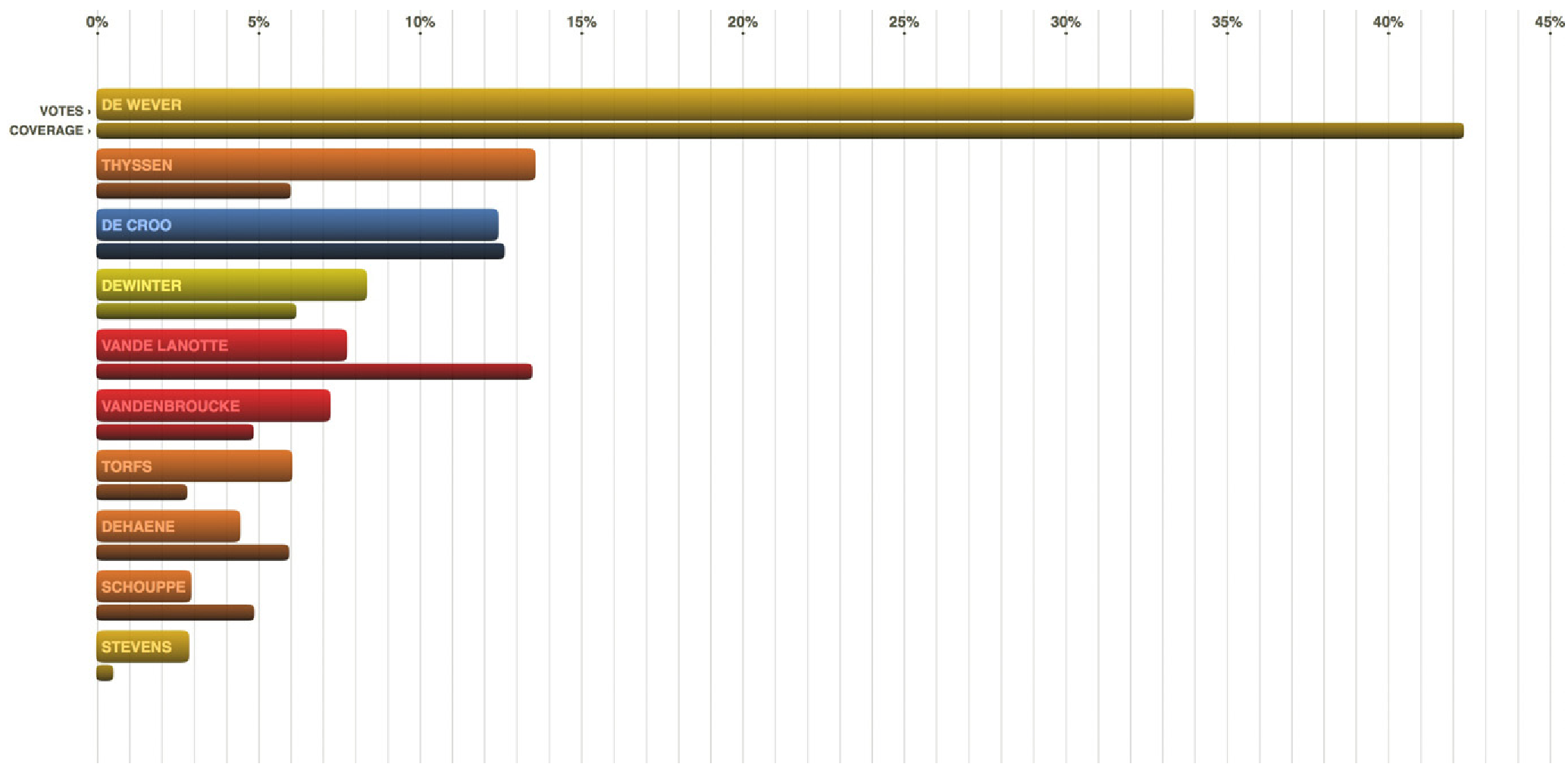
2. **Coverage Bias**: The discrepancy between a party's electoral weight and its physical presence in the news.
3. **Statement Bias**: The positive or negative tone associated with an entity.
The system uses a **subjectivity lexicon** of over 3,000 Dutch adjectives. Unlike simple word-counting, this system identifies "targets" using a proximity window, ensuring that the sentiment is accurately linked to the specific politician or party mentioned.
## Key Insights: The "Quarantine" and "No News is Good News"
The results provide striking evidence of systemic media behavior:
### 1. The Marginalized vs. The Mainstream
The study found a massive negative bias against the far-right *Vlaams Belang (VB)*. Despite their electoral share, they were systematically under-reported (Gatekeeping) and spoken of with the most negative sentiment (Statement Bias). Conversely, the *CD&V* party, which led the interim government, enjoyed a "coverage bonus," appearing far more frequently than their election results would predict.
### 2. The Celebrity Politician Effect
Interestingly, the bias toward an individual politician often diverges from their party. For example, Bart De Wever (N-VA) maintained a high distinct coverage profile that did not always correlate with the sentiment or coverage level of his party as a whole.
### 3. Chronological Sentiment Peaks
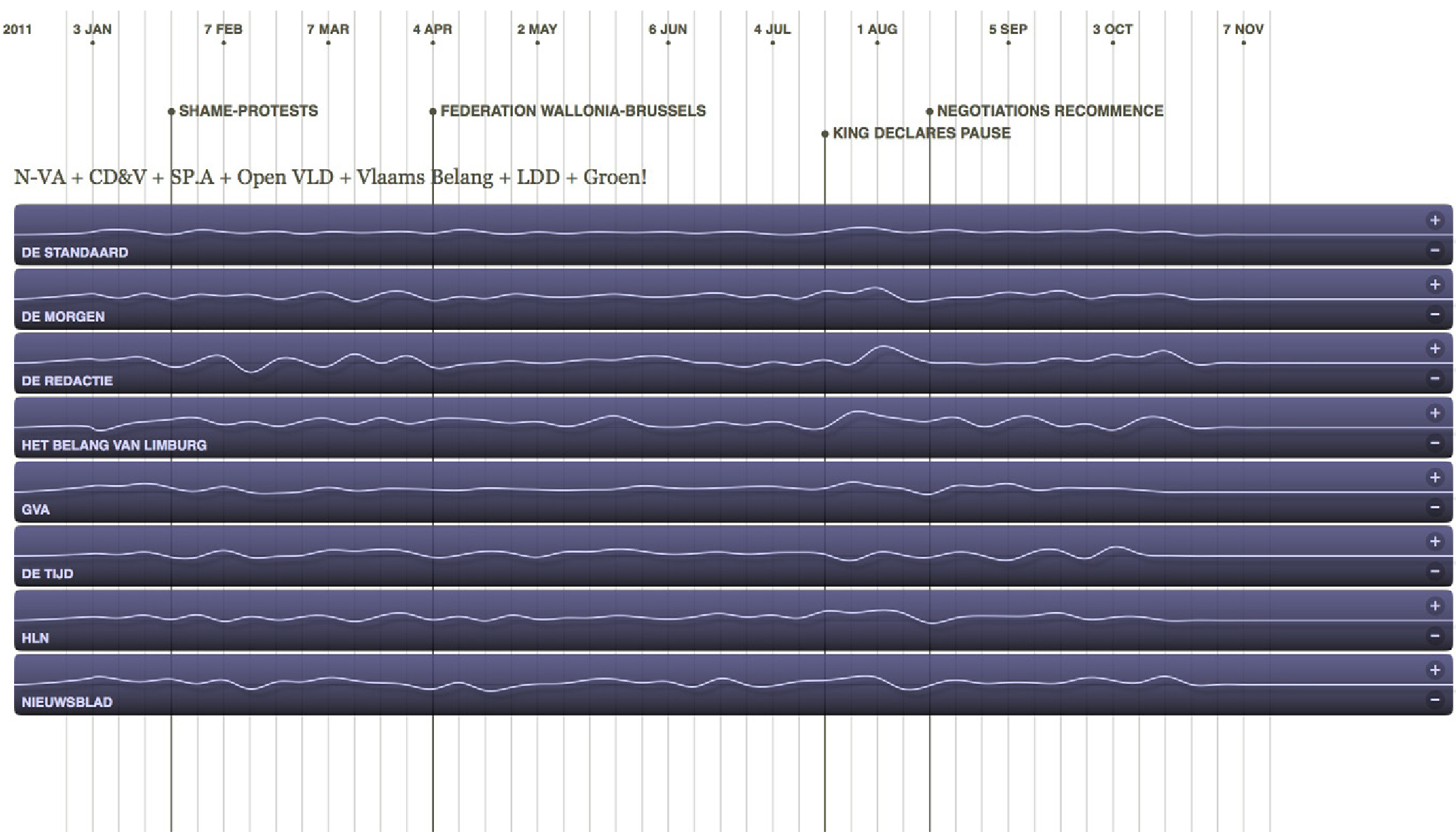
One of the most fascinating findings is the evolution of sentiment over time. When negotiations were active, sentiment was generally lower (more critical). However, during the July-August leave—when politicians stopped talking—news sentiment peaked. This suggests that in a polarized crisis, the mere absence of political friction is reported as "positive" news.
## Critical Analysis & Conclusion
This work sets a methodological precedent for **Computational Political Science**. By using the 2010 Chamber and Senate election results as a "Golden Standard," the authors provide a rare, quantifiable definition of "fairness" in media.
**Limitations**: The study relies on a lexicon-based approach, which struggles with sarcasm or complex political irony. Furthermore, a "negative" sentiment associated with a party might be due to the party's own aggressive rhetoric rather than the journalist's bias.
**Future Outlook**: As we move toward 2026, integrating Transformer-based models (like BERT or GPT-4) into this framework could further refine the distinction between "negative reporting" and "reporting on negative events," providing an even deeper look into the mechanics of political opinion formation.
---
*Reference: de Fortuny, E. J., et al. (2012). Media coverage in times of political crisis: A text mining approach. Expert Systems with Applications.*