
Beyond "A implies B": Unlocking Medical Insights with Negative Association Rules
Analysis of medical and healthcare data based on positive and negative association rules
This paper introduces an integrated data mining approach using the 2LMS FP algorithm and PNARC model to extract both positive and negative association rules from a 3.56GB healthcare dataset. It successfully identifies hidden correlations between diseases (e.g., Pneumonia and Coronary Heart Disease) and medicines, achieving high confidence levels in rule discovery.
TL;DR
In the world of medical data, knowing what won't happen is often as critical as knowing what will. This paper presents a robust framework using the 2LMS FP algorithm and PNARC model to mine both positive and negative association rules from over 3GB of real-world hospital data. By analyzing these "dual-sided" rules, the researchers uncovered hidden links between diseases like pneumonia and heart disease, while also identifying drug combinations that should be avoided.
Context: Why "Positive Only" Rules Are Not Enough
Most data mining in healthcare focuses on positive associations: "If a patient has symptom X, they likely have disease Y." However, medical reality is more complex. A specific symptom might explicitly exclude a certain diagnosis, or a specific drug might prevent another from working. Ignoring these negative association rules leads to a significant loss of information.
The challenge lies in the data itself. Medical records are notoriously "poor" despite being voluminous—they are fragmented, redundant, and heterogeneous. Traditional algorithms like Apriori fail under the weight of such large-scale, messy data.
Methodology: The 2LMS FP + PNARC Engine
To tackle the complexity of 3.56GB of hospital records, the authors moved away from candidate-heavy algorithms toward the FP-Growth (Frequent Pattern Growth) strategy.
1. Scaling with 2LMS FP
The algorithm employs a frequent pattern tree (FP-Tree) structure, which only requires two passes over the database. By using a 2-Level Minimum Support (2LMS) approach, the system can more flexibly identify items that are frequent enough to be meaningful but not so common that they drown out specific medical nuances.
2. Resolving Contradictions with PNARC
Mining negative rules introduces the risk of "logic collisions" (e.g., a system suggesting both and ). The PNARC model uses correlation tests to delete these contradictions, ensuring that the final rule set is statistically sound and medically relevant.
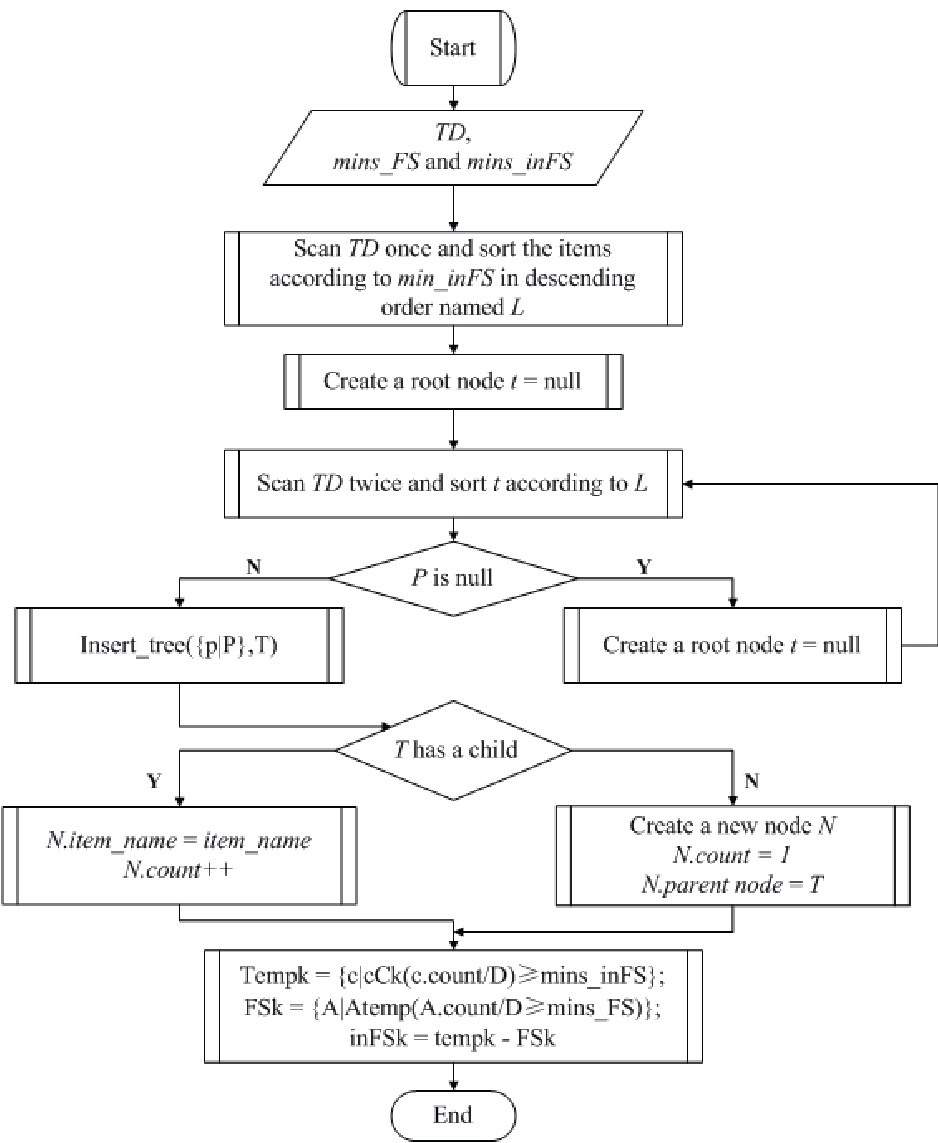 Fig 1: The 2LMS FP implementation workflow, showcasing the transition from raw data to refined rules.
Key Findings: Medical Truths Hidden in Data
The results provided a fascinating split between expected correlations and unexpected medical insights.
Disease Associations
- The Pneumonia-Heart Link: The rule
S6 (Pneumonia) => S5 (Coronary Heart Disease)showed a 54.66% confidence. While pneumonia doesn't "cause" heart disease, medical literature confirms that heart disease patients are highly susceptible to certain infections that lead to pneumonia—a critical diagnostic reminder for clinicians. - Debunking Myths: The negative rule
S7 (Disc Herniation) => ¬S8 (Stroke)(78.56% confidence) suggests that patients with cervical issues are statistically unlikely to have strokes based on those symptoms alone. This helps doctors avoid ordering redundant, expensive neurological scans.
Medicine Management
- Harmful Interactions: The system flagged
WM072 (Ibuprofen) => ¬(WM049, WM071)with 77.69% confidence. This indicates that Ibuprofen negatively interacts with certain antihypertensive drugs, reducing their effectiveness—a vital insight for patient safety.
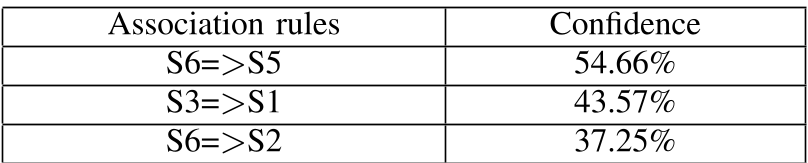 Table 1: High-confidence positive rules discovered between different disease categories.
Critical Analysis & Future Outlook
The core value of this work is its Inductive Bias toward comprehensive modeling. By treating "absence" as a feature, the researchers provide a more holistic view of the patient journey.
Limitations: The paper notes that continuous data (like exact age or blood pressure fluctuations) had to be discretized into "bins" (e.g., Age A1, A2, A3) to fit the support-confidence framework. This process can sometimes lead to "edge cases" being lost.
The Future: As AI moves toward more explainable models, association rules offer a "white-box" alternative to deep learning. Integrating these rules into real-time Electronic Health Records (EHR) could provide doctors with automated "red-flag" warnings for drug interactions and "green-flag" confirmations to avoid unnecessary tests.
Conclusion
This research proves that "negative" doesn't mean "bad" in data science. By mining what doesn't occur, healthcare systems can become more efficient, cost-effective, and, most importantly, safer for patients.