
Medical Monkeys: Gamifying the Future of Medical Big Data
Medical Monkeys: A Crowdsourcing Approach to Medical Big Data
This paper introduces "Medical Monkeys," a crowdsourcing web application designed to generate high-quality labeled medical big data for MRI and CT image segmentation. By integrating gamification and a free innovation model, the platform leverages e-communities to perform complex data annotation tasks typically reserved for experts.
TL;DR
"Medical Monkeys" is a web-based ecosystem that tackles the "bottleneck" of medical AI: the lack of labeled data. By turning MRI and CT scan segmentation into a competitive game for non-experts and students, the project creates a "Free Innovation" model that provides researchers with the massive datasets needed to train SOTA Machine Learning models for clinical decision support.
The Data Scarcity Problem in eHealth
In the world of AI, data is the new oil, but medical data is locked behind a vault of privacy regulations and the extreme cost of expert time. While we have millions of labeled images of cats and dogs, we lack sufficient labeled MRIs because:
- Privacy Barriers: Legal and ethical constraints make sharing medical records difficult.
- Annotation Fatigue: Radiologists are too busy and expensive to label thousands of images for training algorithms.
- Complexity: Unlike identifying a "stop sign," segmenting an organ in a 3D CT scan requires high precision and domain knowledge.
Methodology: The "Mutual Advantage" Ecosystem
The researchers developed a multi-actor framework designed to satisfy three distinct groups:
- Image Donors: Patients donate their medical images and gain access to all research results derived from their data (Open Access).
- Solver Gamers: Through a gamified 3D interface, users (students or online gamers) provide segmentation labels. They are motivated by high scores, level progression, and social media sharing.
- Researchers: They analyze the crowd-generated data, filter out "noise" from low-performing players, and build the "Ground Truth" for ML training.
Scalable Architecture
To handle "Medical Big Data," the platform employs a Hadoop Distributed File System (HDFS) using WebHDFS for interaction. This ensures the system is fault-tolerant and capable of processing large-scale imagery.
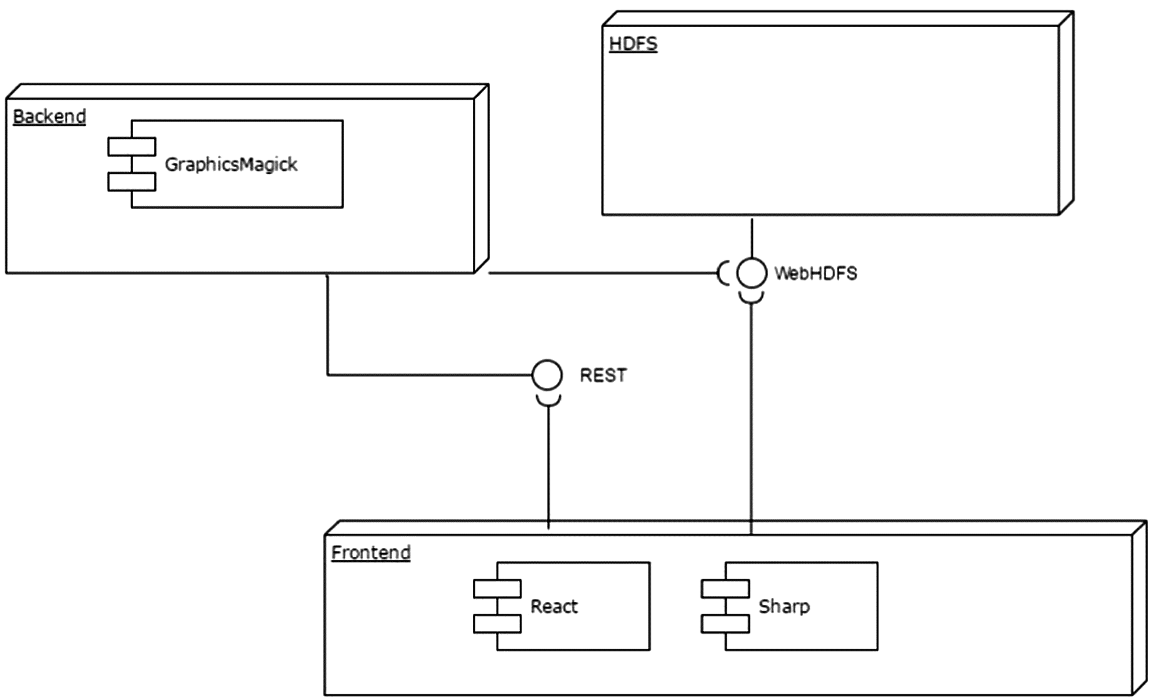 Figure 1: The components and utilized interfaces (REST/WebHDFS) for the distributed file system.
Turning Games into Science
A key insight of this paper is that masses of non-experts can reach professional accuracy. By structuring the game into levels of increasing difficulty and using statistical methods to aggregate multiple user inputs, the system effectively cancels out individual human errors.
The workflow involves:
- Image Tiling: Splitting images into smaller tiles for faster web processing.
- Scoring Mechanisms: Gamers play against existing automatic algorithms to set benchmarks.
- Statistical Filtering: Identifying and ignoring "anomalous" player behavior to ensure data integrity.
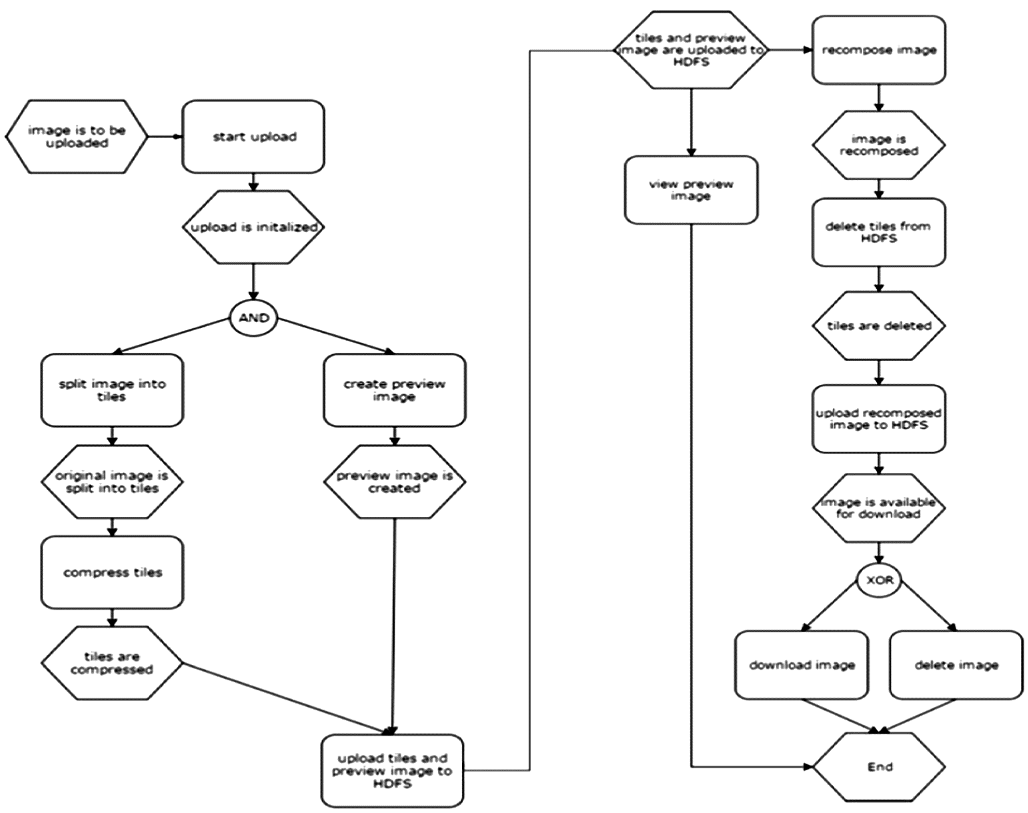 Figure 2: Local application flowchart illustrating the administration and storage of medical images.
Critical Insight & Conclusion
The true value of Medical Monkeys lies in its shift toward Free Innovation. By moving away from proprietary, siloed datasets, it allows the academic community to reclaim a strategic role in the Big Data era.
Takeaway: Innovation in medical AI is often less about the algorithm and more about the data pipeline. By lowering the barrier to participation through gamification, we can transform the public's free time into a vital resource for global health.
Future Work: The team is focused on improving the 3D gaming interface and expanding multi-institutional competitions to further scale data collection.