
Melanin: The Hidden Corrosive Agent in Our Fuel Tanks
The role of a melanin-like polymer in carbon steel corrosion by Amorphotheca resinae
This study investigates the role of the diesel fungus Amorphotheca resinae in carbon steel corrosion, specifically identifying a "melanin-like" polymer as a key corrosive agent. By employing CRISPR/Cas9 genome editing to create melanin-deficient and constitutive-producing strains, the researchers demonstrated that while fungal biofilms can provide bioprotection against localized corrosion in biodiesel, secreted melanin actively accelerates uniform corrosion.
TL;DR
Researchers have pinpointed a surprising culprit in the degradation of fuel infrastructure: melanin. Using CRISPR/Cas9 to "silence" the pigments in the diesel fungus Amorphotheca resinae, the study reveals that while fungal biofilms can sometimes protect steel from localized pitting, the secretion of melanin-like polymers acts as a potent catalyst for uniform corrosion, doubling the rate of metal loss in certain conditions.
Background: The Fungal Fuel Crisis
The shift toward biodiesel (FAME) was a win for renewable energy but a nightmare for storage infrastructure. Biodiesel is "thirstier" (higher moisture content) and "breathier" (higher oxygen solubility) than conventional diesel, creating a perfect petri dish for the "kerosene fungus," Amorphotheca resinae. Historically, it was unclear if these fungi were actively "eating" the steel or if their presence was a mere coincidence. This paper moves beyond observation into mechanistic proof.
The Problem: Bioprotection or Biodeterioration?
The scientific community has long debated whether microbial biofilms are "good" or "bad" for steel. Some argue that biofilms act as a physical barrier (bioprotection), while others point to Microbiologically Influenced Corrosion (MIC). The authors noticed that A. resinae only produced a dark, brown pigment (melanin) when in contact with carbon steel and glucose. This led to a critical hypothesis: Is the pigment itself the weapon?
Methodology: Engineering the Fungus
To isolate the effect of melanin, the team did more than just grow fungi; they re-wrote their DNA. Using CRISPR/Cas9, they targeted the melanin biosynthetic pathway (DHN pathway):
- / : Mutant strains that cannot produce melanin (appearing white).
- CE::pks1: A "melanin factory" strain that overproduces the pigment.
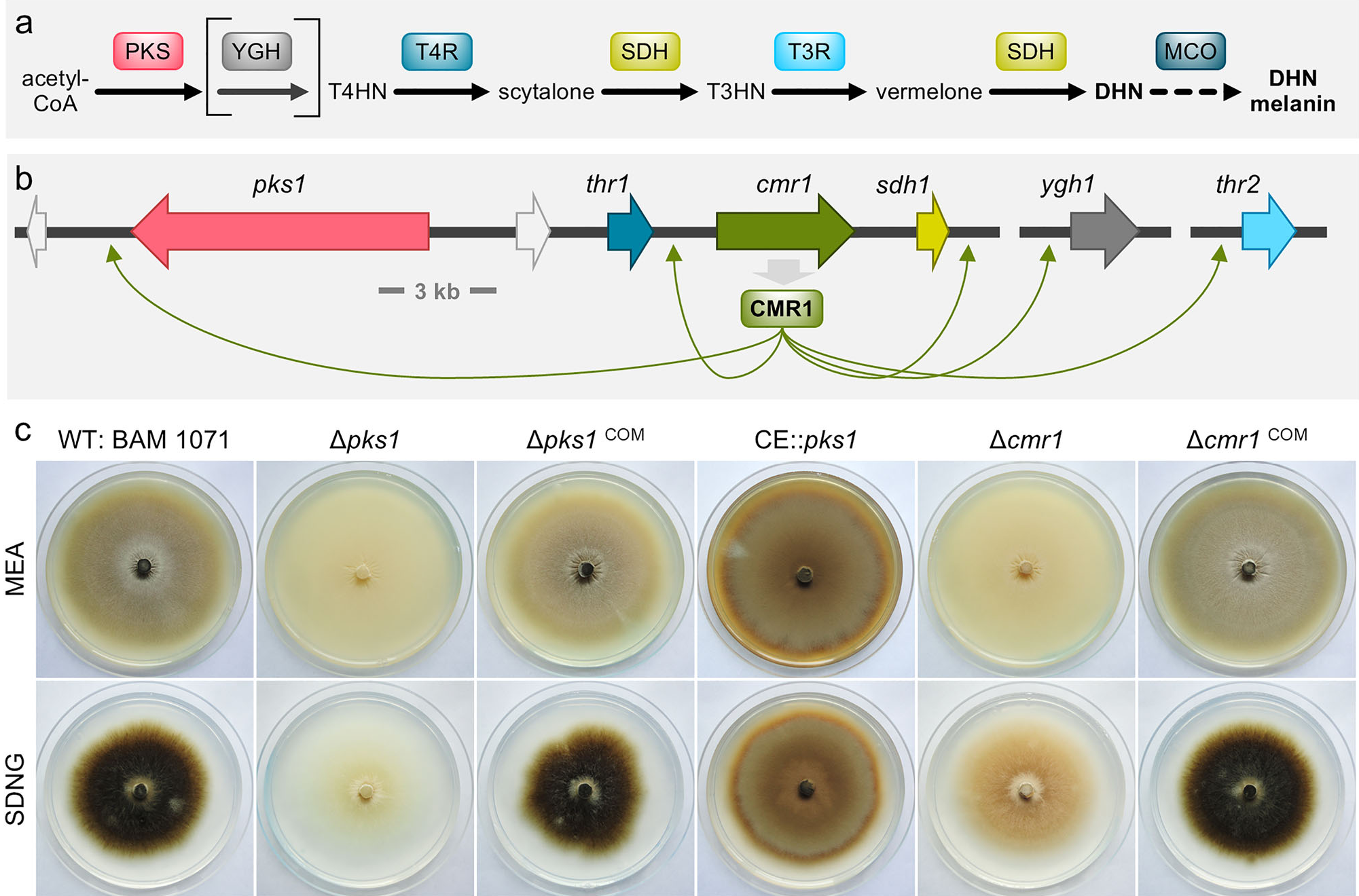 Figure 1: The DHN melanin pathway and the genomic strategy used to delete or overexpress key enzymes like Polyketide Synthase (PKS).
Results: The Dual Face of A. Resinae
The experiments yielded a fascinating paradox:
- Uniform Corrosion (The Melanin Effect): In glucose-based media, the secretion of melanin-like polymers significantly increased weight loss. Abiotic tests confirmed that simply adding purified melanin to a sterile environment could increase corrosion by 102%.
- Localized Corrosion (The Biofilm Shield): In biodiesel, the results flipped. The abiotic control suffered from severe pitting (localized corrosion) due to the oxygen-rich water-biodiesel interface. However, the fungal biofilm actually reduced this pitting. The hyphal network created an anoxic (oxygen-free) microenvironment and immobilized protective minerals like vivianite.
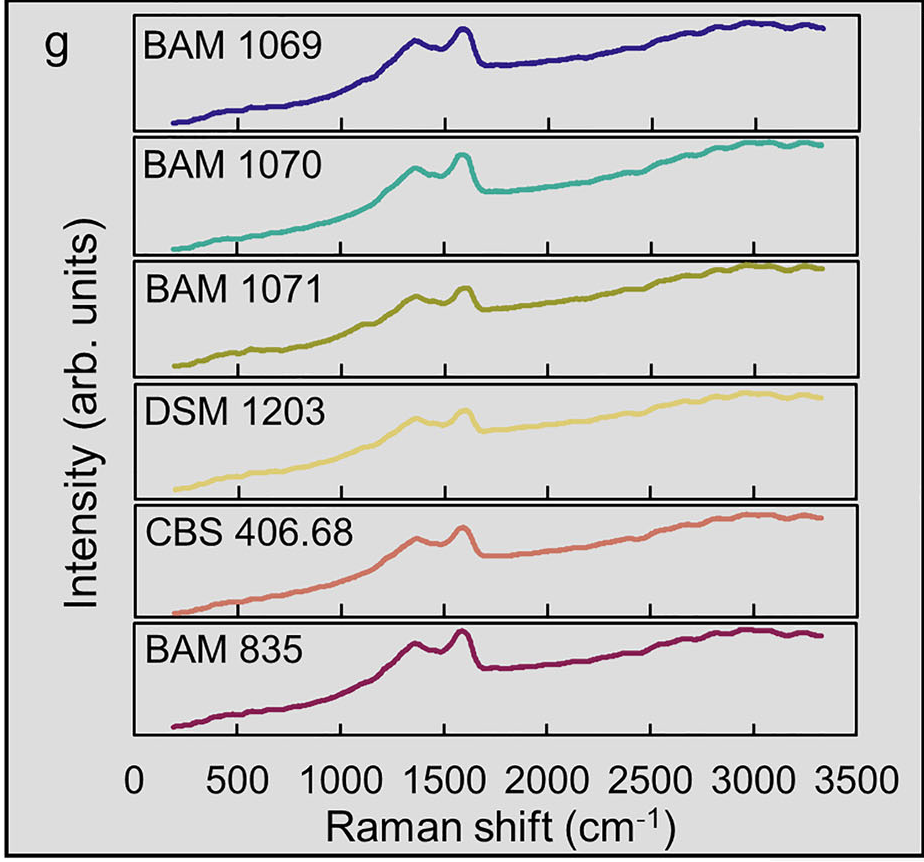 Figure 2: Comparison of biomass, pH, and corrosion rates across different isolates. Note the "acid precipitate" (melanin) only appearing in the presence of steel.
Why is Melanin Corrosive? (The Physical Intuition)
Melanin isn't just a dye; it’s a redox-active polymer. The study suggests three mechanisms:
- Electron Shuttling: Melanin can accept electrons from the steel (acting as a cathode).
- Iron Reduction: It can reduce ferric iron () back to ferrous iron (), preventing the formation of a protective "passive" rust layer.
- Adsorption: It binds to iron ions, effectively "pulling" metal away from the surface and preventing the saturation that would normally slow down corrosion.
Deep Insight: A Complex Tug-of-War
The most profound takeaway is that fungal corrosion is not a single process. As depicted in the authors' final model, the fungus is engaged in a tug-of-war. Its biofilm tries to protect the steel by blocking oxygen, while its melanin (either in the cell wall or secreted) tries to exploit the steel for redox reactions.
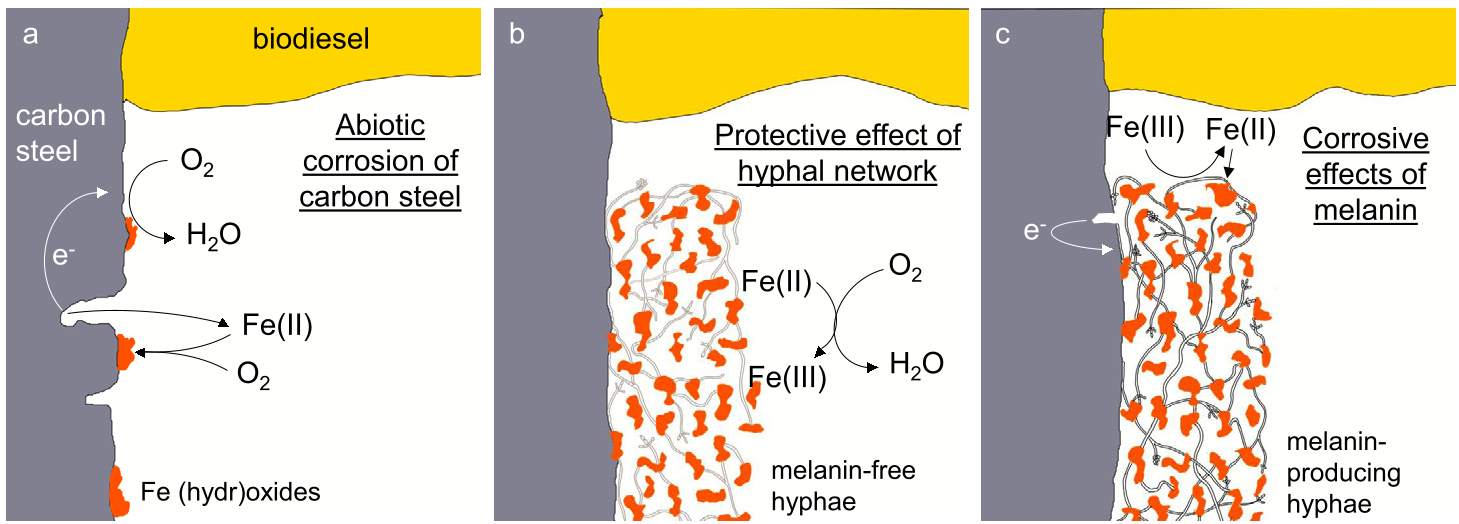 Figure 3: Graphical summary showing how melanin-free fungi inhibit localized corrosion via biofilms, while melanin-producing strains accelerate metal loss through redox interaction.
Conclusion
This research proves that the "color" of a fungal contamination matters. The presence of dark pigments like melanin in a fuel tank isn't just a sign of growth; it is a chemical signature of active infrastructure destruction. For the industry, this underscores the need for biocides that not only kill the fungus but specifically inhibit the metabolic pathways that produce these corrosive biopolymers.
Takeaway for Future Research: The use of CRISPR/Cas9 here sets a new gold standard for FIC studies—moving from "who is there" (metagenomics) to "how does it work" (functional genetics).