
MELODY: Synchronizing Incentives with the Rhythm of Worker Expertise
MELODY: A Long-Term Dynamic Quality-Aware Incentive Mechanism for Crowdsourcing
This paper proposes MELODY, a long-term dynamic quality-aware incentive mechanism for crowdsourcing. It combines a greedy approximation algorithm for task allocation based on reverse auctions with a Linear Dynamical System (LDS) framework for tracking and predicting workers' time-varying expertise.
TL;DR
Static models of human reliability are failing modern crowdsourcing platforms. MELODY introduces a dynamic framework that treats worker quality as a "living" variable. By combining Linear Dynamical Systems (LDS) for quality tracking and a Greedy Reverse Auction for task allocation, it achieves significant gains in requester utility (+46.6%) while ensuring workers stay honest over the long haul.
The "Static Quality" Fallacy
In the world of Amazon Mechanical Turk (AMT), most incentive mechanisms operate under a "snapshot" assumption: they either look at a worker's performance in a single vacuum (Over-fitting) or assume their skill level is a fixed number drawn from a distribution (Under-fitting).
The reality is much more fluid. Human performance has a "melody"—it rises as workers learn, declines with fatigue, and fluctuates with external distractions. Ignoring these temporal characteristics leads to sub-optimal task allocation and wasted budgets.
Methodology: High-Fidelity Quality Tracking
The core innovation of MELODY lies in its two-pronged architecture:
1. Latent Quality Inference (The LDS Engine)
Instead of measuring quality directly (which is noisy), MELODY models it as a latent variable that evolves over time.
- Transition Density: Models how quality shifts from one run to the next (e.g., skill growth).
- Emission Density: Models the probability of seeing a specific score given the latent quality.
By applying Expectation-Maximization (EM), the platform can "learn" the unique expertise trajectory of every worker, allowing for much more accurate predictions of future performance.
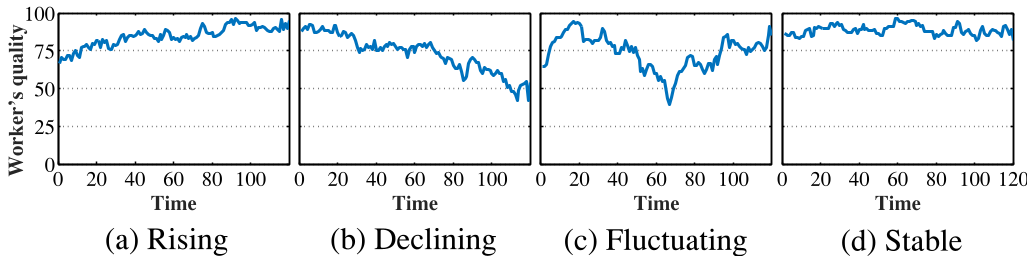 Figure 1: Comparison of MELODY's properties against other popular incentive mechanisms.
2. Truthful Reverse Auction
Allocation is treated as a reverse auction where workers bid their costs () and availability (). The platform runs a greedy algorithm that prioritizes workers based on their "estimated quality-to-cost" ratio. Crucially, the payment rule is designed to ensure:
- Short-term Truthfulness: Workers maximize utility by bidding their true costs.
- Long-term Truthfulness: Workers cannot game the system by under-performing or over-bidding to manipulate future quality estimates.
Experimental Results: Proving the Advantage
MELODY was tested against benchmarks like RANDOM, STATIC, and Maximum Likelihood (ML) models.
- Requester Utility: Under a limited budget, MELODY consistently satisfies more tasks by choosing the right workers at the right time.
- Estimation Accuracy: By accounting for temporal trends, MELODY reduces estimation error by up to 24.2% compared to static baselines.
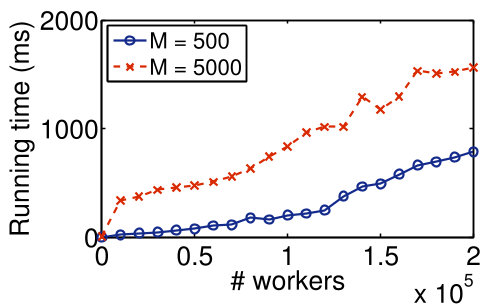 Figure 2: Average estimation error and requester utility per run, demonstrating MELODY's long-term superiority.
Critical Insight: Why it Works
The success of MELODY isn't just in the math—it's in the Inductive Bias. By assuming that a worker's quality at time t is related to time t-1, the model filters out "accidentally abnormal performance" (noise) while capturing genuine "leveling up" (trends).
Limitations & Future Outlook
While MELODY is computationally efficient ( complexity), its current form assumes tasks are homogeneous. In complex environments, we might see workers who excel at image labeling but fail at proofreading. Future iterations should explore Multi-task LDS models where quality is a vector rather than a scalar.
Conclusion
MELODY proves that for crowdsourcing to be efficient, the platform must be as dynamic as the humans it employs. By bridging the gap between control theory (LDS) and algorithmic game theory (truthful auctions), it sets a new SOTA for long-term crowd management.