
Towards Meningitis Ontology: Engineering Semantic Bridges for Epidemic Surveillance
Towards Meningitis Ontology for the Annotation of Text Corpora
This paper introduces a specialized methodology for developing a Meningitis Ontology designed to facilitate automated data extraction and event annotation from social media text corpora. Built as an extension of the Infectious Disease Ontology (IDO), it leverages the NeOn methodology and the NCBO Annotator to integrate medical knowledge for real-time epidemiological surveillance.
TL;DR
Public health surveillance in West Africa faces a critical "data lag" during meningitis outbreaks. This paper presents a rigorous methodology to build a Meningitis Ontology by combining the NeOn engineering framework with automated text corpus annotation. The goal is to turn social media "noise" into structured data for qualitative epidemic simulations, specifically extending the standard Infectious Disease Ontology (IDO).
The Motivation: Why an Ontology for Meningitis?
Meningitis remains a localized catastrophe in Africa. Early detection is a race against time. While social media provides a wealth of real-time "signals," these signals are unstructured and semantically ambiguous.
Traditional surveillance systems often miss the first cases due to a lack of shared vocabulary and formal models. The authors argue that an ontology—a formal, explicit specification of a shared conceptualization—is the necessary "missing link" to identify relevant corpora and extract data points (risk factors, symptoms, locations) automatically.
Methodology: The NeOn Fusion
Rather than building from scratch, the authors adopt the NeOn Methodology, known for its flexibility in handling "networked" ontologies. Their custom 5-step workflow includes:
- Specification (Scenario 1): Defining the scope with experts.
- Corpus-Based Annotation: Using the NCBO Annotator to scan 500+ INSERM articles, identifying which existing biomedical ontologies already cover meningitis-related terms.
- Reuse (Scenario 3): Pulling relevant concepts from the Bioportal repository.
- Alignment & Fusion (Scenario 5): Merging these resources into a cohesive model.
- Design Patterns (Scenario 7): Ensuring the architecture follows best practices for modularity.
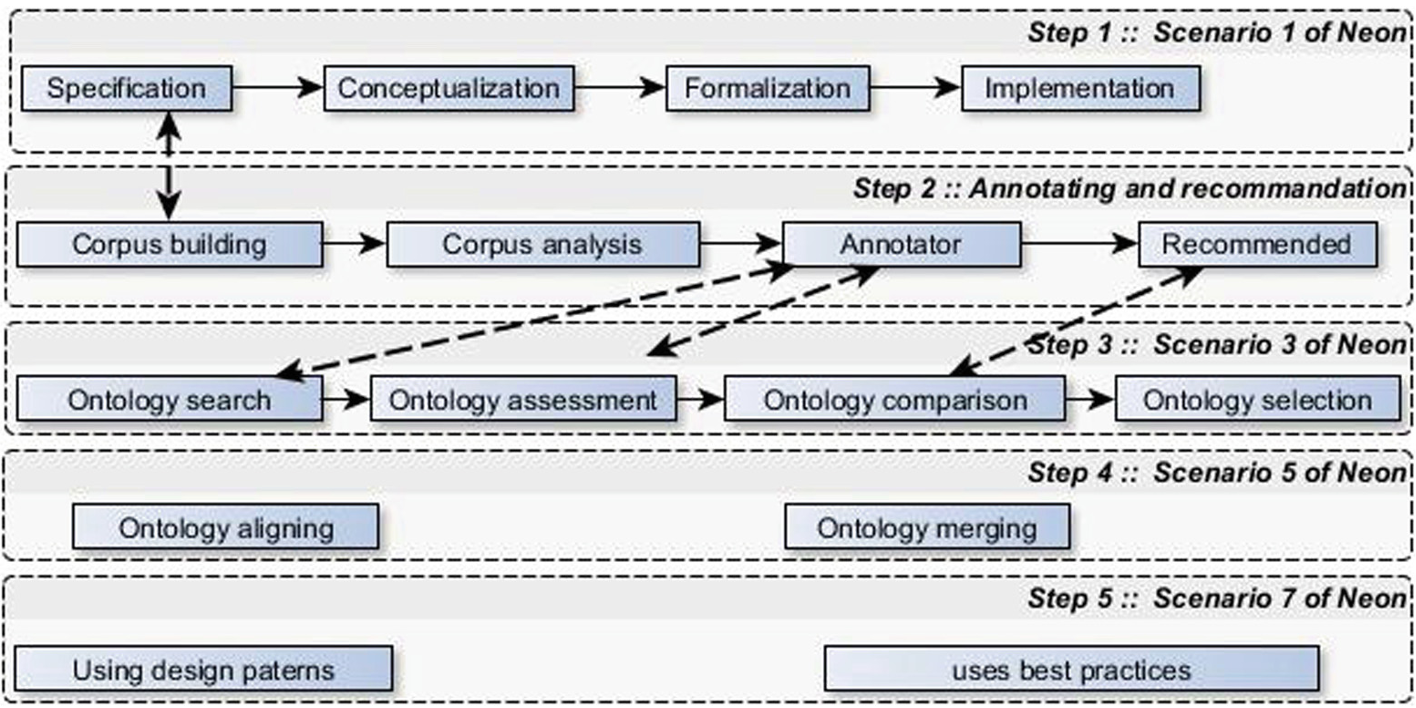 Fig 1. The 5-step methodological approach adapted from NeOn scenarios.
Core Modules: From Biology to Infection
The paper details two critical conceptual models that form the backbone of the ontology:
1. The Biology of the Pathogen
The model precisely maps the serological typing of Neisseria meningitidis. It accounts for the six major fatal serogroups (A, B, C, W-135, X, Y), ensuring that the system can distinguish between different bacterial strains mentioned in clinical reports.
2. Transmission and Acquisition
The ontology formalizes the path of infection—from the inhalation of droplets to the colonization of the nasopharyngeal mucosa and the crossing of the blood-brain barrier (BBB). This semantic mapping allows the simulation platform to "understand" the biological progression of the disease.
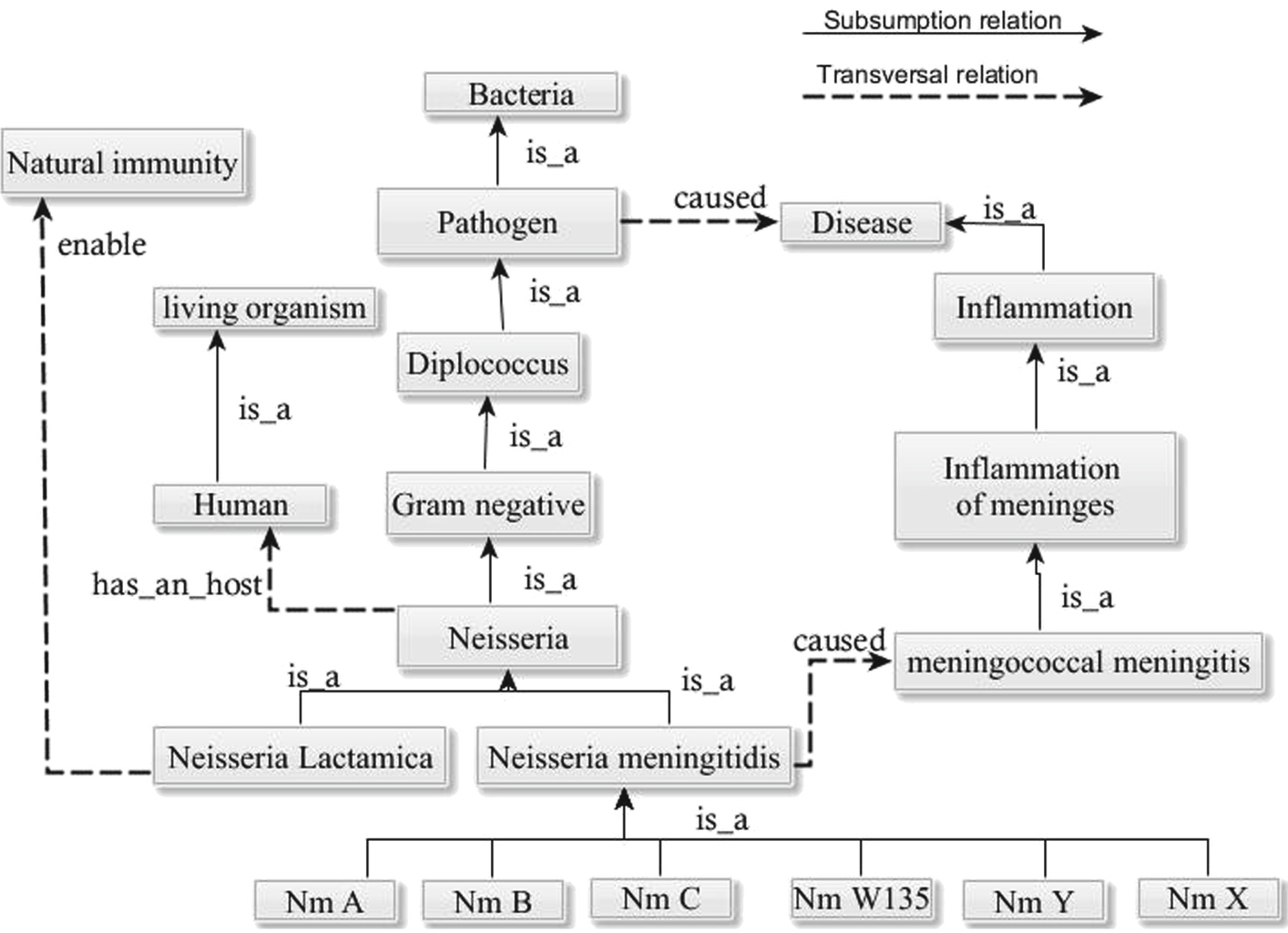 Fig 2. Conceptual model of Meningococcus biology and its classification.
SOTA and Insights
Compared to generic medical ontologies, this work stands out by its modular application focus. It doesn't just describe the disease; it is built specifically to support text annotation tools. By leveraging the OBO Foundry principles, the authors ensure that their Meningitis Ontology is interoperable with the broader ecosystem of biomedical research, while remaining lightweight enough for real-time social media processing.
Critical Analysis & Future Outlook
While the methodology is robust, the paper currently focuses on the conceptual modeling phase. The ultimate success of this project hinges on two factors:
- Validation: How well the formal model aligns with the "natural language" used by laypeople on social media (which often differs from clinical literature).
- Social Media Noise: Future work must address how the ontology handles slang, misspellings, and metaphors in social media text—a common challenge in digital epidemiology.
In conclusion, this research provides a vital blueprint for localized medical ontologies. By turning the NeOn methodology into a practical pipeline, the authors have moved one step closer to a real-time, AI-driven surveillance system for one of Africa’s most pressing health challenges.