
MeSoOnTV: Bridging the Gap Between Traditional TV and Social Media via Knowledge Graphs
MeSoOnTV: a media and social-driven ontology-based TV knowledge management system
MeSoOnTV is an ontology-based knowledge management system designed to integrate heterogeneous media and social data. It leverages a Knowledge Graph to unify broadcaster archives, social media interactions (Twitter, YouTube), and domain concepts to enhance Social TV analysis.
TL;DR
The MeSoOnTV system introduces a sophisticated framework for integrating the "Culture of TV" with the "Culture of the Web." By utilizing a multi-layered Knowledge Graph, it unifies heterogeneous data from YouTube, Twitter, and professional broadcasters, allowing for deep, cross-domain analysis of social sentiment and content relevance during live events.
Context: Beyond Simple Web Scraping
In the early internet era, web content was primarily static and textual. Today, it is multimedial, social, and dynamic. The challenge isn't just gathering data; it's understanding the implicit links between a video posted on YouTube, a trending hashtag on Twitter, and a live segment on a television broadcast.
The authors argue that simply using data mining on isolated sources is insufficient because the perception of events changes over time. We need a system that models the evolution of concepts and user interactions in a unified semantic space.
Methodology: The MeSoOnTV Architecture
The core of the system is a Knowledge Graph (), which categorizes the world into three types of nodes:
- Subjects: The users who act (e.g., a Twitter user).
- Social Objects: The results of public acts (e.g., a tweet, a video comment).
- Concepts: The ideal objects referred to (e.g., a politician, an emotion, or a specific time).
The Pipeline
The framework operates across three distinct layers:
- Source Processing Layer: Extractors pull data from Twitter (using hashtags/usernames) and YouTube (using keywords/dates). It uses Freeling for POS tagging and Wikipedia for Named Entity Disambiguation.
- Knowledge Graph Layer: A Neo4j-backed graph that establishes relationships between the extracted nodes (Support, Representation, and Structural edges).
- Query & Analysis Layer: A REST API that allows for data mining, such as co-clustering to find patterns across different social platforms.
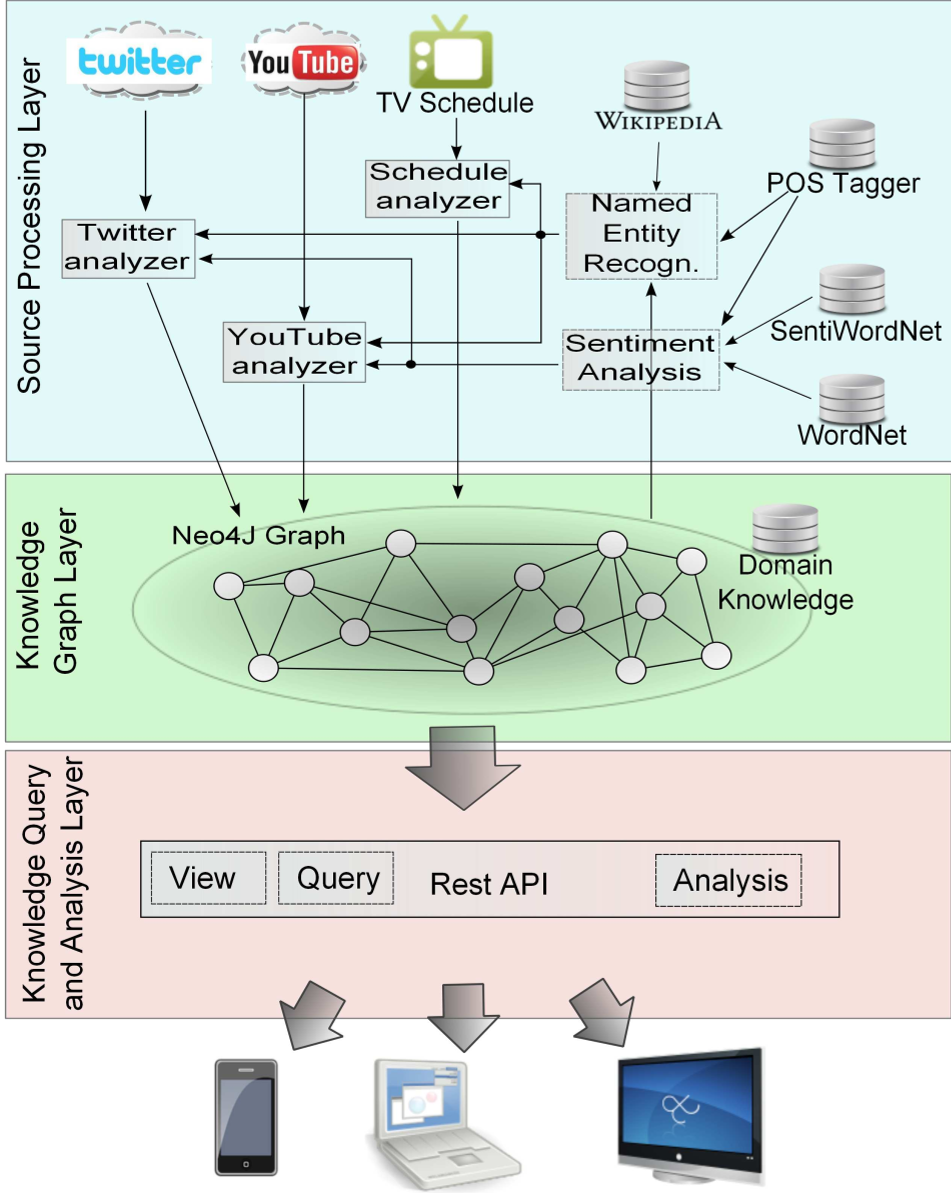 Figure 1: The MeSoOnTV integration framework showing the flow from social sources to the analyzed Knowledge Graph.
Real-World Case Study: Italian Politics
The researchers tested the system on the Italian talk show Ballarò during a critical political period in 2012.
- The Problem: How do you connect a YouTube video of a satire segment to the chaotic conversation on Twitter?
- The Solution: By mapping both to common "Concept" nodes in the graph.
- The Result: Using a co-clustering algorithm, the system identified clusters where specific political movements (like M5S) were strongly associated with specific viral videos, even if the videos weren't directly linked in the original metadata.
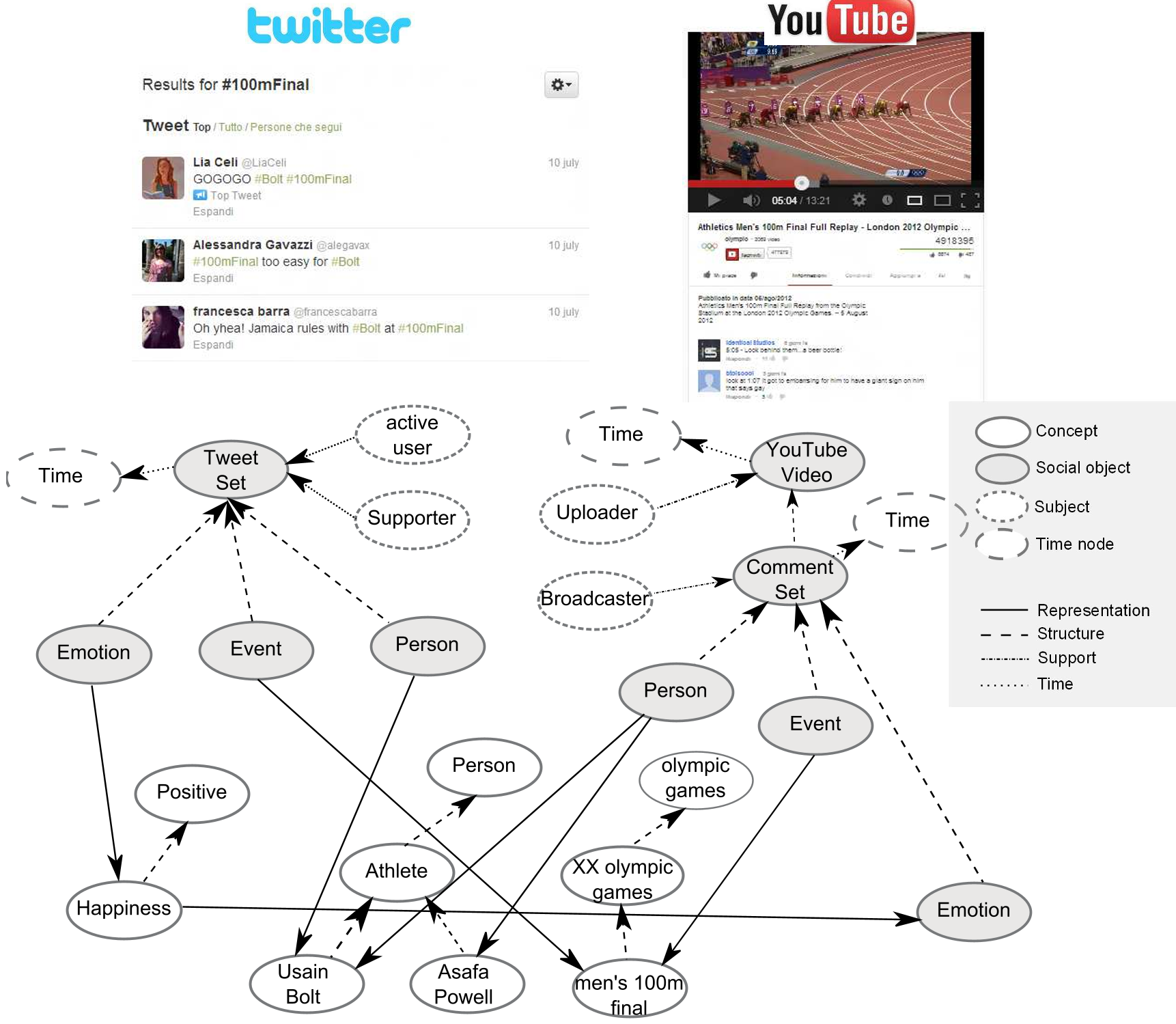 Figure 2: An instance of the Knowledge Graph showing how Concept nodes (center) bridge Twitter subjects and YouTube social objects.
Critical Insight & Results
The power of MeSoOnTV lies in its ability to generate a Hashtags × Videos matrix. By calculating the number of shared concepts (), the system can recommend content across platforms. For instance, the analysis correctly associated videos of satirist Maurizio Crozza with hashtags from other competing political shows like Servizio Pubblico, revealing how audiences cross-pollinate discussions between different TV programs.
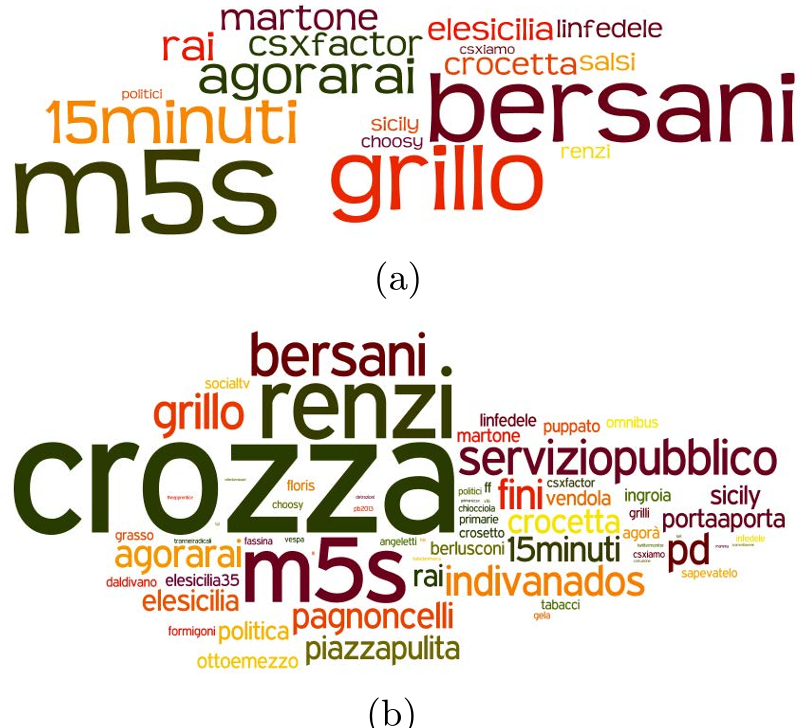 Figure 3: Semantic "Tag Clouds" generated from clustered hashtags, proving the system's ability to identify thematic groups like the 2012 Sicilian elections.
Conclusion & Future Outlook
MeSoOnTV represents a significant step toward "Social TV." By treating social interactions as first-class citizens in a Knowledge Graph, broadcasters can move beyond simple "View Counts" and into the realm of Social Intelligence.
Limitations: While robust, the system relies heavily on Wikipedia for disambiguation, which may lag during incredibly fast-breaking news compared to modern LLM-based approaches. However, its structured nature offers a level of explainability that "black-box" AI models often lack.
Takeaway: For researchers in Information Retrieval and Media, the value of MeSoOnTV is its blueprint for a unified, time-sensitive knowledge base that respects the context of both the producer (Broadcaster) and the consumer (Social User).