
Eliminating the Echo: Smarter Content Dissemination in Dense Mobile Social Networks
Message Duplication Reduction in Dense Mobile Social Networks
The paper introduces a message duplication reduction algorithm for Dense Mobile Social Networks (MSNs), leveraging the predictability of human movement. It models content dissemination as an on-line graph problem and utilizes a spanning tree/star-based approach to eliminate redundant transmissions while maintaining delivery constraints.
TL;DR
In high-density Mobile Social Networks (MSNs), current protocols are drowning in their own success—up to 94% of network traffic consists of redundant duplicates. This paper presents a novel graph-based algorithm that leverages the predictability of human routines to "prune" redundant message paths. By coordinating relay nodes based on their future encounter times, the authors achieved up to a 71.8% reduction in duplication without compromising delivery speed.
The Motivation: The High Cost of "Just in Case"
Mobile Social Networks (MSNs) are a specialized breed of Delay Tolerant Networks (DTNs). Because connections are intermittent, the standard "best practice" has been Replication-based Routing. To ensure a message gets from point A to point B, the network creates dozens of copies, hoping one finds a path.
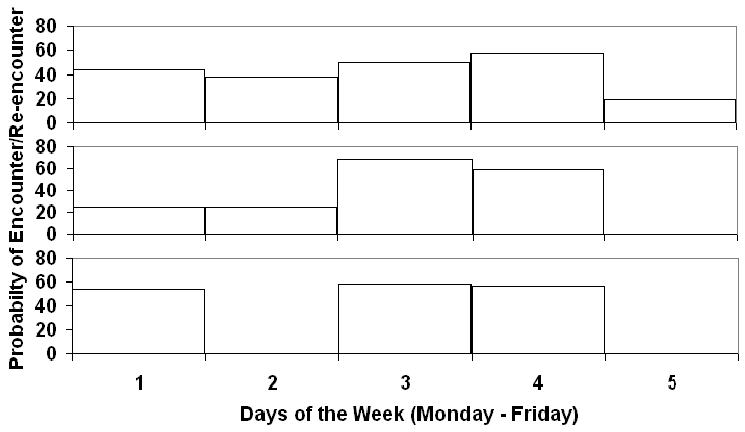
However, in a dense urban environment, this leads to a "broadcast storm." Most of these copies eventually reach the same destination, wasting precious battery life and bandwidth. The researchers identified a critical insight: human movement isn't random. If we know when we will meet someone, we can decide who should carry the message and who should drop it.
Methodology: Spanning Trees and Future Appointments
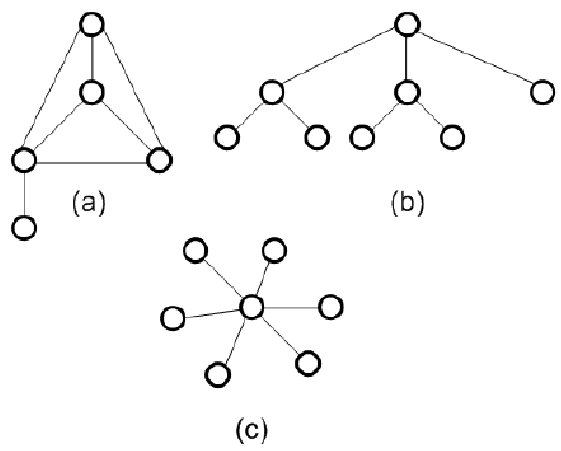
The core of the solution lies in treating the MSN as an On-line Graph. Each user is a vertex, and an encounter is an edge. The algorithm operates on three levels of optimization:
- Minimize Delivery Time: Find the fastest path.
- Minimize Duplication: Use a Star-Graph approach to identify redundant relays.
- Minimize Storage: Delete messages once their delivery is guaranteed by a more "efficient" peer.
The "Star-Graph" Logic
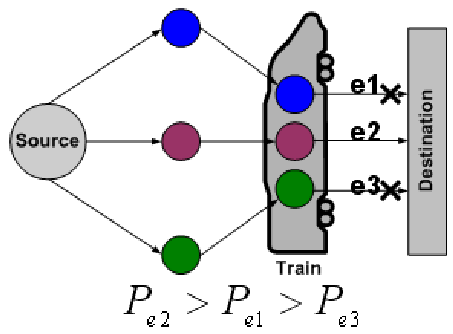
When two relay nodes (let's call them Node A and Node B) meet, they don't just swap messages—they swap Schedules. If both are carrying a message for the same destination (Node D), they compare their next encounter times with Node D.
- If Node B will meet Node D at 2:00 PM and Node A will meet Node D at 4:00 PM, Node A deletes its copy.
- This transformation of the network into a series of dynamic stars and trees ensures that only the "winning" relay expends energy.
Experiments: Real-World Patterns vs. Randomness
The authors tested their theory against three datasets, finding that traditional mobility models (like Random Waypoint) fail to capture the nuances of social behavior. They utilized a "Discrete Encounter" model based on life-simulations in Second Life to validate their approach.
Key Results
- The "Social" Advantage: When messages were handled by "Social Senders" (influential users in a Dominating Set), duplication dropped by a staggering 71.8%.
- Global Efficiency: Across all user categories (One-to-One, Many-to-Many), the average reduction was 29.3%.
- Traffic Control: As shown in Figure 5, the proposed algorithm significantly dampens the "spikes" in message volume, leading to a much more stable network environment.
Critical Insights & The Road Ahead
This work proves that context-awareness is the ultimate weapon against inefficiency in MSNs. By shifting from a "probabilistic" model to a "predictive" one, we can make opportunistic networks viable for resource-constrained IoT and mobile devices.
Limitations:
- Complexity: Updating graph states for thousands of interests across thousands of users requires space/time, which may be taxing for older hardware.
- Privacy: The model assumes friends can see each other's schedules—a potential privacy hurdle in real-world deployment.
Takeaway: The future of MSNs lies in the "Social Dominating Set." If we can identify and incentivize the most connected individuals to act as smart relays, we can build a global data-sharing network that is both robust and incredibly lean.