
Beyond Single Species: A Meta-Analytic Map of the Microbiome-Immunotherapy Interface
Meta-analytic microbiome target discovery for immune checkpoint inhibitor response in advanced melanoma
This study presents a large-scale meta-analysis of 15 melanoma cohorts (n=484) using a unified pipeline (MetaPhlAn 4, HUMAnN 3, and BGCLens) to identify microbial signatures associated with Immune Checkpoint Inhibitor (ICI) response. The researchers uncovered that microbial biomarkers are highly treatment-context dependent, showing distinct taxonomic and functional shifts between ICI-only therapy and ICI combined with Fecal Microbiota Transplantation (FMT).
TL;DR
A massive meta-analysis of 763 metagenomic samples reveals that the "ideal" gut microbiome for cancer immunotherapy isn't a fixed target. By analyzing 15 melanoma cohorts, researchers found that microbial signatures for treatment success shift dramatically depending on whether a patient receives standard immunotherapy or a fecal transplant (FMT). The study moves past simple "bacterial lists" to highlight metabolic programs—like amino-acid biosynthesis and antimicrobial gene clusters—as the true drivers of clinical response.
The "Moving Target" Problem in Microbiome Research
For a decade, the oncology world has chased a "signature" of the gut microbiome that predicts success for Immune Checkpoint Inhibitors (ICIs). However, Study A would point to Akkermansia, while Study B insisted on Faecalibacterium.
The authors of this paper argue that these inconsistencies aren't just noise; they are a result of regimen-dependent ecology. By harmonizing data from 12 ICI-only cohorts and 3 ICI+FMT trials, they sought to answer why the "good" bacteria change when the treatment context shifts.
Methodology: The Three Layers of Microbial Intelligence
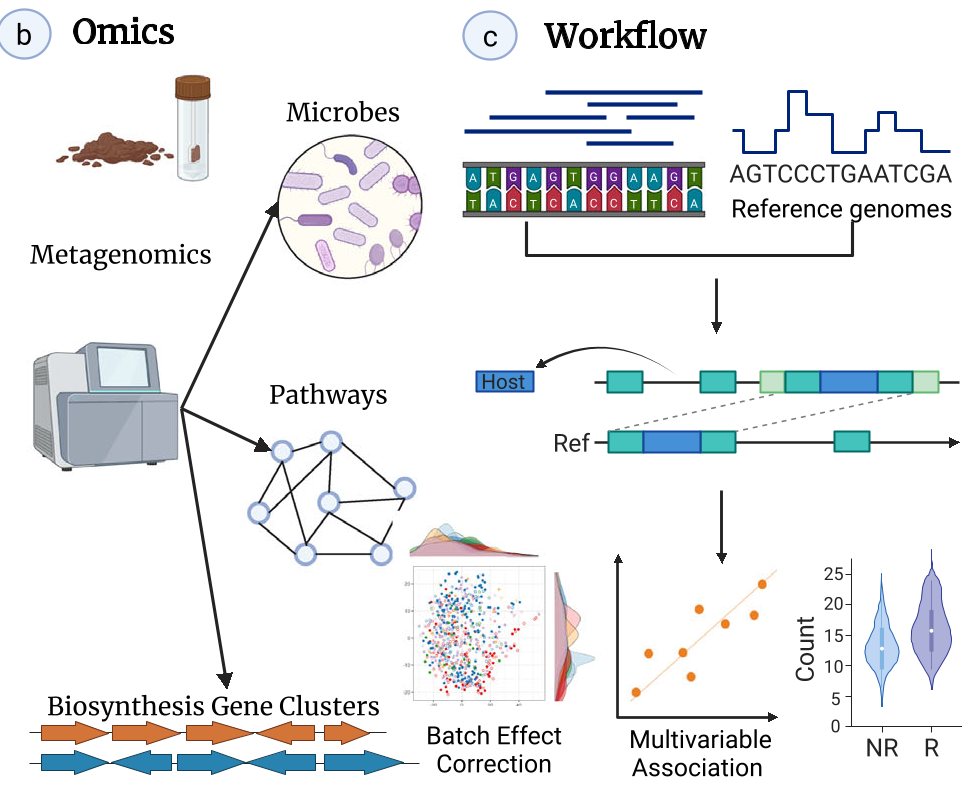
The team didn't just look at "who" is there (Taxonomy); they looked at "what they can do" (Pathways) and "how they compete" (Biosynthetic Gene Clusters - BGCs).
- Taxonomy: Using MetaPhlAn 4 to capture low-abundance species.
- Function: Using HUMAnN 3 to map metabolic pathways.
- Chemical Warfare: Using BGCLens to identify gene clusters that produce antimicrobial peptides and polysaccharides.
Key Insight: Context is King
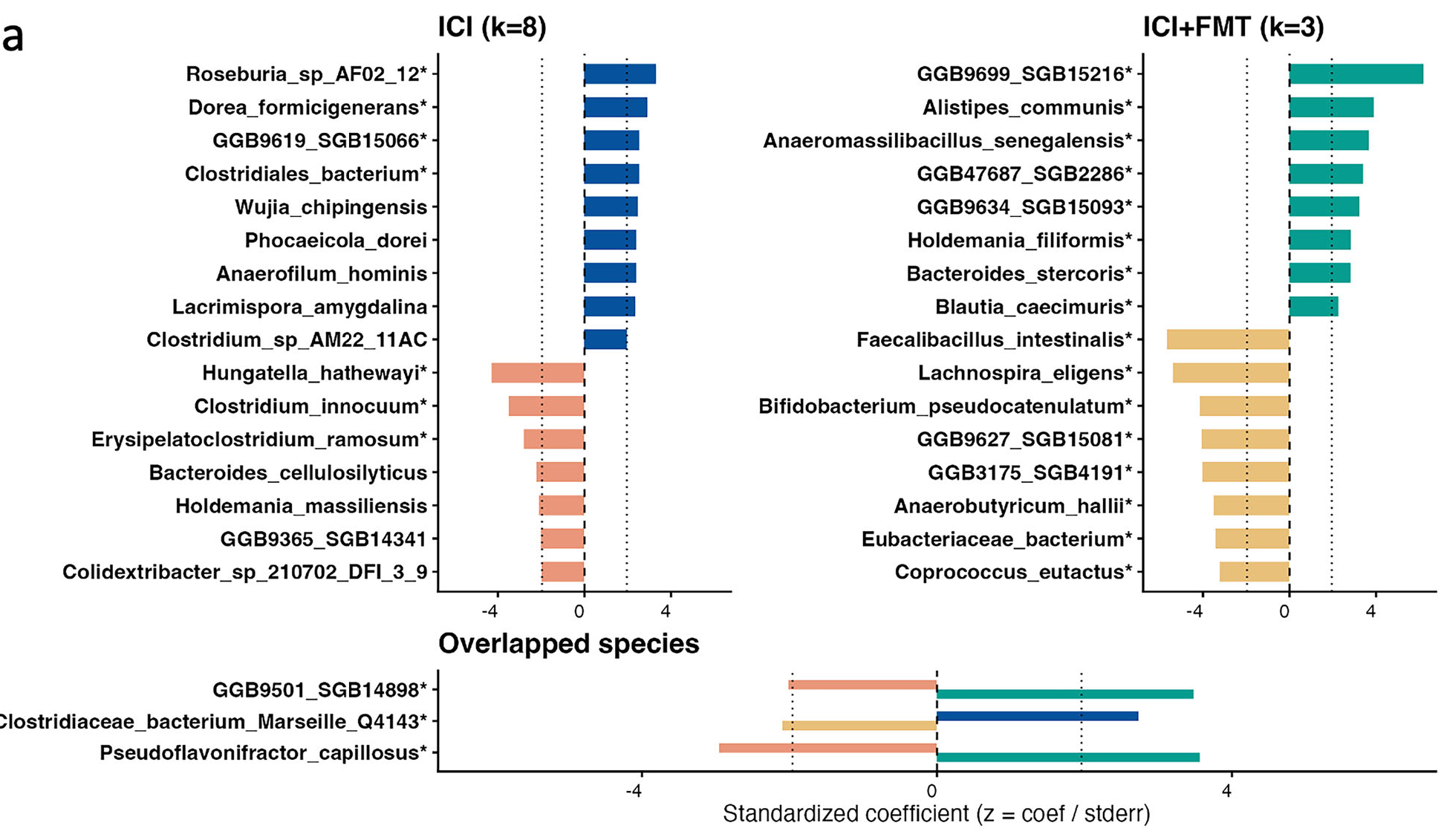
The most striking finding was the discordance between treatment groups. Species that favored response in ICI-only patients often meant nothing—or were even detrimental—in the context of an FMT-augmented treatment.
- ICI-Only Responders: Enriched in short-chain fatty acid (SCFA) producers like Roseburia and Dorea. These metabolites are known to support the intestinal barrier and prime systemic immunity.
- ICI+FMT Responders: Showed a surge in Alistipes and Bacteroides species.
- The Switch: Three specific taxa (Pseudoflavonifractor capillosus, for instance) flipped their association entirely. This suggests that FMT reshapes the ecological "rules" of the gut, changing how individual species influence the host's immune system.
Functional Foundations: Anabolic vs. Catabolic
The study found that responders' microbiomes are functionally "anabolic." In ICI-only cohorts, pathways for amino-acid biosynthesis (L-arginine, L-methionine) were significantly upregulated. In contrast, non-responders’ guts were geared toward catabolism (breaking down amino acids).
In the FMT setting, the signature shifted toward nucleotide salvage pathways, suggesting that the way the microbiome handles the raw materials of DNA/RNA may influence how immune cells proliferate during therapy.
Predictive Power and BGC Discovery
Using Leave-One-Dataset-Out (LODO) validation, the researchers proved that while we can't yet perfectly predict who will respond to therapy (AUC ~0.60), certain features are "stable" across the globe.
Interestingly, the most stable predictors were often Biosynthetic Gene Clusters (BGCs). Specifically, gene clusters for lanthipeptides (natural antibiotics) and capsular polysaccharides (surface sugars) were repeatedly selected by the machine learning models. This implies that the competitive "chemical warfare" and the physical "coating" of bacteria are more predictive of patient outcome than the mere presence of a specific species.

Academic Conclusion & Future Outlook
This meta-analysis effectively ends the hunt for a "universal probiotic" for melanoma. Instead, it directs the field toward Metabolic Engineering of the gut.
Takeaways for the Field:
- Stop looking for "The One": Microbiome effects are community-driven and context-specific.
- Focus on SCFAs and Amino Acids: Anabolic microbial metabolism consistently correlates with anti-tumor immunity.
- Validate BGCs: The antimicrobial peptides identified (like Rothia lanthipeptides) are prime candidates for mechanistic studies to see if they directly modulate T-cell activity.
While the predictive accuracy remains modest, this work provides a rigorous, harmonized map for the next generation of microbiome-informed cancer trials.