
Beyond Interaction: Meta-Design and the Architecture of Participation
Beyond interaction: meta-design and cultures of participation
This seminal paper by Gerhard Fischer introduces the concept of "Cultures of Participation" and the "Meta-Design" framework as the next evolution of Human-Computer Interaction (HCI). It moves beyond simple interaction and usability to focus on socio-technical infrastructures that empower users to act as co-designers in solving complex, ill-defined societal problems.
TL;DR
In this foundational work, Gerhard Fischer argues that the future of Human-Computer Interaction (HCI) lies not in making better "tools for consumers," but in building "scaffolding for designers." By moving from Consumer Cultures to Cultures of Participation, and utilizing Meta-Design, we can empower stakeholders to solve complex, "wicked" problems through collaborative, evolvable socio-technical systems.
Background: THE SHIFT IN HCI TEMPORALITY
To understand where HCI is going, we must look at the time scales of interaction. Early HCI focused on the "millisecond to minute" range—optimizing operators and unit tasks. Fischer argues we must look at "months to decades," focusing on Design, Education, and Culture.
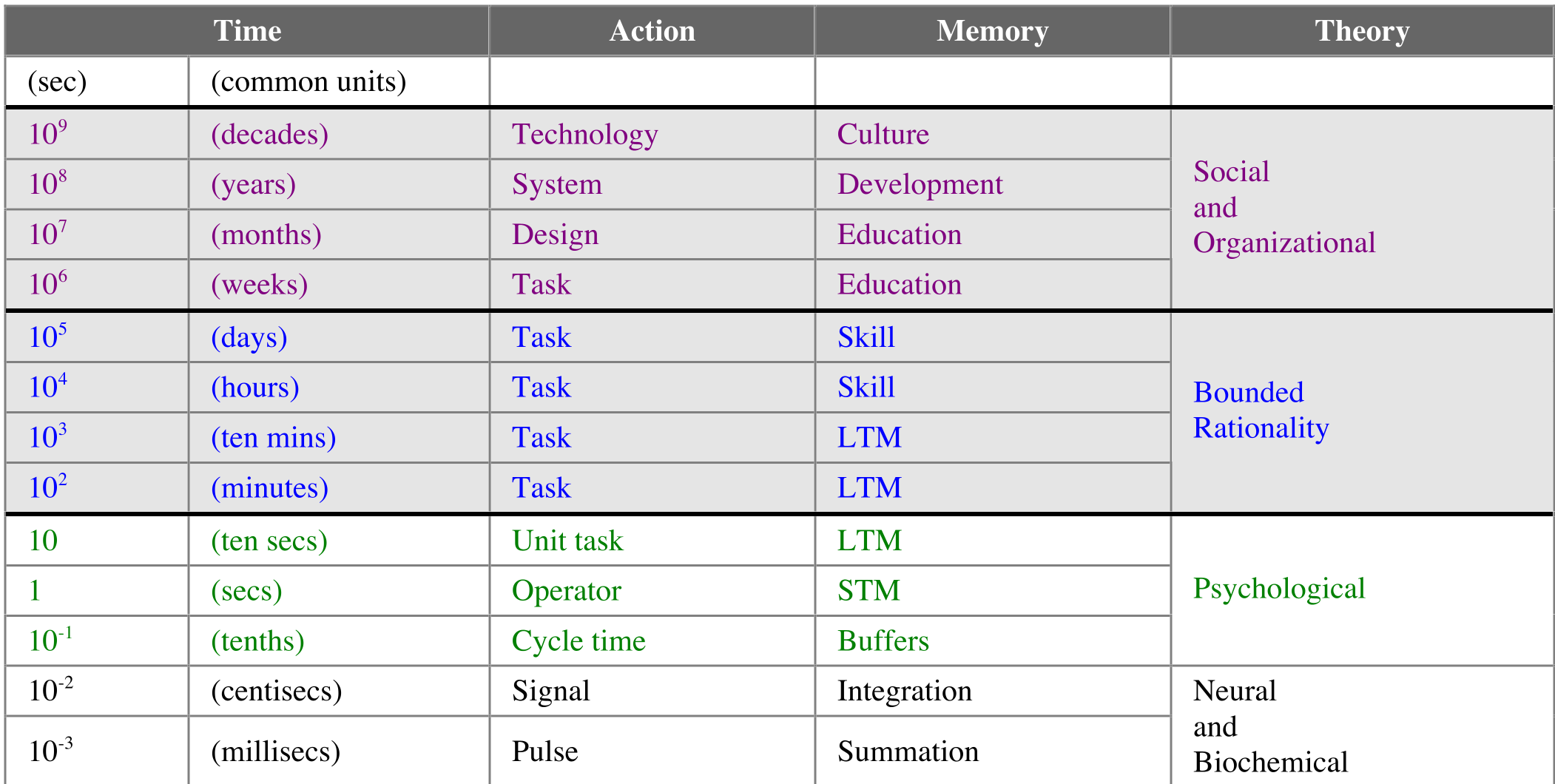 Table 1: The Newell and Card time scales highlight the transition from psychological actions to cultural developments.
The Core Motivation: From Couch Potatoes to Prosumers
Modern society has historically been a "Consumer Culture." Whether it's television or traditional software, the distinction between producer and consumer is rigid.
The author identifies a critical failure in this model: The 21st-century's most pressing problems (climate change, urban planning, etc.) cannot be solved by a single mind. They require "Social Creativity." To unlock this, we must transition users into "Prosumers"—active participants who own the problems they are trying to solve.
Methodology: Meta-Design — Designing for Design
Meta-Design is the architectural philosophy supporting this shift. While User-Centered Design focuses on the user's needs and Participatory Design involves users at the start, Meta-Design ensures the system remains open forever.
Key Pillars of Meta-Design:
- Seeds over Solutions: Developers provide a "seed" (an initial, functional infrastructure) that users grow through use.
- Under-design for Flexibility: Creating "loose fit" systems that allow for unexpected uses at use-time.
- The Symmetry of Ignorance: Acknowledging that no single stakeholder has all the answers; the system serves as a "boundary object" where different expertises meet.
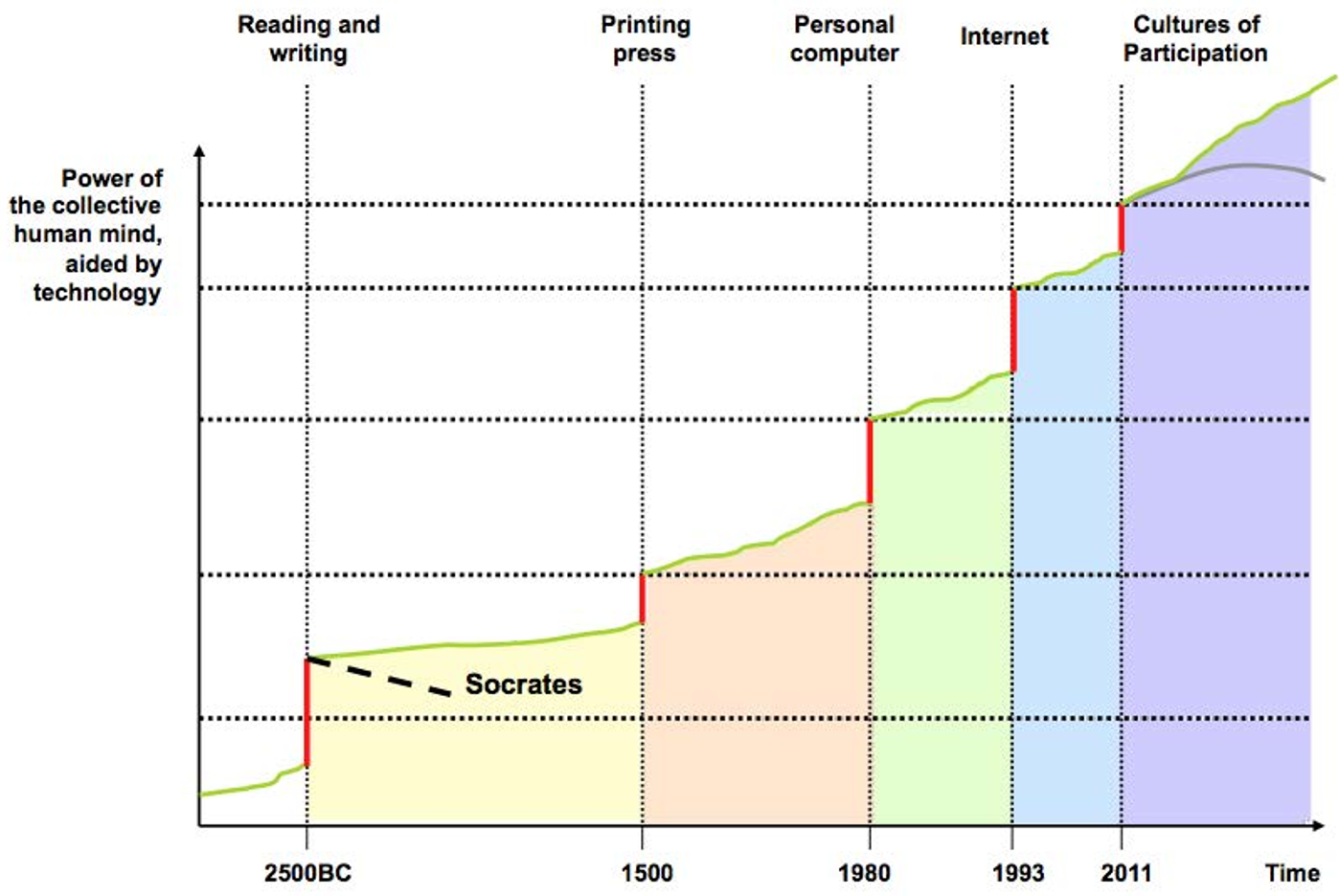 Figure 1: The historical progression from Oral to Digital cultures, culminating in participation.
Real-World Evidence: The Envisionment & Discovery Collaboratory (EDC)
The EDC serves as a primary example of Meta-Design in action. Unlike a closed simulation (like a standard game), the EDC uses tabletop computing and physical objects to allow urban planners and local residents to "frame" problems together.
- Insight: Residents contribute local, situated knowledge that professional planners lack.
- Mechanism: The system allows for "Reflection-in-Action," where the visualization of conflicting decisions leads to consensus building.
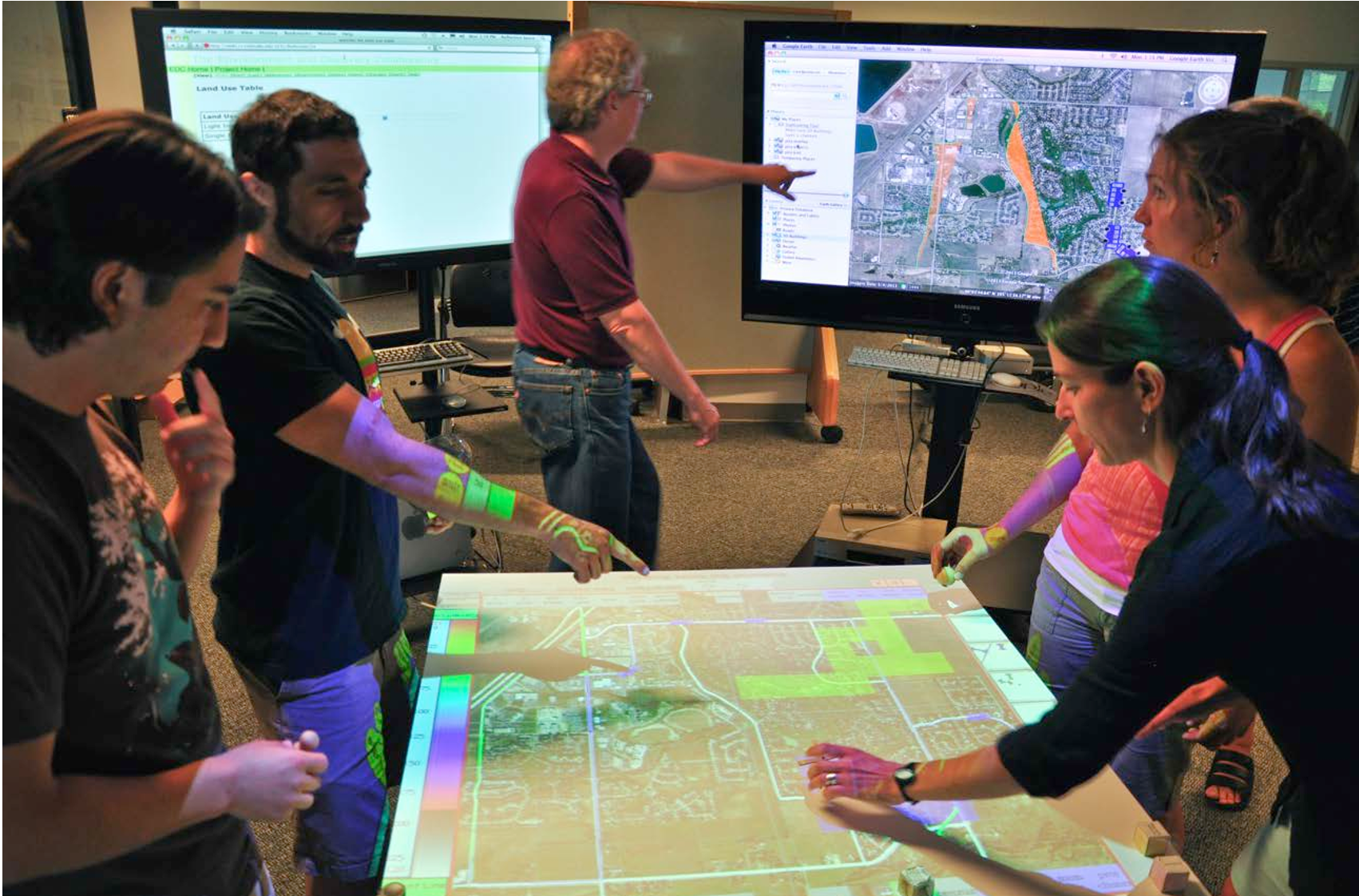 Figure 2: Multi-stakeholder collaboration using the EDC platform.
The Challenges: The Burden of Participation
Fischer is careful to note that participation is not "free."
- The "Do-It-Yourself" Burden: Forcing users to be active in irrelevant tasks (like self-checkout at airports) is not empowering—it's offloading work.
- Quality & Trust: As seen with Wikipedia, when everyone can contribute, how do we ensure accuracy? The paper suggests "Curator Networks" and the "Power of Eyeballs" (the idea that bugs are shallow when many people look at them).
Deep Insight & Conclusion
This paper reframes the role of the software engineer from a "High-Tech Scribe" to a "Meta-Designer." The value of future software will not be measured by its features, but by its extensibility and the vibrancy of the community it sustains.
Takeaway for Today: In the age of AI, this paper is more relevant than ever. As we move toward systems that can generate code and content, the "Meta-Design" of how humans remain in the loop as designers—rather than just consumers of AI output—will be the defining challenge of the next decade.