
Meta-Terrorism: Decoding the Linguistic Pulse of Crisis on Social Media
Meta-Terrorism: Identifying Linguistic Patterns in Public Discourse After an Attack
The paper introduces a multi-dimensional framework to analyze social media behavior during crisis events, specifically the Manchester bombing and Las Vegas shooting. It utilizes SentiStrength for sentiment analysis, LDA for topic modeling to identify "echo chambers," and Passive Aggressive Classifiers for fake news detection.
TL;DR
In the wake of terror attacks, social media transforms into a digital battlefield of emotions and information. This study analyzes the Manchester Arena bombing and the Las Vegas shooting using a tripartite methodology: sentiment analysis, topic modeling (LDA), and fake news classification. The findings reveal a landscape dominated by negativity, the rapid formation of thematic "echo chambers," and an alarming prevalence of linguistically suspicious content.
Background: The Digital Shrapnel of Terror
When a crisis hits, Twitter doesn't just report news; it manifests a collective psychological reaction. The researchers position this work as a "holistic analysis" aimed at helping authorities govern and manage crises by understanding how information is amplified or reinforced within echo chambers—defined here as systems where beliefs are reinforced by repetition.
Methodology: The Three Pillars of Analysis
The authors utilized the Tweepy library to scrape data around two major events and implemented a modular analytical pipeline:
1. Sentiment Analysis (The Emotional Barometer)
The study compared two lexicon-based methods: SentiWordNet and SentiStrength.
- Insight: SentiStrength outperformed SentiWordNet because it handles social media idiosyncrasies better, such as emoticons, slang, and negations.
- Observation: Negative tweets outnumbered positive ones by a factor of 10 during the acute phase of the events.
2. Topic Modeling (Mapping Echo Chambers)
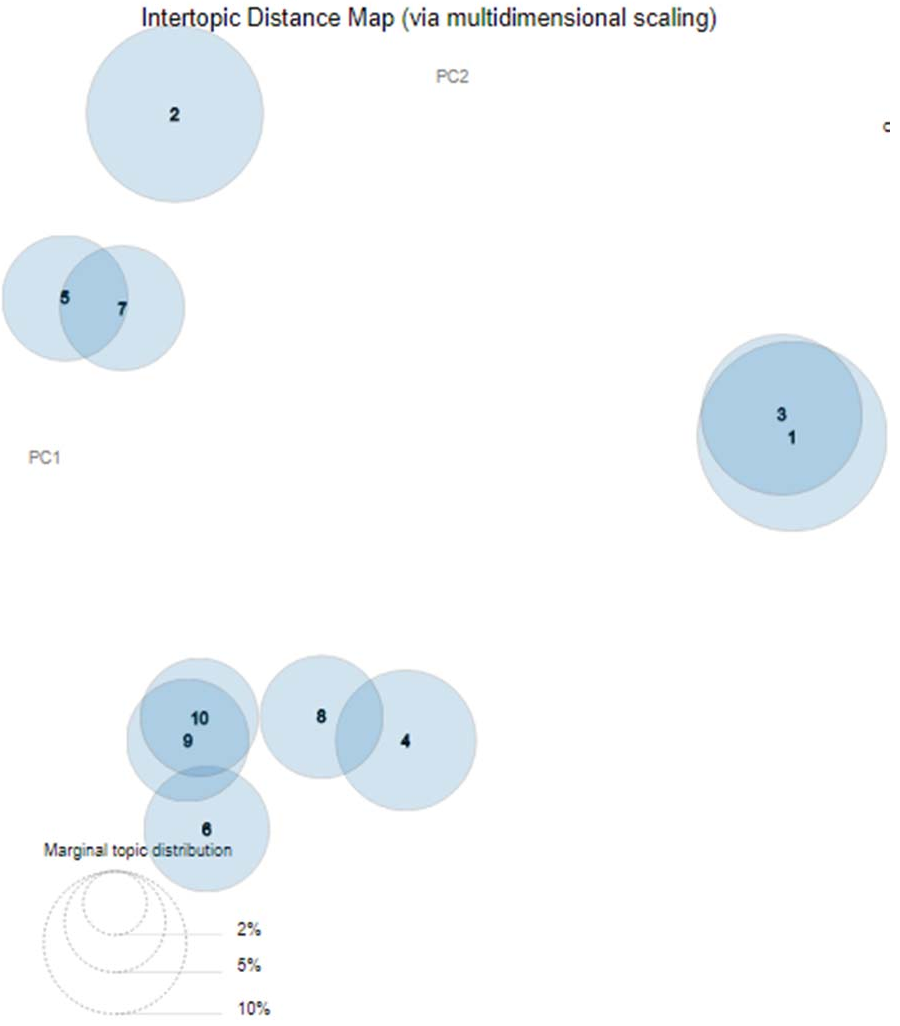
Using Latent Dirichlet Allocation (LDA) on the titles of shared URLs, the researchers mapped the thematic spread.
- The Visualization: By calculating Jensen–Shannon divergence, they visualized how topics cluster.
- Echo Chambers: In the Manchester event, they identified five distinct chambers ranging from "ISIS/Terrorism" to "Global Corruption" and "Indian Politics."
3. Fake News Classification (The Truth Gap)
The researchers employed a Passive Aggressive Classifier, an online learning model designed for streaming data.
- Shocking Statistic: The model flagged 80% of shared news in the Manchester dataset and 75% in the Las Vegas dataset as "fake."
- The Caveat: The authors admit this is "experimental." The classifier relied heavily on specific keywords (e.g., "Clinton," "GOP"), suggesting it might be capturing political bias or "noise" rather than objective falsehood.
Key Results & Evidence
The temporal analysis shows a massive spike in shared news immediately following the events, which decays within a few days.
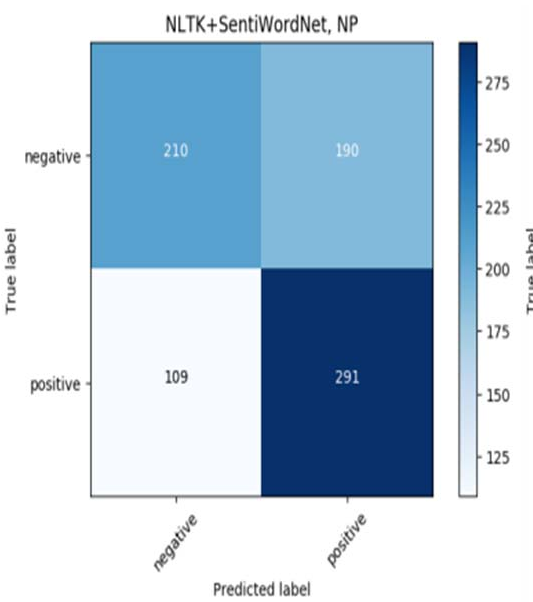 Fig 1: Sentiment trends showing the dominance of negative (blue) over positive (red) scores during the crisis peak.
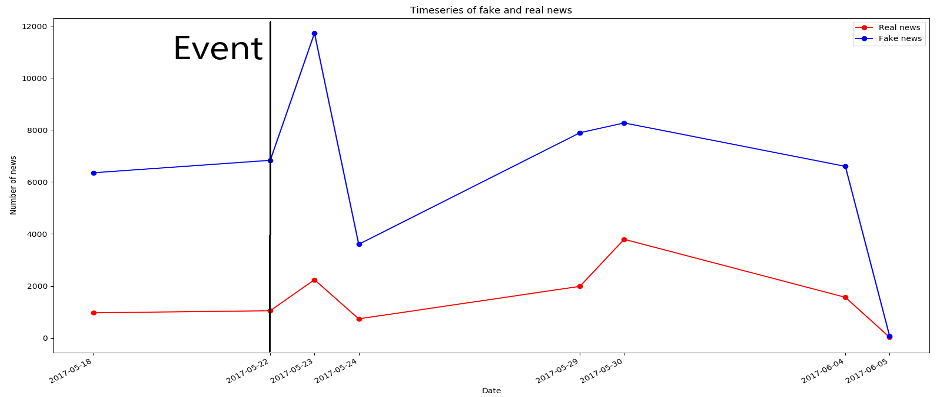 Fig 2: The surge of news sharing (Fake vs. Real) post-attack, highlighting the window where misinformation is most potent.
Critical Insight: The "Normalization" of Negativity
What makes this paper stand out is the observation of pre-event sentiment. In the Las Vegas case, negativity began to strengthen before the shooting. While the authors attribute some of this to "noise" (like Hurricane Maria), it suggests that social media sentiment is a continuous stream where sub-events and global crises bleed into one another, creating a baseline of high-tension "meta-terrorism."
Limitations & Future Directions
- Keyword Sensitivity: Both the LDA and Fake News detection were heavily influenced by the initial search terms (ISIS, Terror, etc.), which may have created a "self-fulfilling prophecy" of negative results.
- Linguistic Nuance: Detecting fake news based solely on word weights (e.g., "October" vs "Tuesday") is a weak proxy for truth. Future work should integrate user interaction graphs—following who retweets whom—to better define the structural boundaries of echo chambers.
Conclusion
This research provides a foundational look at how terror events polarize public discourse. While the automated "fake news" detection requires further refinement, the integration of topic clustering and sentiment analysis offers a powerful tool for crisis managers to identify where and why digital divisions occur.