
Bridging the Silos: A Unified Metamodel for IoT, Cloud, and Industry 4.0
10013_Metamodel for integration of Internet of Things, Social Networks, the Cloud and Industry 4.0.
This paper proposes a comprehensive metamodel and a 5-layer architecture designed to integrate the Internet of Things (IoT), Social Networks, and Cloud Computing within the Industry 4.0 framework. The study validates this approach through a manufacturing monitoring prototype built on Raspberry Pi, demonstrating real-time industrial process control and cross-platform application generation.
TL;DR
The transition to Industry 4.0 is often stalled by "technological Babel"—a chaotic mix of incompatible hardware and software. This paper introduces a Model-Driven Engineering (MDE) metamodel and a 5-layer architecture that integrates IoT devices, social networks, and cloud computing. By abstracting hardware into "Smart Objects" with social capabilities, the authors proved that manufacturing monitoring can be automated and scaled using accessible tools like Raspberry Pi and cloud-native databases.
The Interoperability Nightmare
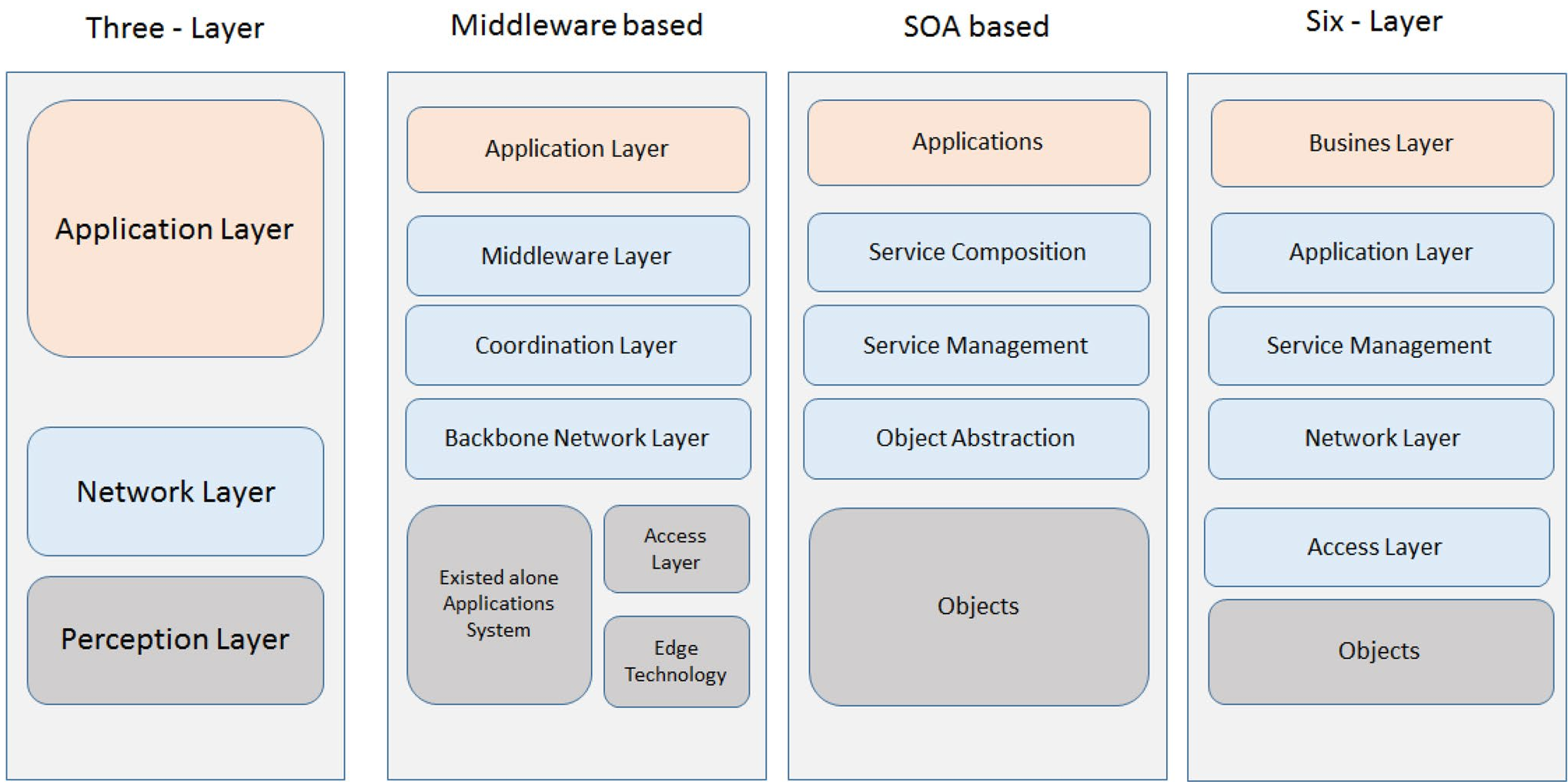
In a typical factory, machines from different decades and manufacturers speak different "languages." The core friction in the Industrial Internet of Things (IIoT) isn't just getting a sensor to work; it's the heterogeneity. Existing architectures (like the traditional 3-tier IoT model) often fail to account for the complex data persistence needs and the "social" nature of modern human-machine collaboration. The authors argue that we need a way to build applications that are platform-independent yet capable of complex, rule-based automation.
Methodology: The 5-Layer Blueprint
To solve the integration crisis, the paper shifts away from rigid hardware-to-app connections and proposes a decoupled 5-layer stacks:
1. The Architecture
- Sensing Layer: The physical hardware (sensors/actuators).
- Databases Layer: Uses a hybrid approach of physical (SQL/NoSQL) and Virtual Databases to abstract data from specific network nodes.
- Network Layer: The connective tissue (wired/wireless) managing message flow.
- Data Response Layer: The "intelligence" center where automated responses and persistence logic reside.
- User Layer: The API and Middleware surface where ERP systems and mobile apps interact with the process.
2. The Metamodel & Social Logic
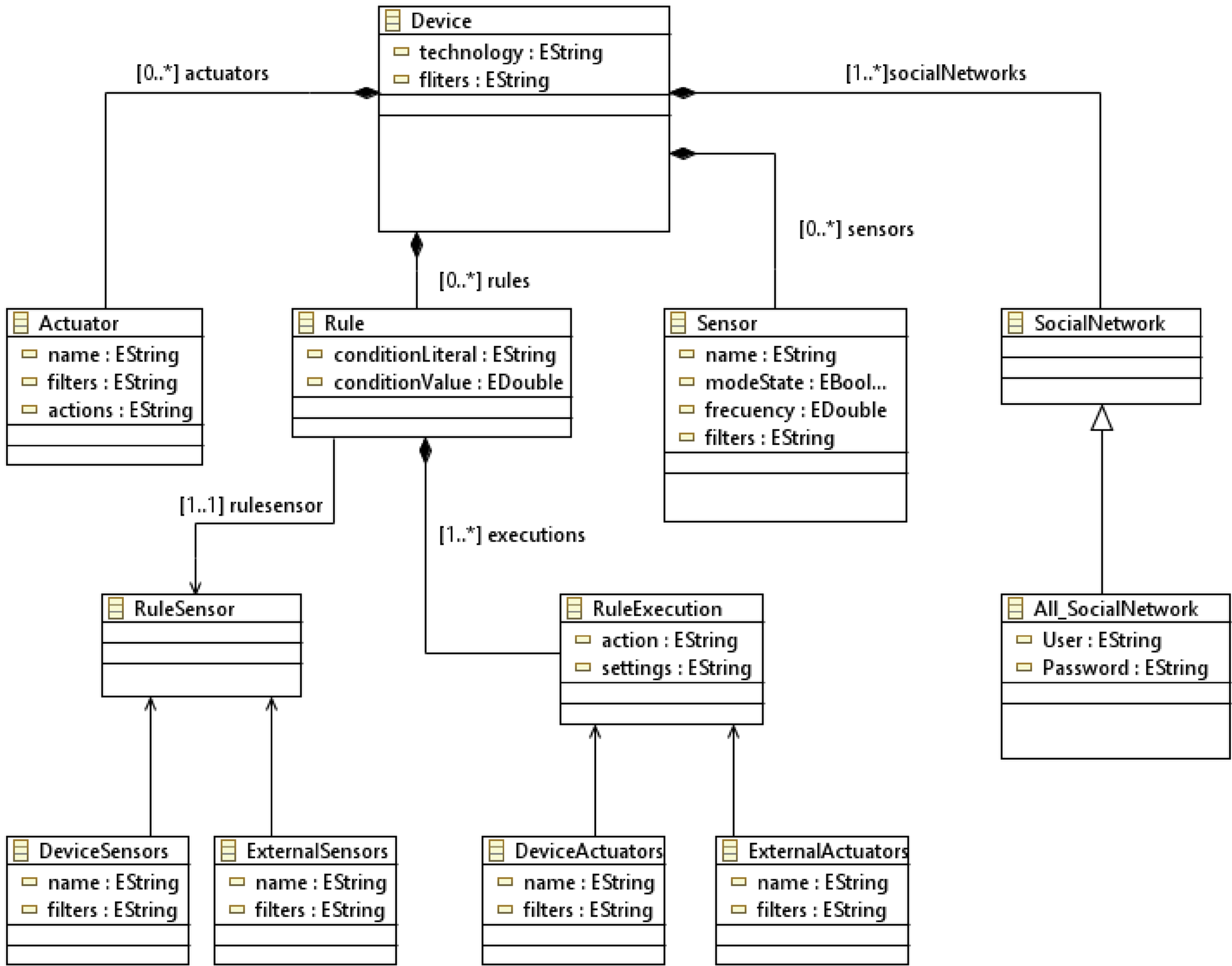
The most unique insight is the Social Internet of Things (SIoT) integration. By applying MDE via the Ecore meta-metamodel, the authors define devices not just as hardware, but as entities with "Social Networks." This allows a sensor to "post" its status or an actuator to "listen" for rules, effectively using the Web 2.0 paradigm to manage industrial M2M (Machine-to-Machine) communication.
Experimental Validation: Ceramic Production
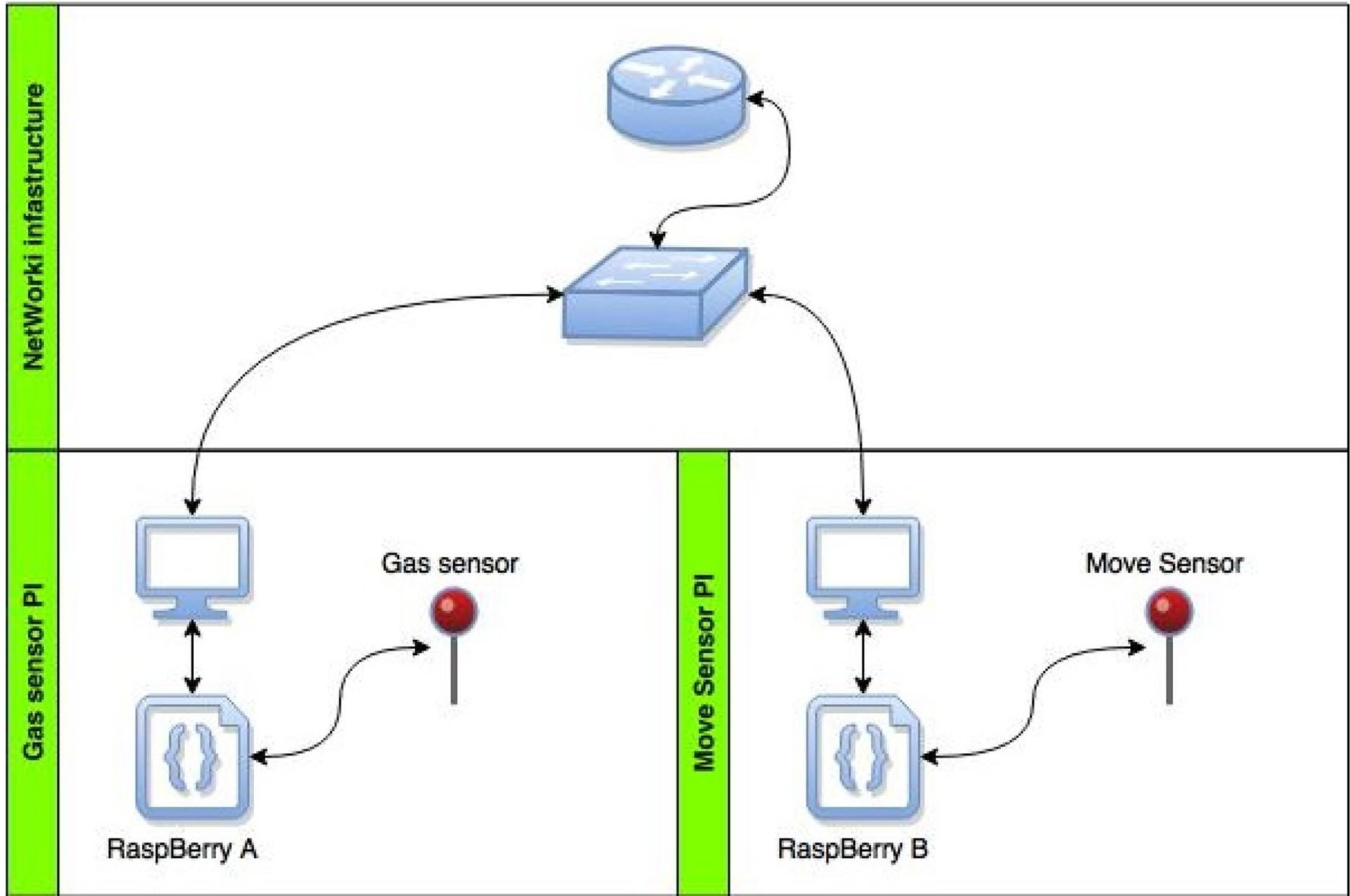
The researchers deployed a prototype using a Raspberry Pi and four sensors on a ceramic production line.
- Parallel Monitoring: The prototype ran alongside legacy systems. While old systems often triggered "false stops" due to simple speed changes, the new architecture's Data Response Layer could distinguish between a process adjustment and a genuine failure.
- Preventive Action: By monitoring computer stability and alignment via sensors, the system allowed for "on-the-fly" adjustments without stopping the line—a feat impossible for the legacy setup.
- Cloud Synchronization: Data was pushed continuously to a cloud server, enabling real-time traceability on mobile devices for off-site supervisors.
Critical Insight & Future Outlook
The paper's takeaway is profound: Technology is no longer the bottleneck. The real barrier to Industry 4.0 is the standardization of interfaces.
Key Contributions:
- Traceability: Removing the human element from data collection reduces measurement error significantly.
- Social Objects: Treating machines like social network entities simplifies the logic of "who talks to whom."
- Model-Driven Flexibility: By using metamodels, developers can generate applications for Raspberry Pi, Arduino, or mobile devices from the same logical blueprint.
Limitations: While the prototype is robust for monitoring, the paper acknowledges that Data Safety (Security) and System Accuracy remain open challenges as these networks become more interconnected and exposed to the cloud.
Final Takeaway
This work shifts IIoT from a "hardware-first" challenge to a "data-architecture" challenge. By integrating Social Network logic into the factory floor, the authors have provided a viable pathway for the "Smart World" where machines, people, and the cloud exist in a single, fluent ecosystem.