
MetBots: Ushering in the Age of Molecular Precision Viticulture
Metbots: Metabolomics Robots for Precision Viticulture
This paper introduces MetBots, an autonomous robotic system specifically designed for precision viticulture that integrates UV-VIS-SWNIR and LIBS spectroscopy. The system automates the generation of geo-referenced metabolic maps of vineyards, achieving high-accuracy quantification of chemical markers like glucose, fructose, and organic acids using AI-driven spectral analysis.
TL;DR
MetBots is a groundbreaking autonomous system that combines robotics and spectroscopy to map the internal "metabolic health" of a vineyard. Unlike drones that only see surface greenness, MetBots uses a robotic arm to scan individual grapes, providing high-resolution data on sugars, acids, and nutrients to help winemakers optimize harvest and quality.
From Surface Vision to Metabolic Insight
For decades, precision agriculture has been synonymous with drones and NDVI (Normalized Difference Vegetation Index). While useful for measuring biomass, these tools are "blind" to the chemistry that actually defines wine quality—compounds like anthocyanins, malic acid, and glucose.
The authors identify a critical gap: aerial technology cannot see metabolism. To solve this, the MetBots system moves the laboratory into the field. By navigating the challenging, steep terrains of the Portuguese Douro Valley, the system collects "in-situ" data that was previously only available through destructive, manual lab testing.
The Methodology: Robotics Meets Spectroscopy
The MetBots architecture is a triad of physical robotics, advanced sensing, and AI-driven processing.
1. The Physical Platform
The system utilizes the AgRob V16, a robotic platform specifically designed for steep slopes (up to 30%). It uses VineSLAM, a localization algorithm that recognizes natural vineyard features to compensate for poor GPS signals under dense canopies.
2. Active Perception Manipulation
A robotic arm handles the spectroscopy probe. This isn't just a pre-programmed path; it uses "Active Perception." The system must:
- Detect grape bunches in a cluttered environment.
- Plan a trajectory to a specific grape.
- Control the probe to eliminate surface reflection (stray light) by ensuring proper skin contact.
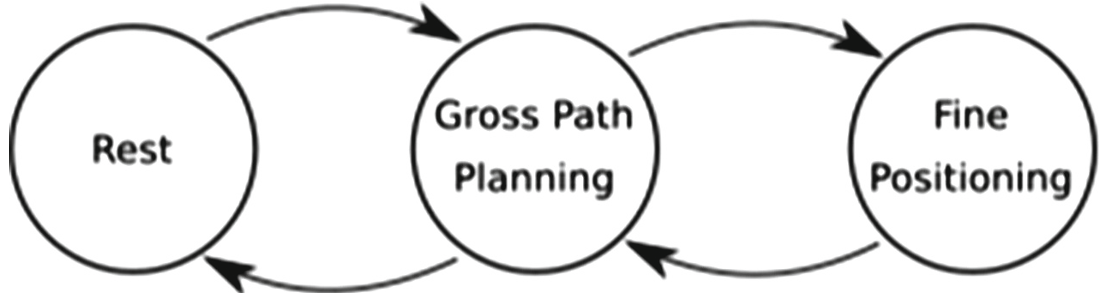 Figure 1: The stages of autonomous manipulation and grape recognition.
3. The Spectral "Fingerprint"
The core sensor is a UV-VIS-SWNIR (Ultraviolet-Visible-Short Wave Near Infrared) spectrometer. The innovation here is the spectral integration: the probe's fiber optics are designed to capture a combined signal from the skin, pulp, and seeds simultaneously.
AI and Data Processing: Solving the Nonlinearity Problem
Translating light reflection into chemical concentration is notoriously difficult due to "noise" from environmental variability. The researchers employed Partial Least Squares (PLS) regression but added a sophisticated Two-Step Validation Scheme:
- Global Cross-Validation: Selecting latent variables (LVs) that show the steepest descent in error.
- Extrapolation Cross-Validation: Ensuring the model remains linear and stable even when encountering grape compositions outside the primary training range.
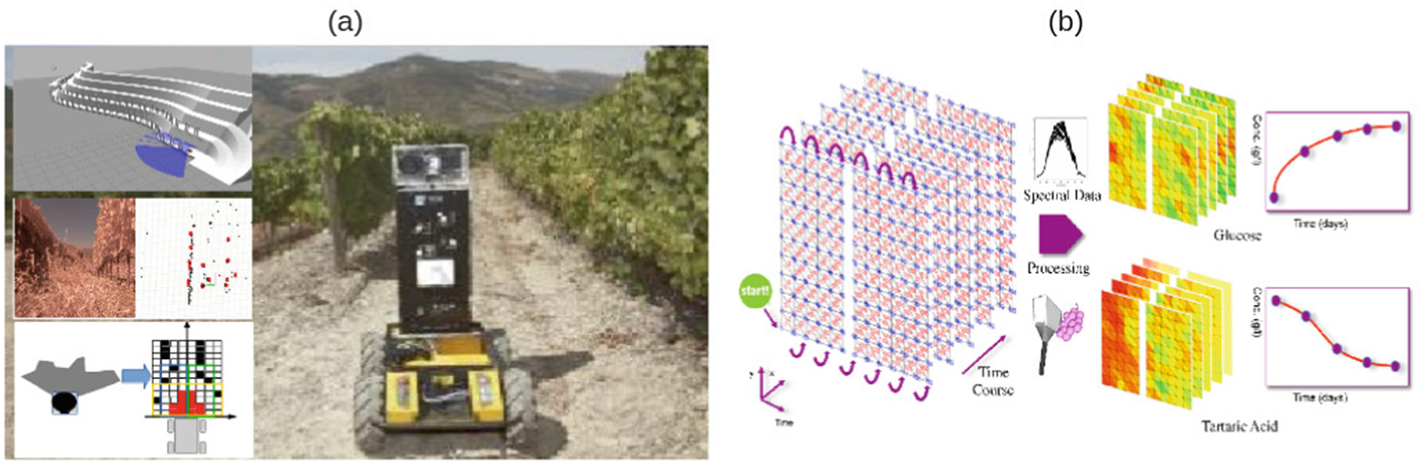 Figure 2: Integration of skin, pulp, and seed spectra for a holistic metabolic reading.
Experimental Results
The system's accuracy was validated against traditional laboratory chemistry. The results (Table 1) show impressive correlation for the most vital wine quality markers:
| Parameter | Range | R² (Accuracy) |
|---|---|---|
| Malic Acid | 1.0–10.0 | 0.82 |
| Degree Brix (Sugar) | 5.0–25.0 | 0.78 |
| Glucose | 1.3–160.0 | 0.77 |
Furthermore, the system can detect trace levels of pesticides and agricultural chemicals on leaves, acting as an autonomous "compliance officer" for organic or sustainable practices.
Deep Insight: Why This Matters
MetBots represents a shift from Reactive to Predictive viticulture. By generating hyperspectral metabolic images (reconstructed via finite element methods), growers can see a "heat map" of flavor development across their land.
The ultimate goal mentioned by the authors is to connect this real-time field data with Genome-Scale Models. This would allow a winemaker to understand how a specific irrigation or pruning decision is affecting the vine at the genetic and proteomic levels, effectively closing the loop between agricultural practice and molecular response.
Conclusion & Future Outlook
MetBots successfully bridges the gap between high-tech robotics and deep plant biology. While the system currently requires a complex setup involving robotic arms and spectrometers, the move toward "Precision Metabolomics" is inevitable as the industry demands higher quality consistency and climate resilience.
Limitations: The system currently takes about 1 minute per measurement, which is excellent for research but may need further speed optimization for massive industrial estates. Future work focusing on LIBS (Laser Induced Breakdown Spectroscopy) will likely expand the system's capabilities to direct soil nutrient analysis, making it a truly "all-in-one" vineyard doctor.