
Decoding the Moscow Labor Market: A Data Mining Approach to Career Strategy
Methodology for Job Advertisements Analysis in the Labor Market in Metropolitan Cities: The Case Study of the Capital of Russia
This paper introduces a data-driven methodology for analyzing regional labor markets by aggregating job advertisements from major Russian recruitment platforms (HeadHunter, SuperJob, TrudVsem). It utilizes web parsing, APIs, and Data Mining to categorize over 90,000 vacancies into professional groups and generate rankings based on popularity and salary levels.
TL;DR
Researchers have developed a robust methodology to navigate the noise of online job boards. By analyzing over 90,000 vacancies in Moscow, the study identifies that the most popular jobs are rarely the highest paying, while "rare" specialized roles offer the best financial security. The work provides a blueprint for turning unstructured job ads into actionable career rankings.
Problem & Motivation: The Information Overload of E-Recruiting
In the hyper-competitive labor markets of megacities like Moscow, the leap from graduation to employment is often hindered by a lack of transparency. Traditional classification systems list over 8,000 unique professions, yet an average job seeker cannot discern which of these are truly in demand or offer growth.
The authors argue that while platforms like HeadHunter and SuperJob provide the data, they act as silos. There is a critical need for an "aggregator of insights" that can filter out salary outliers, account for varying education requirements, and provide a unified view of professional value.
Methodology: From Web Scraping to Statistical Insight
The core of this research is a systematic algorithm that transforms raw HTML and JSON data into structured intelligence.
- Semantic Clustering: Instead of analyzing 8,000 individual titles, the authors grouped related roles (e.g., "Developer," "Software Architect") into "Professional Groups" using a two-level synonym directory.
- Multisource Parsing: Using a custom PHP-based parser, data was pulled from private giants (HeadHunter) as well as the federal state platform (TrudVsem), ensuring a balanced view of both the private and public sectors.
- Data Normalization: Variables like "Experience" were converted into pure numerical values (0–20 years), and salary ranges were averaged to allow for comparative clustering.
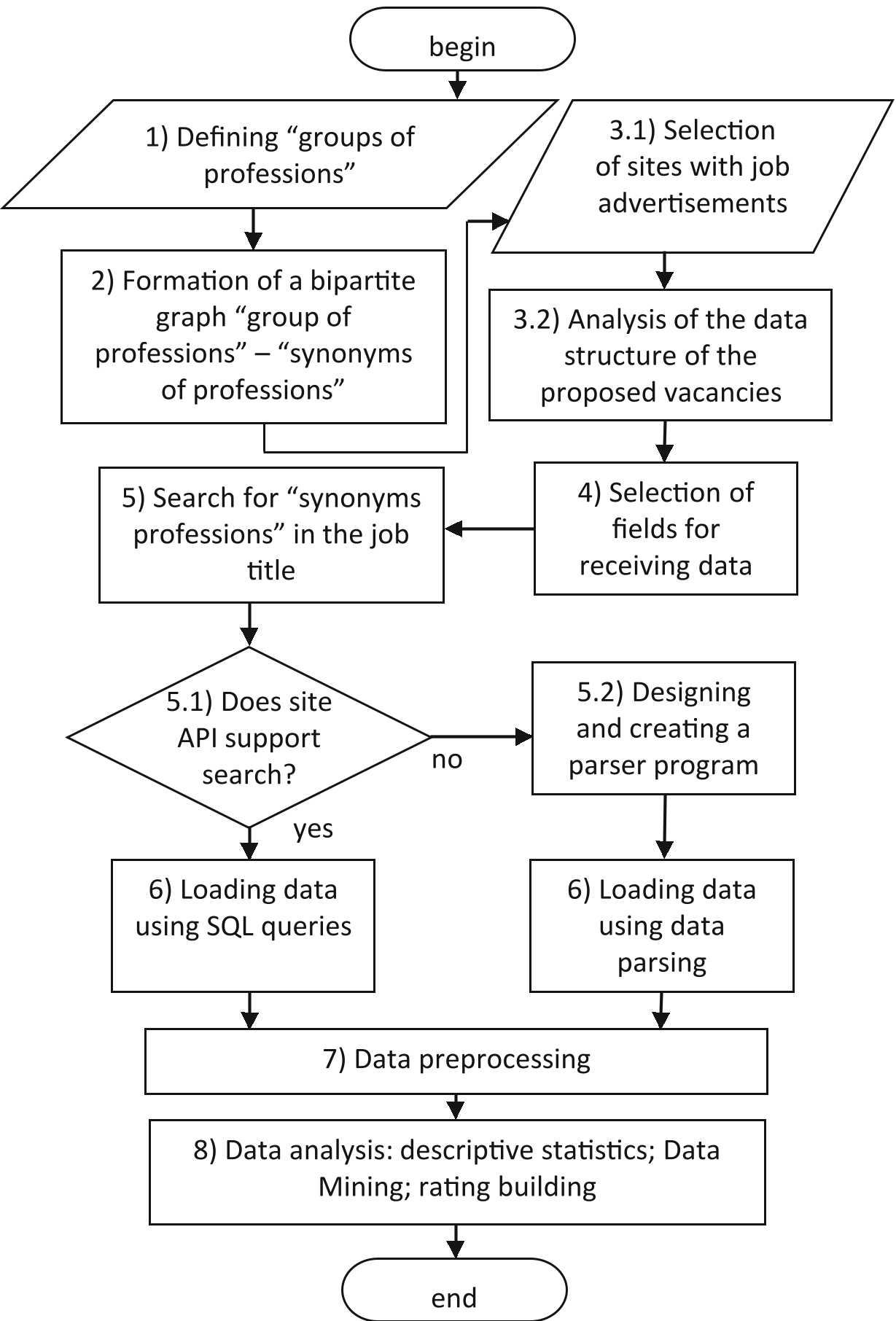 Figure 1: The proposed algorithm for automated job advertisement analysis.
Experiments & Results: Debunking Professional Stereotypes
The study’s analysis of 90,000 vacancies revealed surprising trends that challenge traditional career advice:
1. The Inverse Correlation of "Mass" and "Pay"
The data suggests a harsh reality for the labor market: the more common a job opening is, the less likely it is to pay the maximum wage. Roles like "Administrator" or "Sales Manager" dominate the market volume but sit at the lower end of the salary spectrum. Conversely, "Rare" professions like Pilots (avg. 212,095 rub) and Team Leaders (avg. 167,291 rub) command the highest premiums.
2. The Experience-Salary Paradox
Interestingly, the study found that for many common roles, high education levels or extensive work experience did not linearly correlate with higher salaries. This implies that "Domain Rarity" (having a skill few others have) is a more potent driver of income than mere "Years on the Job."
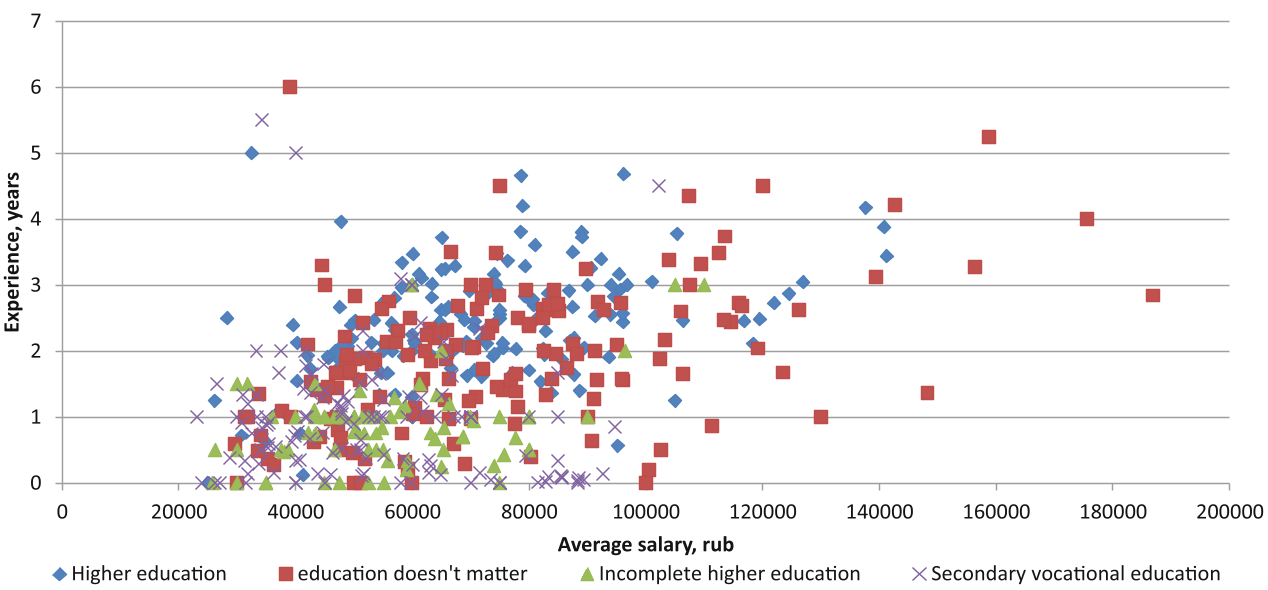 Figure 2: Correlation of salaries and work experience across different education levels.
3. Market Distribution (Gini Coefficient)
By calculating the Gini Coefficient (0.182) and plotting the Lorenz Curve, the researchers proved that the Moscow job market is relatively balanced in terms of salary diversity—meaning there is a healthy spread of low, middle, and high-income opportunities, contrary to the "winner-takes-all" myth of big city economies.
Critical Analysis & Conclusion
Takeaway
The research confirms that to maximize career ROI, one must move away from "mass" professions and cultivate specialized, "rare" skills. For career counselors, this methodology serves as a real-time monitor for the "health" of the labor market.
Limitations
A significant portion of job ads (as noted by the authors) contain "blank" lines regarding salary or specific requirements. Furthermore, the methodology relies on expert-defined synonym sets, which may become outdated as new tech roles emerge (e.g., Prompt Engineers).
Future Work
Future iterations could benefit from Natural Language Processing (NLP) to automatically detect semantic relationships between job titles, removing the need for manual synonym lists and allowing the system to scale across different languages and regions globally.