
Lipoprotein Ontology: Bridging the Semantic Gap in Cardiovascular Research
Towards a methodology for Lipoprotein Ontology
The paper introduces a structured nine-step methodology for designing a "Lipoprotein Ontology," a semantic framework aimed at organizing complex biomedical data related to cardiovascular health. It establishes a comprehensive model covering lipoprotein classification, metabolism, pathophysiology, etiology, and treatment to improve data interoperability and clinical decision-making.
TL;DR
Researchers at Curtin University have developed a rigorous nine-step methodology to create a Lipoprotein Ontology. By transforming fragmented biomedical data into a machine-readable semantic framework, this work enables better diagnosis and treatment strategies for dyslipidemia—the leading driver of cardiovascular disease globally.
Background & Motivation: Scaling Knowledge in the Age of Big Data
Lipoproteins are the vital "protein + lipid" complexes responsible for transporting fats through our bloodstream. While the medical community has studied them since 1929, we are currently drowning in information but starving for knowledge. Researchers face a "heterogeneity crisis": data exists in thousands of disparate papers, databases (like LOVD), and clinical records, but there is no "common language" to link a specific protein structure to a cardiovascular outcome.
The authors argue that without a formal Ontology, we cannot effectively use AI or automated reasoning to discover new metabolic pathways or valid treatment protocols.
Methodology: The Nine-Step Blueprint
The paper doesn't just build a database; it proposes a scalable engineering methodology divided into three critical phases:
1. Specification
The scope is defined by formal "Competency Questions." These are the questions the ontology must be able to answer, such as "What are the pathways involved in LDL clearance?"
2. Conceptualisation
This is the "brain" of the project. The authors identify core classes (Classification, Metabolism, Pathophysiology, Etiology, and Treatment) and define the relationships (Is-A, Part-Of) between them.
3. Implementation
Using Protégé (a specialized ontology editor), the framework is formalised. One of the most innovative aspects is the proposed use of TerMine and TF-IDF for semi-automated population, allowing the system to "read" PubMed abstracts and extract relevant instances.
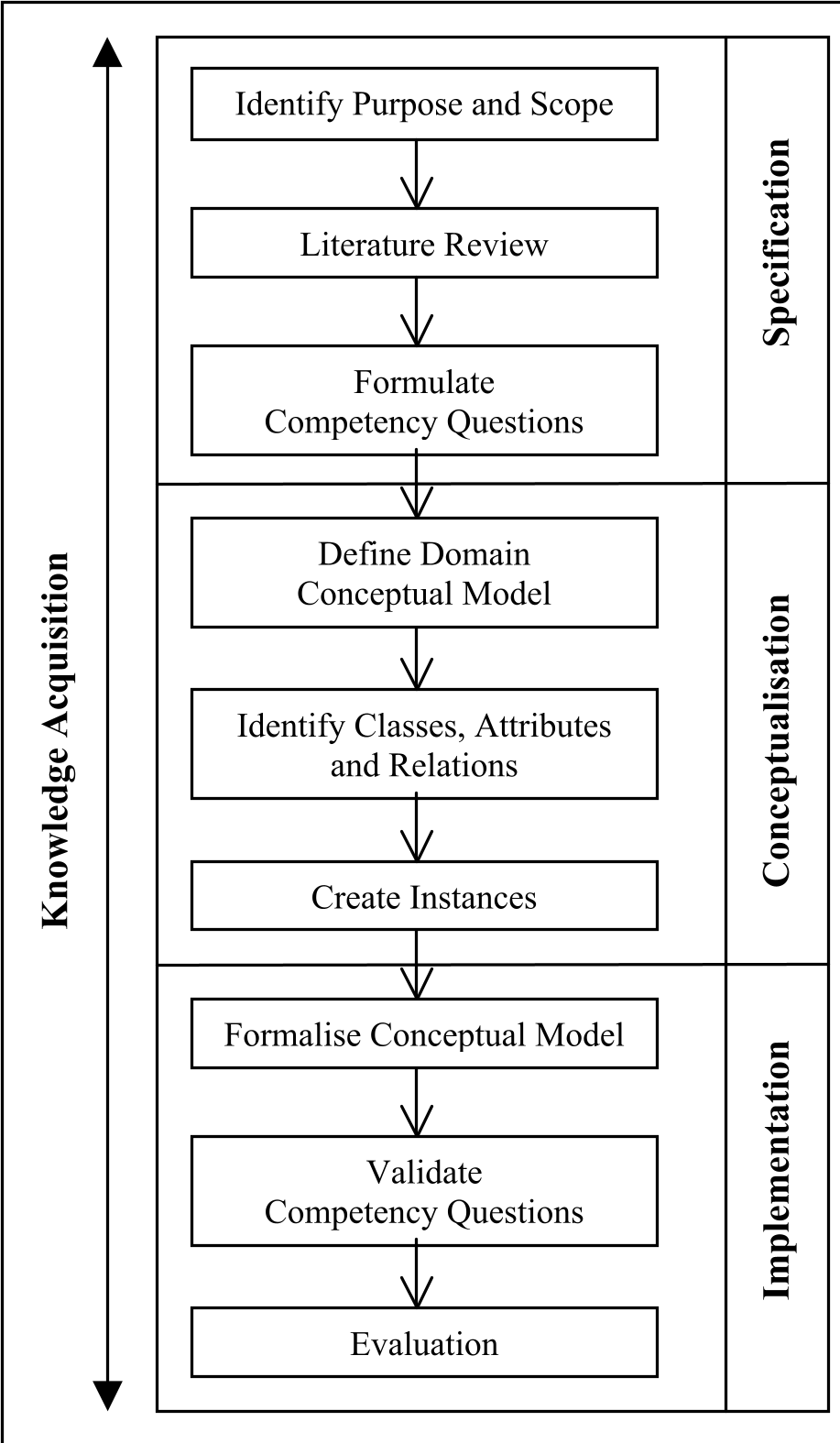 Fig 2. The nine-step methodology for Lipoprotein Ontology development.
Architecture of Knowledge
The Lipoprotein Ontology is not a monolith. It is composed of five interconnected sub-ontologies that mirror the clinical reality of lipid disorders:
- Classification: Organizing particles by density and composition.
- Metabolism: Mapping the supply and clearance pathways.
- Pathophysiology: Defining how dysregulation leads to disease.
- Etiology: Identifying causes (genetic, lifestyle, diet).
- Treatment: Linking findings to pharmaceutical or therapeutic interventions.
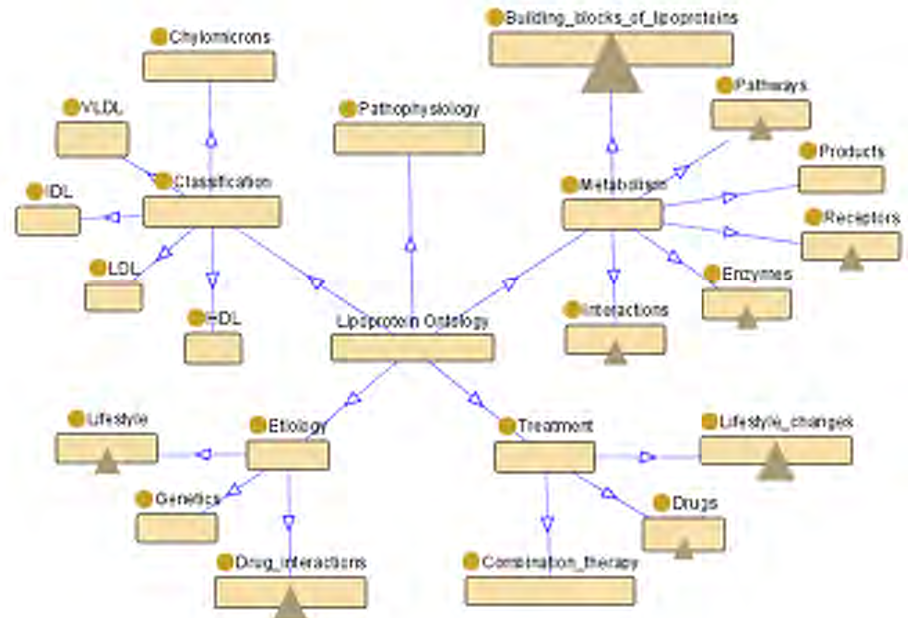 Fig 3. The Lipoprotein Ontology model showing the hierarchy of clinical domains.
Evaluation and SOTA Comparison
Unlike the general Gene Ontology (GO) or the broader Lipid Ontology, this work provides the high-resolution granularity needed for cardiovascular specialists. By using the RACER reasoning engine, the system can perform "Consistency Checks" to ensure that new biological findings do not contradict established medical facts.
Compared to previous database-driven approaches, this ontological method allows for:
- Interoperability: Different research groups can finally share data using a "shared vocabulary."
- Intelligent Retrieval: Moving beyond keyword searches to semantic searches that understand the context of LDL vs. HDL.
Critical Analysis & Future Outlook
The strength of this paper lies in its Evidence-Based approach. However, a major challenge remains: the manual effort required for initial validation of "Competency Questions."
Future Work: The authors aim to fully populate the ontology using the PubMed "bibliosphere." In the era of modern AI, integrating this structured ontology with Large Language Models (LLMs) could be the "holy grail"—combining the reasoning accuracy of ontologies with the linguistic flexibility of AI.
Conclusion
The Lipoprotein Ontology is more than just a classification tool; it is a foundational infrastructure for the next generation of digital health ecosystems. It proves that in the battle against heart disease, data organization is just as important as data generation.