
MEGL: Bridging the Gap Between Musical Emotion and Stage Lighting through Machine Learning
Methodology for stage lighting control based on music emotions
The paper proposes an automatic stage-lighting regulation system titled "Music Emotion and Genre-based Lighting" (MEGL). It leverages Support Vector Regression (SVR) to map music intensity, emotion (Thayer’s model), and genre to optimal lighting colors and brightness, achieving synchronized stage effects without manual operation.
TL;DR
This study presents a methodology for automatic stage-lighting regulation that eliminates the need for manual MIDI programming. By extracting 21 acoustic features and utilizing Support Vector Regression (SVR), the system translates music emotions (Arousal/Valence) and genres into dynamic lighting sequences. The result is a system that not only follows the beat but understands the "vibe" of the music.
Background & Motivation: Beyond the Beat
Most "sound-to-light" systems are simple reactive tools—they flash when the bass hits. However, professional stage lighting is about atmosphere. Traditionally, this required a human technician to interpret the "feeling" of a song. The authors identify a massive time-cost bottleneck (technicians spend 2-3x the performance time in preparation) and aim to solve it by quantifying the abstract connection between sound and color.
The Methodology: The Three Pillars of MEGL
The research framework is built on three critical components: Emotion Recognition, Genre Classification, and Temporal Segmentation.
1. Music Emotion Recognition (MER)
Instead of using subjective adjectives like "happy" or "sad," the authors adopt Thayer’s Emotion Plane. This model places emotions on a 2D coordinate system:
- Arousal: The energy level (Quiet to Energetic).
- Valence: The emotional quality (Negative to Positive).
2. Feature Extraction and Dimension Reduction
The team extracted 21 distinct features (Intensity, Timbre, MFCC, LPCC) from 2,087 song clips. To prevent the "curse of dimensionality," they applied Principal Component Analysis (PCA), ensuring the machine learning model focuses only on the most significant acoustic indicators.
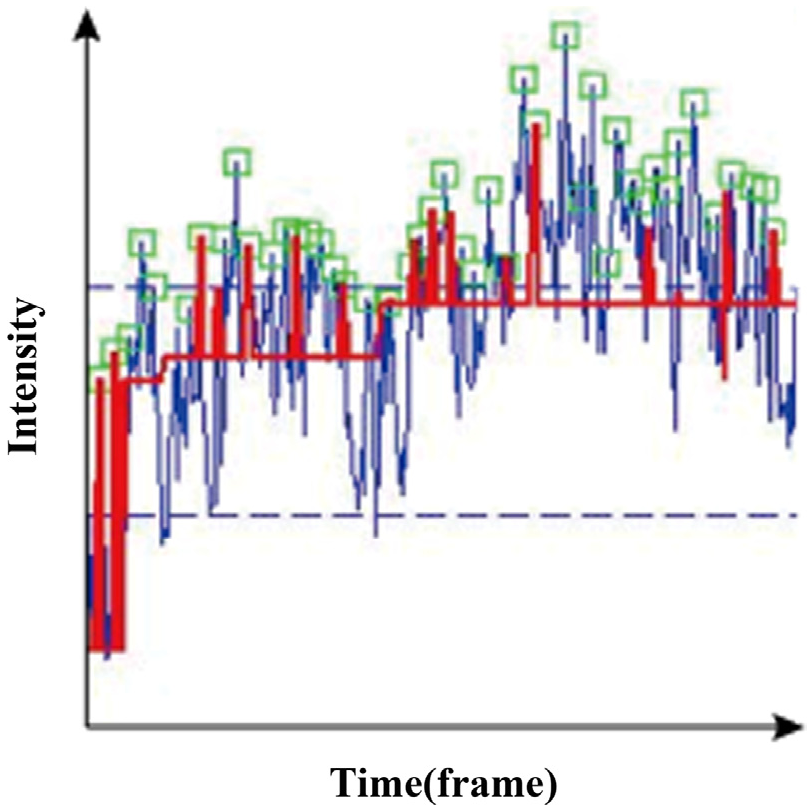 Fig 1: The overall research procedure from audio processing to lighting output.
3. Automatic Segment Detection
A song isn't an emotionless block; it evolves. The authors developed a peak and valley detection methodology using Gaussian convolution to smooth noise. This allows the system to partition a song into logical "paragraphs," applying different lighting strategies for a verse versus a chorus.
Experimental Insights: Mapping Sound to CIE Space
The authors invited professional lighting technicians to regulate colors for 988 music clips. These manual preferences served as the "Ground Truth" for training the SVR.
Key Findings from MANOVA Analysis:
- Arousal is strongly correlated with Saturation. High-energy music demands vivid, saturated colors.
- Valence influences Hue. Positive valence tends towards warmer tones, while negative valence attracts cooler, blue-heavy spectrums.
- Genre serves as a vital anchor. For example, Electronic music is mapped to technological "pale blue" tones, while Latin music leans toward vibrant greens and reds.
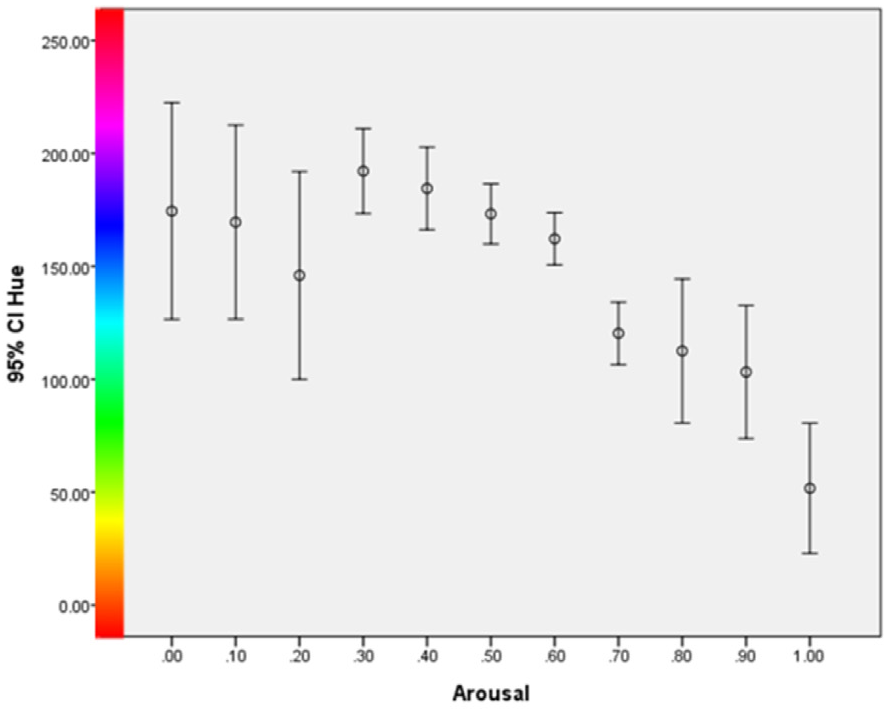 Fig 2: SVR-generated color maps showing the relationship between Arousal/Valence and lighting output.
Results & Performance
The system's performance was validated through both statistical correlation and human case studies.
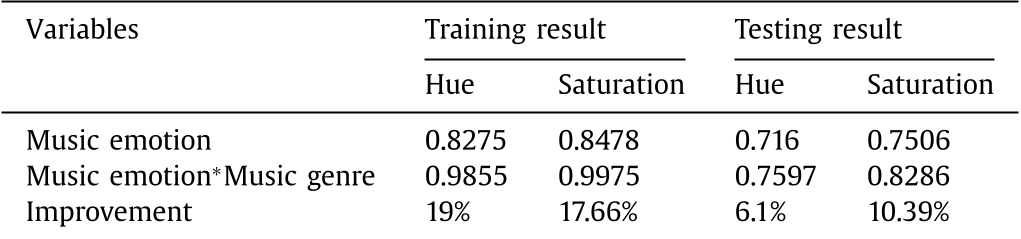 Table 1: Significant improvements in prediction accuracy after adding the Music Genre factor.
As shown in the table, adding the Music Genre factor improved the prediction of Hue by 19% and Saturation by 17.66%. In real-world testing, subjects found that songs with "harder" rhythms (like Rock or Funk) had significantly more "fit" between the music and the automatic lighting compared to more monotonous tracks.
Critical Analysis & Conclusion
Takeaway
This paper successfully demonstrates that stage lighting is not just a hardware problem, but a cross-modal mapping problem. By using SVR to create a continuous mapping between Thayer’s emotional space and CIE HSI color space, the authors have provided a scalable blueprint for AI-driven "Vibe" engineering.
Limitations
- Cultural Bias: The color-emotion mapping was based on a small sample of technicians. Color symbolism varies wildly across cultures (e.g., White in the West vs. East).
- Dynamics: The current system handles segments well but may lack the "micro-rhythmic" flourishes (strobe effects, precise gobo movements) that a human lighting designer would perform live.
Future Work
The next step for this technology lies in Deep Learning (RNNs or Transformers) to capture the temporal dependencies of music, allowing the lighting to anticipate emotional shifts rather than just reacting to them.