
Dreaming of Stardom and Money: The Anatomy of the Modern Streamer
Dreaming of Stardom and Money: Micro-celebrities and Influencers on Live Streaming Services
This study investigates the motivations of 7,667 broadcasters across three Social Live Streaming Services (SLSSs)—Periscope, Ustream, and YouNow—focusing on the pursuit of fame and financial gain. The researchers categorize streamers by platform, gender, origin, and age to define the profile of modern micro-celebrities and influencers.
TL;DR
In the high-stakes world of Social Live Streaming Services (SLSSs), not all streamers are chasing the same dream. This study analyzes over 7,600 streams across Periscope, Ustream, and YouNow to reveal a clear divide: while Gen Z hunts for "stardom" through chatting and music, older generations are more "grounded," utilizing live video primarily as a vehicle for financial gain.
The Problem: Beyond the Screen
Traditional media created celebrities; social media creates micro-celebrities. However, the transition to Social Live Streaming Services (SLSSs)—which blend Live TV with social networking—has shifted the focus toward an "online reputation economy."
The core problem addressed by the authors is the lack of empirical data on who these people are and why they go live. Why does an ordinary user move from being a consumer to a broadcast product? Is it the allure of the spotlight, or the pragmatic reach for a paycheck?
Methodology: Observing the Attention Economy
The research team conducted a massive-scale observation of 7,667 streams across three countries: Germany, Japan, and the USA.
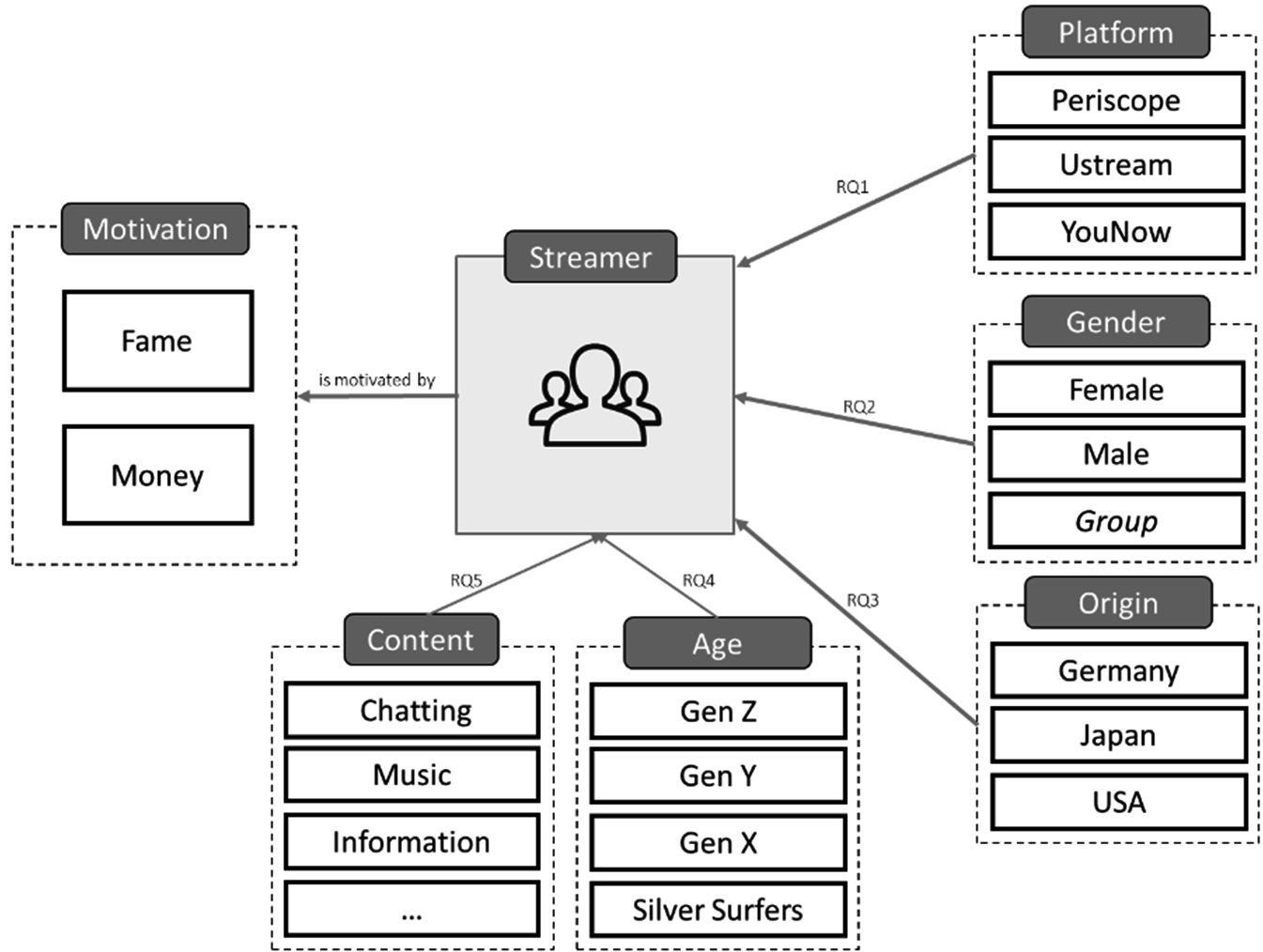
Using a mix of content analysis and direct inquiry (asking streamers their motives via chat), they categorized users into generational cohorts:
- Gen Z: Born after 1998
- Gen Y (Millennials): 1981–1998
- Gen X: 1961–1980
- Silver Surfers: Pre-1960
Results: The Fame vs. Fortune Divide
1. Platform Personality
The study found that platforms attract specific "dreamers":
- Ustream: The pragmatic choice. Streamers here are motivated by money (approx. 13%).
- YouNow: The stage for stars. Broadcasters are significantly more focused on achieving "stardom" (nearly 10%).
- Periscope: Neither factor dominates, suggesting more casual or spontaneous usage.
2. The Generational Gap
One of the most striking findings is the inverse relationship between age and the desire for fame.
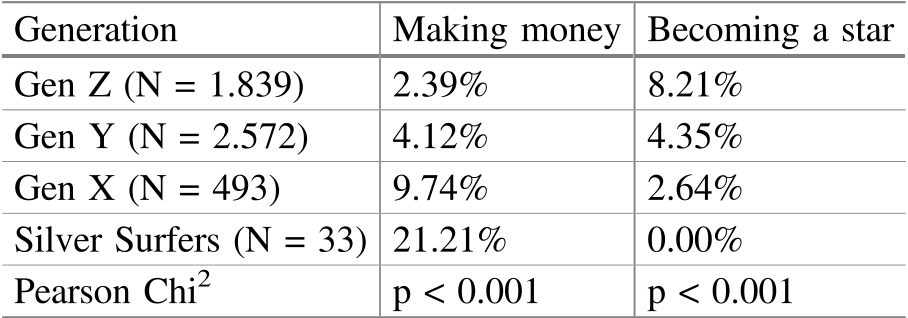
- The Youth (Gen Z): Highly motivated by the concept of the "star." They seek appreciation and social capital.
- The Seniors (Silver Surfers): Interestingly, over 21% are motivated by financial gain, while 0% reported an interest in becoming a star. For them, streaming is a business, not a popularity contest.
3. Content is King (But for different reasons)
What you stream reveals what you want.
- Fame-seekers spend their time Chatting (67.77%) and Making Music (42.86%). These categories allow for high interactivity and performance, essential for building a "fanbase."
- Money-seekers leverage Entertainment Media (40.29%) and 24/7 streams (e.g., webcams, informational feeds). They focus on content that can run long and accumulate passive views or ad revenue.
Critical Insight: The Illusion of Intimacy
The research highlights that micro-celebrity is not something a person is, but something they do.
Success on these platforms relies on Para-social Interaction—the illusion of a face-to-face friendship. Gen Z excels at this by using "affiliative techniques" in chat-heavy streams. Older generations, conversely, treat the platform as a utility for distributing information or media.
Conclusion & Limitations
This work provides a baseline for understanding the "human product" in the digital age. However, the study is a snapshot of 2016. In the years since, platforms like TikTok and Twitch have further blurred these lines, often making it impossible to separate fame from money through integrated "tipping" features (like Bits or Bars).
Future Outlook: The study suggests that as the "reputation economy" matures, the motivation for "fame" may become a secondary metric to "conversion"—where stardom is merely the marketing funnel for the ultimate goal: liquidity.
Senior Editor's Note: This research underscores the necessity for platforms to differentiate their monetization tools based on creator demographics. A platform built for Gen Z must focus on "gift-ability" and social status symbols, while one for Gen X should prioritize direct revenue and business information tools.