
The Calculus of Influence: A Micro-foundation of Social Capital
A Micro-Foundation of Social Capital in Evolving Social Networks
This paper presents a micro-founded mathematical model of social capital emergence in evolving directed networks. By integrating stochastic processes of birth, meeting, and linking, the authors identify three distinct forms of social capital—Bonding, Popularity, and Bridging—demonstrating how they are endogenously determined by individual homophily, structural opportunism, and gregariousness.
TL;DR
Why do some people become "influencers" while others remain "brokers"? This paper provides a rigorous mathematical framework to explain how social capital—traditionally a vague sociological concept—emerges from simple individual behaviors like Homophily (liking people like ourselves) and Structural Opportunism (meeting friends of friends). It proves that our "popularity" and "centrality" are not just luck, but predictable outcomes of how we choose to connect.
The "Why": Moving Beyond Static Networks
Most network science treats social capital as a snapshot. You have a high "degree" (popularity) or high "betweenness" (bridging) because of where you are. But networks are living organisms. The authors argue that we need a micro-foundation: we must understand the individual "atomic" decisions that lead to the birth of a link.
The core tension identified is the Homophily Paradox:
- We want to connect with similar people (Homophily) because it's efficient and supportive.
- This efficiency creates "Structural Holes"—gaps between different social clusters.
- These holes prevent the flow of new ideas, creating a massive opportunity for the few "open-minded" individuals who dare to bridge them.
Methodology: The Three Faces of Capital
The paper shifts social capital from a metaphor to a measurable triad:
- Bonding Capital: The direct utility you get from your immediate circle. It thrives on homophily and density.
- Popularity Capital: Your influence on others. The paper proves that Preferential Attachment (the rich-get-richer effect) is not an accidental rule but a direct result of Structural Opportunism.
- Bridging Capital: Your role as an information broker. Measured by Betweenness Centrality, this capital is found at the intersection of segregated groups.
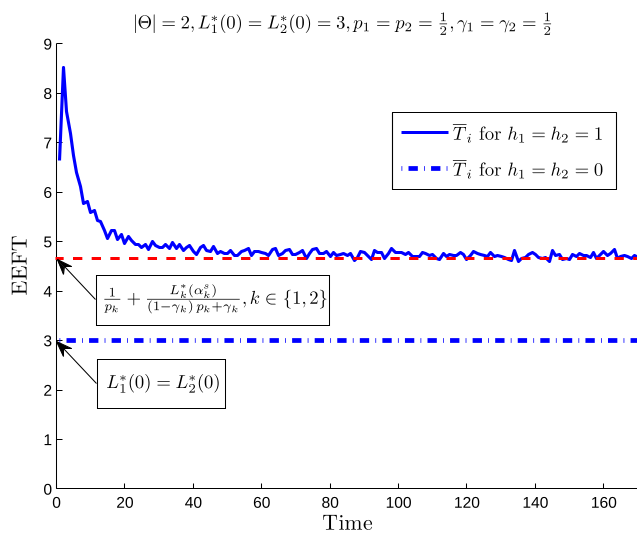 Fig 1: The model links exogenous behaviors (gregariousness, homophily) to endogenous network outcomes.
Key Insights and Equations
One of the paper's most profound contributions is the derivation of Ego-network Formation Time (EFT). If you are a minority in a homophilic society, your EEFT (Expected EFT) is significantly higher:
This equation tells us that Structural Opportunism () is the "accelerant" for minorities. If you are in a small group, you must be opportunistic to find your tribe quickly; otherwise, you remain "socially unsatisfied."
Results: The Power of the "Open-Minded"
Through extensive simulations, the authors find that in highly polarized (homophilic) societies, the most central players are not the most "popular" ones, but the "tolerant" types.
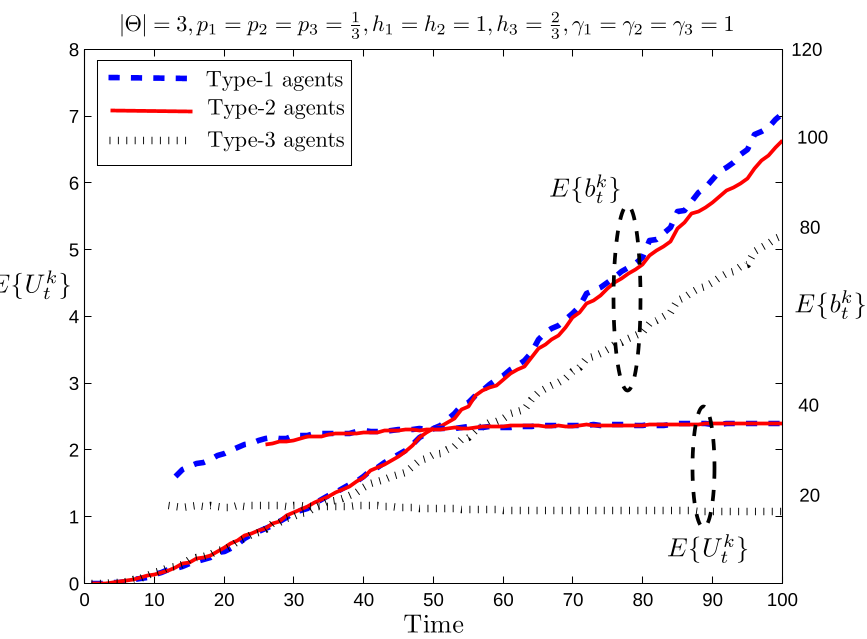 Fig 2: The trade-off between Bonding (Utility) and Bridging (Centrality).
As seen in the figure above:
- Homophilic agents maximize their local utility (Bonding) but have low centrality.
- Non-homophilic agents fill the "Structural Holes," gaining massive Bridging Capital. However, they suffer lower local utility because they interact with diverse, often "dissimilar" types.
Critical Perspective: The "Information Hub" Risk
The paper doesn't just praise tolerance; it also identifies the Dominant Coalition. In a non-homophilic society, a single group that decides to be homophilic can become an "Information Hub." By sticking together in a world that is spreading out, they form a "core" that controls the flow of information for everyone else. This explains how insular, highly coordinated groups can dominate larger, more fragmented "open" societies.
Conclusion
This work bridges the gap between economic rationality and sociological structure. It suggests that if you want to be popular, be opportunistic. If you want support, seek homophily. But if you want to be the source of the "next big idea," you must be the bridge over a structural hole—even if it costs you some local comfort.