
Beyond Popularity: The Hidden Mechanics of Network Inequality
Micro-structural foundations of network inequality: Evidence from a field experiment in professional networking
This study investigates the micro-structural origins of network inequality, combining observational data from 8 professional conferences with a controlled field experiment. It proposes and validates that "triadic closure"—the tendency to form ties with friends-of-friends—is a primary driver of network inequality, often confounded with the traditional "preferential attachment" status-signaling model.
TL;DR
Why do the "rich get richer" in social networks? While we usually blame "status signaling"—the idea that we all want to know the most popular person in the room—new research by de Vaan and Wang reveals a more mechanical truth. Using a field experiment at professional conferences, they demonstrate that network inequality is largely driven by triadic closure (being introduced through mutual friends). When you remove the "mutual friend" advantage, the "celebrity" advantage of central actors almost entirely disappears.
Background: The Limits of Preferential Attachment
In network science, Preferential Attachment is the standard model for inequality. It suggests that individuals with more ties (high degree centrality) attract even more ties because their popularity acts as a signal of quality.
However, this theory has two major "bugs":
- Cognitive Load: Research shows humans are actually terrible at perceiving the overall network structure. We rarely know exactly "how popular" someone else is.
- Reciprocity Fear: We often avoid the "cool kids" because we assume they won't have time to give back to the relationship.
The "Triadic Closure" Insight
The authors propose an alternative: Central actors don't always get more ties because they are wanted more; they get them because they are exposed more. If Alice knows 100 people and Beth knows 5, Alice is statistically much more likely to be "one handshake away" from a stranger.
Methodology: The Conference Laboratory
The researchers collaborated with a networking app called Topi. They tracked "meeting requests" among attendees at 9 professional conferences.
The Field Experiment
This is where the study gets ingenious. They split attendees into two groups:
- Control group: The app's recommendation list prioritized people with mutual connections (simulating real-world triadic closure).
- Treatment group: The app's list was randomized. A "popular" person was just as likely to appear at the bottom of the list as a "nobody."
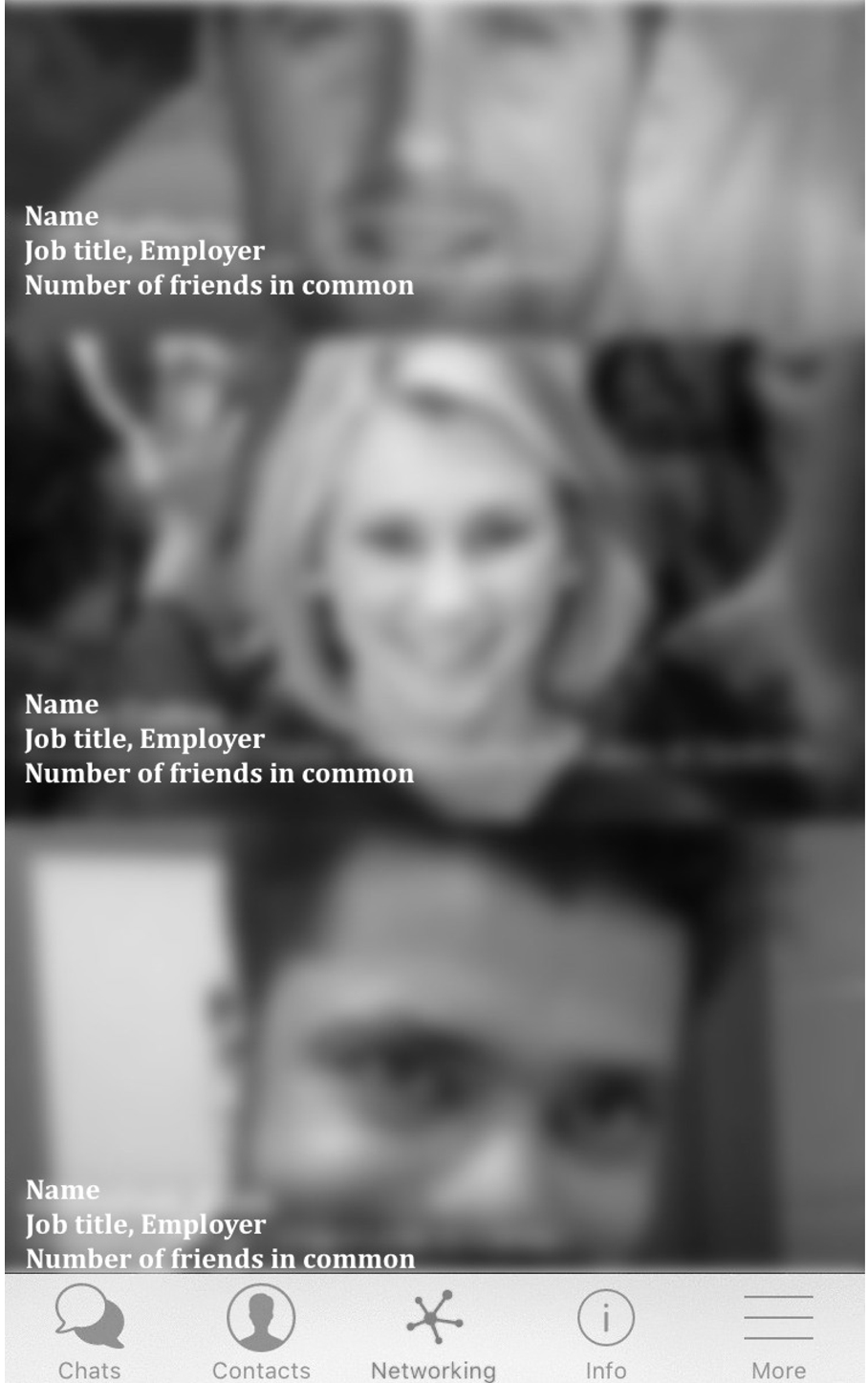 Figure 1: The Topi App interface showing the "PeopleRank" recommendation system used for the intervention.
Key Results: Killing the Popularity Myth
The findings were stark. In the control group, central actors (those with many LinkedIn/Facebook connections) received significantly more requests. But in the Treatment Group, where the "mutual friend" shortcut was removed:
- Centrality stopped predicting success. Highly connected actors and barely connected actors were chosen at almost the same rate.
- Inequality growth slowed. By simply changing the recommendation order, the researchers "flattened" the social hierarchy without reducing the total amount of networking.
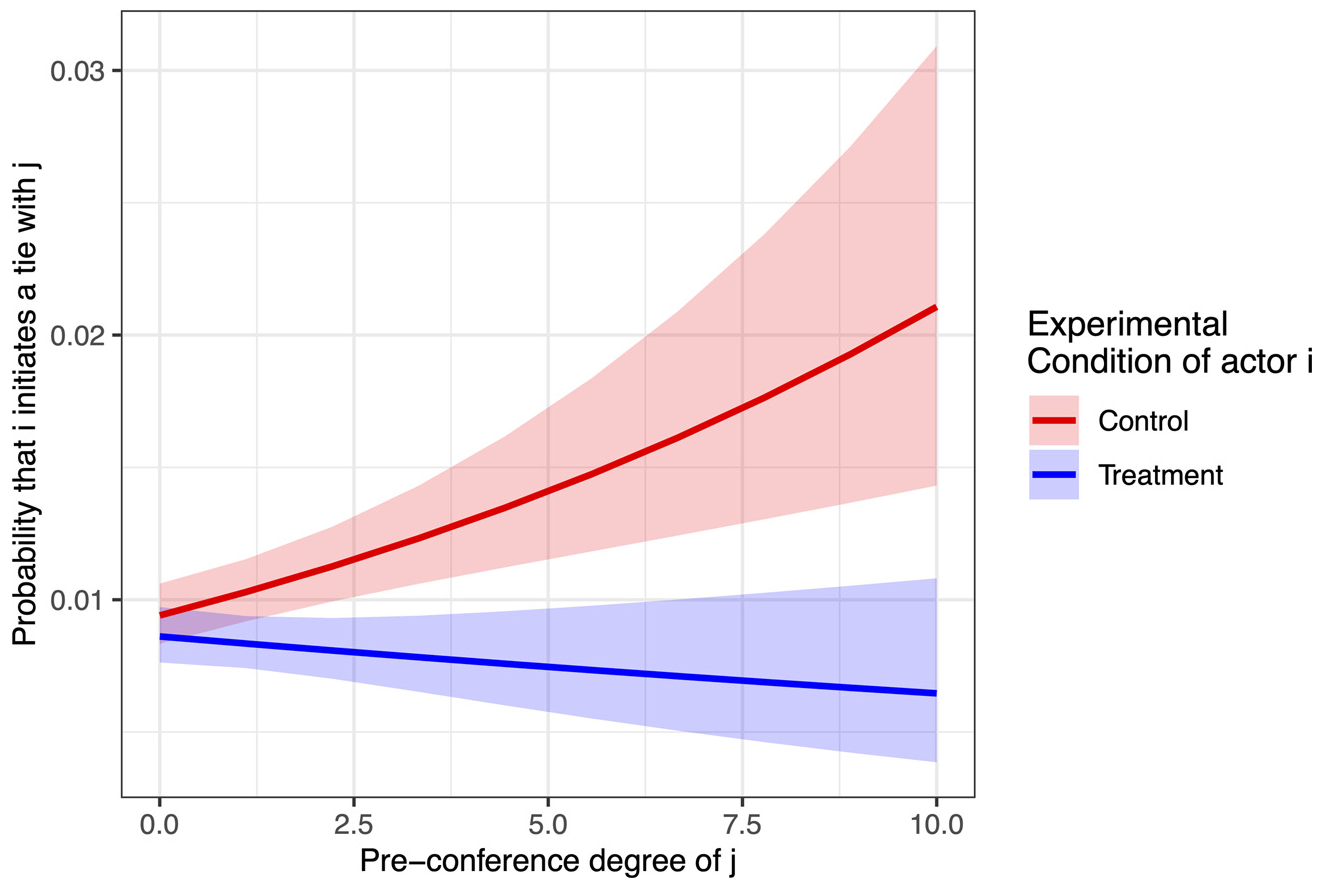 Figure 2: Predicted probability of tie formation. Note how the slope for the control group is steeply positive, while the treatment group (random exposure) is almost flat.
Critical Analysis & Takeaways
This paper provides a powerful critique of the Matthew Effect ("to those who have, more will be given"). It suggests that social capital disadvantage (often faced by women and minorities) isn't necessarily due to a lack of "quality" or "status," but a lack of structural exposure.
Limitations
The study focuses on initial meeting requests. We don't know if these "interventions" lead to long-term, high-quality relationships. Furthermore, in a professional conference, people are "strategic networkers," which might emphasize structural shortcuts more than in casual social settings.
Future Outlook: Engineering Equality
For designers of platforms like LinkedIn or internal corporate directories, the message is clear: Algorithms that suggest "People You May Know" (based on mutual ties) are inequality engines. To foster diversity and break silos, platforms should experiment with "serendipity engines" that connect people based on shared interests rather than shared friends.
Conclusion
Network inequality is not just a result of human preference; it is a result of network geometry. By understanding that triadic closure is the "engine" of inequality, we can begin to design social systems—and technologies—that provide more equitable access to social capital for everyone.