Decoding Sina Weibo: How Personality and Demographics Shape the Digital Self
An Analysis of Microblogging Behavior on Sina Weibo: Personality, Network Size and Demographics
This study investigates the interplay between personality traits, demographics, and microblogging behaviors on Sina Weibo. By combining online survey data from 498 active users with objective social network metrics via APIs, the researchers identified significant correlations between Big Five traits (especially Extraversion and Openness) and specific digital engagement patterns.
TL;DR
Why do some people post dozens of updates a day while others merely lurk? This study analyzes 498 active Sina Weibo users to reveal that our digital footprints are deeply tied to who we are. Key findings show that Extraversion and Openness drive active engagement (likes, votes, and mentions), while gender and education largely dictate the size and reach of one's social circle.
Background: The Rise of the "Twitter-like" Giant
In 2012, Sina Weibo transformed from a niche service to a platform used by nearly half of China’s internet population. Unlike traditional Social Networking Services (SNS) that require reciprocal "friendships," Weibo operates on a follower/followee model. This creates a unique ecosystem for studying human behavior: an environment where social status (followers) and interaction styles (mentions/voting) are quantified.
Methodology: Bridging Psychometrics and Big Data
The researchers didn't just rely on what users said; they looked at what they did.
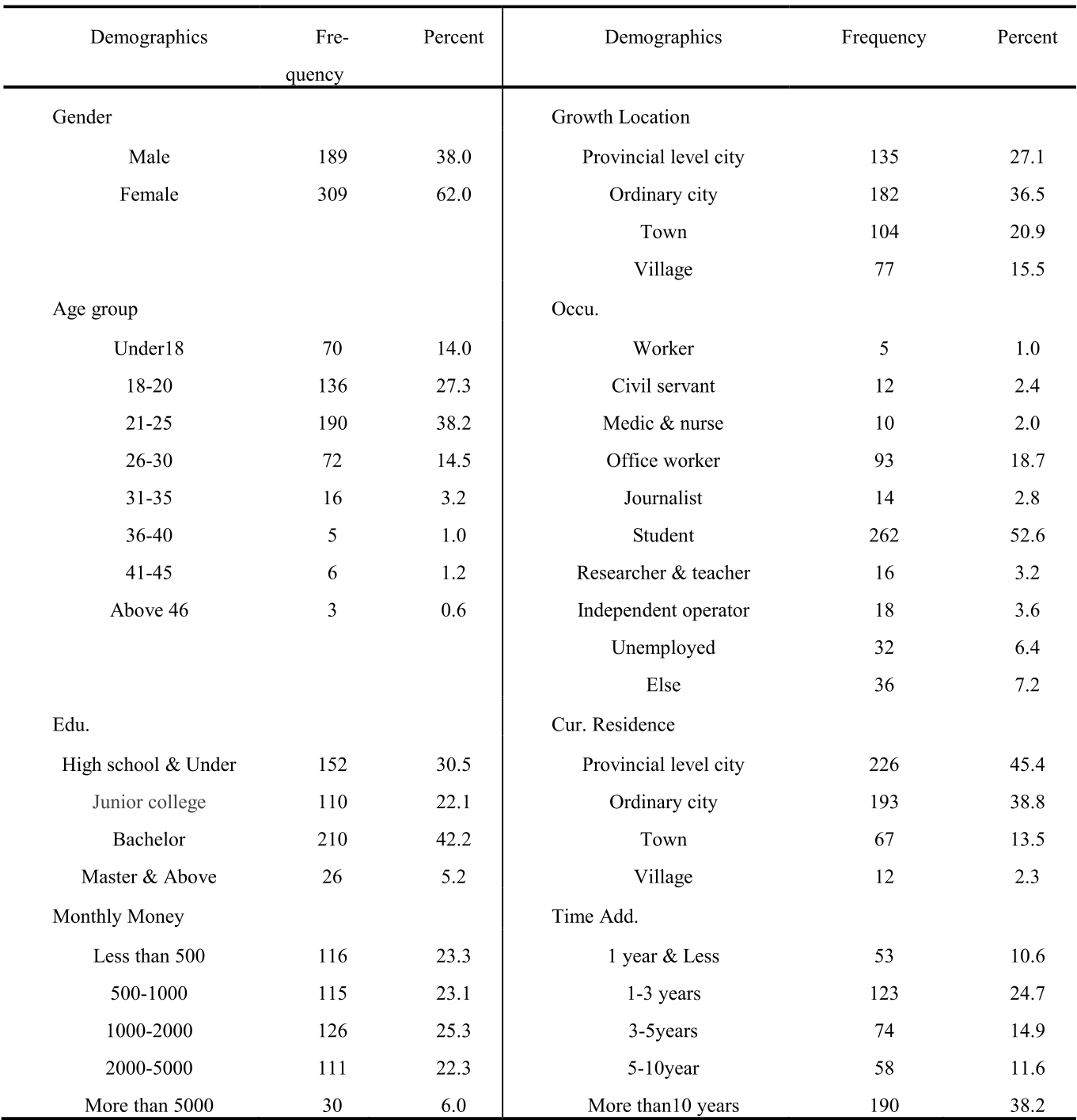
- Filtering the Crowd: From an initial pool of over 96 million IDs, the team filtered for "general active users," excluding "star users" (celebrities) and advertisers to ensure results reflected everyday human psychology.
- The Big Five Integration: Participants completed the BFI-44, measuring Extraversion, Agreeableness, Conscientiousness, Neuroticism, and Openness.
- API Data Harvesting: Real-world metrics—total updates, followers, and social network size—were pulled directly from Weibo’s servers.
Core Insights: Personality is Digital Destiny
The study’s most compelling revelation is the "Digitized Extravert."
1. The Power of Personality
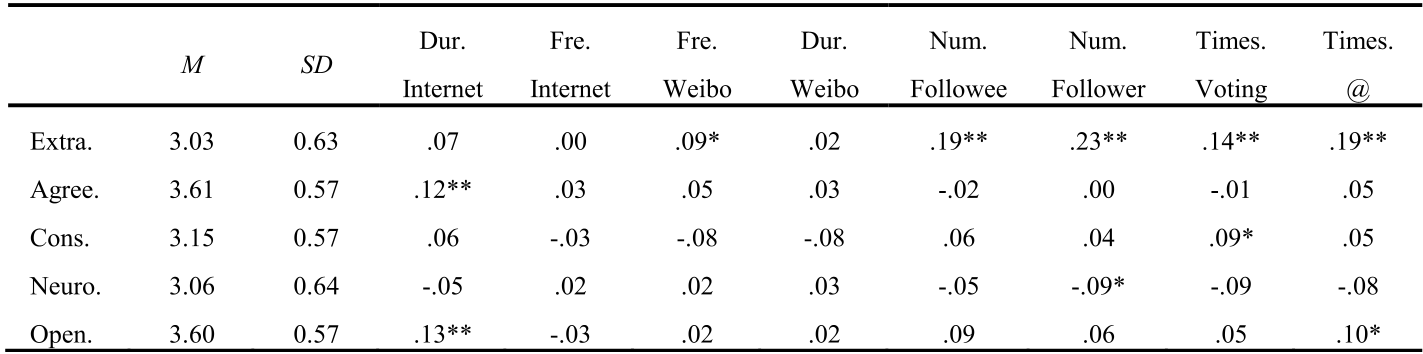
- Extraversion: Highly extraverted users weren't just more active; they had significantly more acquaintances among their followers and used the "@" function more frequently. They use the platform as a tool for social maintenance.
- Openness: Correlated with the use of the "@" function, suggesting that curious, "open" individuals utilize Weibo for broader information-seeking and diverse interactions.
- Neuroticism: Showed a significant negative correlation with the number of acquaintances among followers, suggesting that higher anxiety or emotional instability might lead to more guarded or smaller digital social circles.
2. The Demographic Divide
While personality drives style, demographics often drive substance and scale:
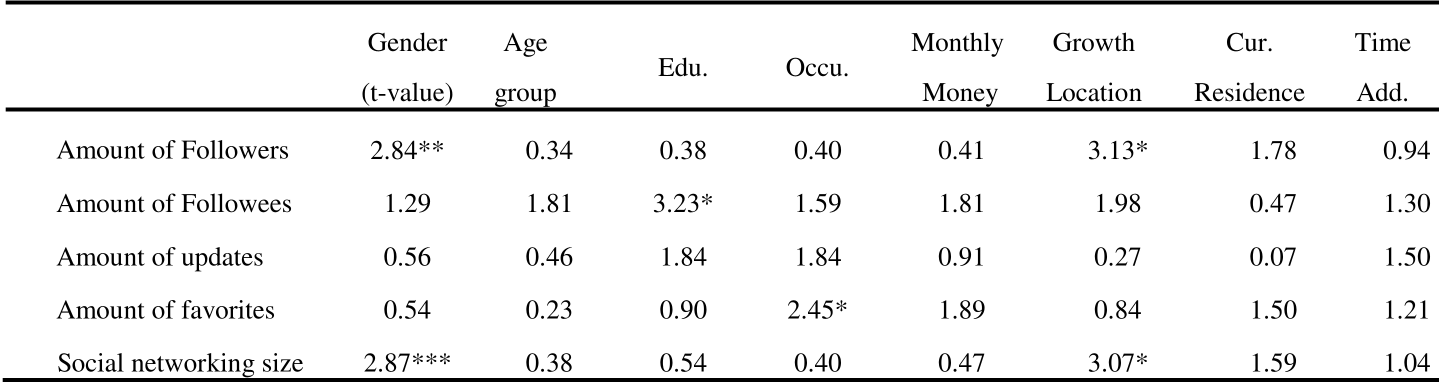
- The Gender Gap: Male users had significantly more followers and larger total network sizes than female users.
- The Age & Education Factor: Younger and more highly educated users spent more time on the platform, likely due to higher digital literacy and "disposable time."
Critical Analysis: Why This Matters
The research moves beyond the "what" of social media use and explores the "why." It suggests that microblogging satisfies specific psychological needs. For an extravert, Weibo is a megaphonic extension of their social life. For a student or a journalist (the latter showed the highest "favorites" count), it is a critical informational tool.
Limitations: The study was conducted in 2012. Since then, the advent of algorithmic feeds and short-video content (like Weibo’s integration of video) has likely shifted these dynamics. Furthermore, the reliance on self-reporting for "use duration" can introduce bias compared to server-side time tracking.
Conclusion
This paper provides a foundational baseline for understanding the "Psychology of the Feed." It proves that our online personas are not masks, but mirrors—reflecting our education, our gender, and most importantly, our fundamental personality traits. For marketers and platform designers, the message is clear: user engagement is not a monolithic metric, but a diverse set of behaviors driven by the user's psychological DNA.