
Beyond Static Numbers: Modeling the "Hidden Pulse" of Human Migration through Multi-Evolutionary Agents
Migration and Social Networks- An Explanatory Multi-evolutionary Agent-Based Model
This paper introduces a Multi-evolutionary Agent-Based Model (ABM) designed to simulate human migration and social network dynamics. By integrating genetic, social, and phenotypic layers, the model successfully replicates SOTA emergent behaviors like countermigration flows and return migration, validated against 2000 Brazilian Census data.
TL;DR
Human migration is rarely just about "higher wages." It is a complex interaction of survival instincts and social feedback loops. This paper presents a Multi-evolutionary Agent-Based Model that moves beyond simple rule-based simulations to show how secondary phenomena like countermigration and social network-driven flows emerge from the interplay of genetics and society.
The Problem: The High Cost of Static Data
Demography is traditionally a "backward-looking" science, relying heavily on expensive censuses and surveys. While these methods tell us what happened, they struggle to explain why specific patterns, like return migration, persist. Analytical models often assume "perfect rationality," treating humans like particles in a gas rather than individuals influenced by their aunt's letter from a distant city or their own internal survival drives.
Methodology: The Three Layers of Choice
The authors argue that for a simulation to be "plausible," it must account for Synergy. They implement a three-tier evolutionary architecture within each agent:
- Genetic Layer: Represents innate traits (like survival instincts), evolving over generations.
- Social Layer: Represents the agent's interpretation of collective values and laws, evolving throughout the agent's life cycle.
- Phenotypic Layer: The actual "expression" of the agent—this is where the decision to move or stay is finalized based on the weight of the previous two layers.
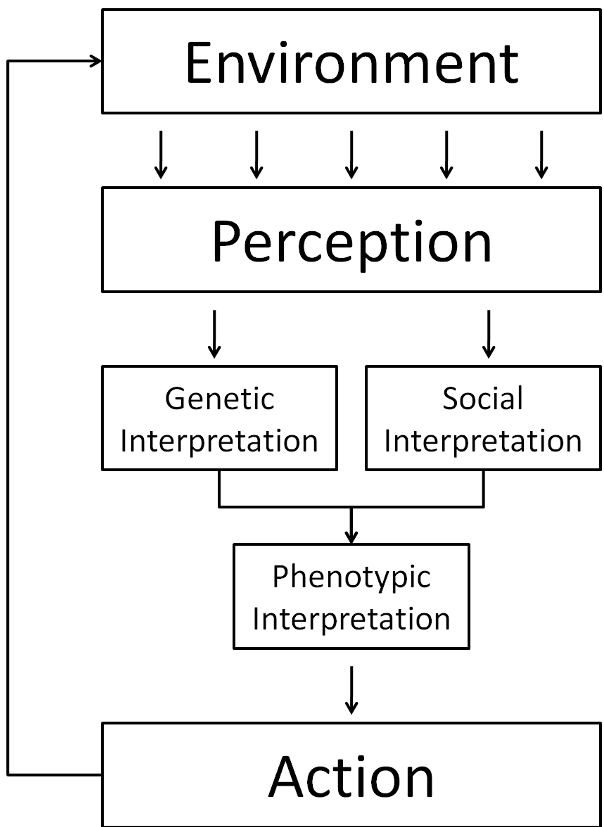 Fig 1: High-level representation of the decision-making mechanism.
The math behind this is elegant: perception is treated as a multiplexed signal , where genetic urgency () might conflict with social rules (). The Phenotypic layer acts as an interpreter, calculating a "Happiness" score that weighs economic gains (Wages vs. Cost of Living) against social gains (the strength of social ties in different regions).
Experimental Setup: Virtual Brazil
To test the model, the researchers calibrated their environment using real data from the 2000 Brazilian Demographic Census (Pernambuco state). They simulated two regions (R1 and R2) with varying economic growth and unemployment rates, populating them with agents possessing realistic age and education distributions.
Results: The Emergence of Complexity
The most striking finding was the difference between a standard "Cognitive Agent" and the proposed "Multi-evolutionary Agent."
- The Baseline: Standard agents showed simple convergence—people moved for money, and the system stabilized quickly.
- The Multi-evolutionary Breakthrough: These agents exhibited "secondary phenomena." Even when economic differences were slight, countermigration flows appeared.
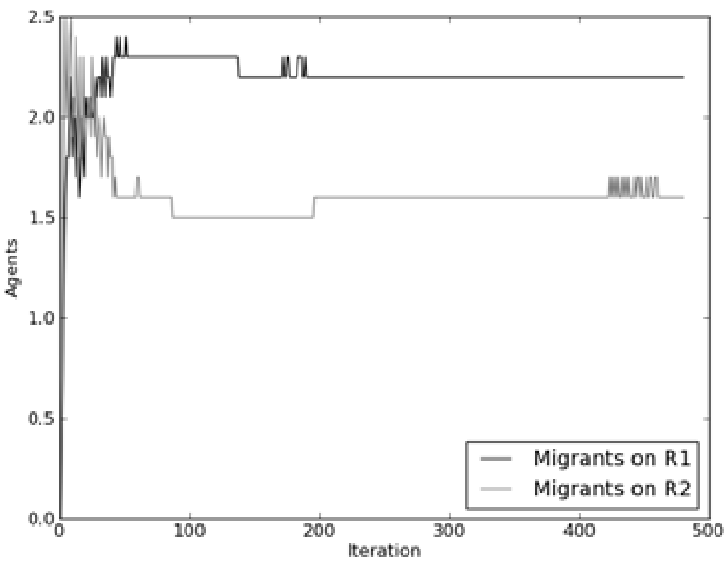 Fig 2: Migration progress with multi-evolutionary agents and social communication enabled.
When the authors enabled Social Network Information Flow (allowing agents to communicate wages to friends in other regions), the speed of convergence increased. More importantly, it showed that "social transmission"—the act of a happier agent influencing a friend—is a more powerful driver of migration than pure economic data alone.
Deep Insight: Why This Matters
The value of this work lies in its Inductive Bias. By building evolutionary adaptability directly into the agent's architecture, we can see "second-order" effects that aren't explicitly programmed into the rules. It proves that social networks aren't just a "feature" of migration; they are the infrastructure through which migration sustains itself.
Limitations & Future Work
While the model is robust, it currently treats the environment as a "container" without its own micro-level dynamics. Future iterations could explore cultural influences (e.g., how the culture of Region A changes when a large population from Region B arrives) or apply the same hierarchical architecture to simulate urban violence and its socio-economic roots.
Takeaway: To understand where people go, don't just look at their wallets—look at who they talk to and what their ancestors passed down.