
Reaching Minimum Adjustment Consensus: A Strategic Intersection of Social Networks and Decision Science
Reaching a minimum adjustment consensus in social network group decision-making
This paper introduces a minimum adjustment consensus framework for Social Network Group Decision-Making (SN-GDM) utilizing Incomplete Linguistic Preference Relations (ILPRs). The core method, Minimum Adjustment Consensus Model (MACM), optimizes personalized adjustment parameters for inconsistent decision-makers (DMs) to achieve a group consensus threshold with minimal cost and maximum efficiency.
TL;DR
Reaching a consensus in large groups is often a "tug-of-war" between individual opinions and group goals. This paper presents a sophisticated framework for Social Network Group Decision-Making (SN-GDM) that uses Structural Hole Theory to weight participants and a Minimum Adjustment Consensus Model (MACM) to minimize the "cost" of changing one's mind. It proves that personalized adjustments are faster and cheaper than the "one-size-fits-all" approach.
Problem & Motivation: The Flaw in Uniformity
In real-world scenarios—like government officials deciding on environmental policies—decision-makers (DMs) are not isolated islands; they are nodes in a social network. Existing research has two major blind spots:
- Topology Ignorance: Most models only look at "tie strength" (how well two people know each other), ignoring the strategic value of a person's position in the network structure.
- Inefficient Feedback: When a group doesn't agree, traditional systems ask everyone to adjust their opinions by a fixed percentage (λ). This is inefficient and often ignores the individual's initial preference "cost."
The authors' insight is twofold: Importance is derived from bridge positions (structural holes), and efficiency is found in personalized optimization.
Methodology: Topology-Aware Weighting and MACM
The framework operates in two primary phases:
1. Determining "Who Matters" (Weight Allocation)
Instead of just counting direct connections, the authors use Structural Hole Theory.
- Tie Strength: Measuring direct relationships.
- Constraint Coefficient: Identifying DMs who occupy sparse parts of the network. A DM in a "structural hole" (low constraint) is a bridge between different information groups and is thus given higher weight.
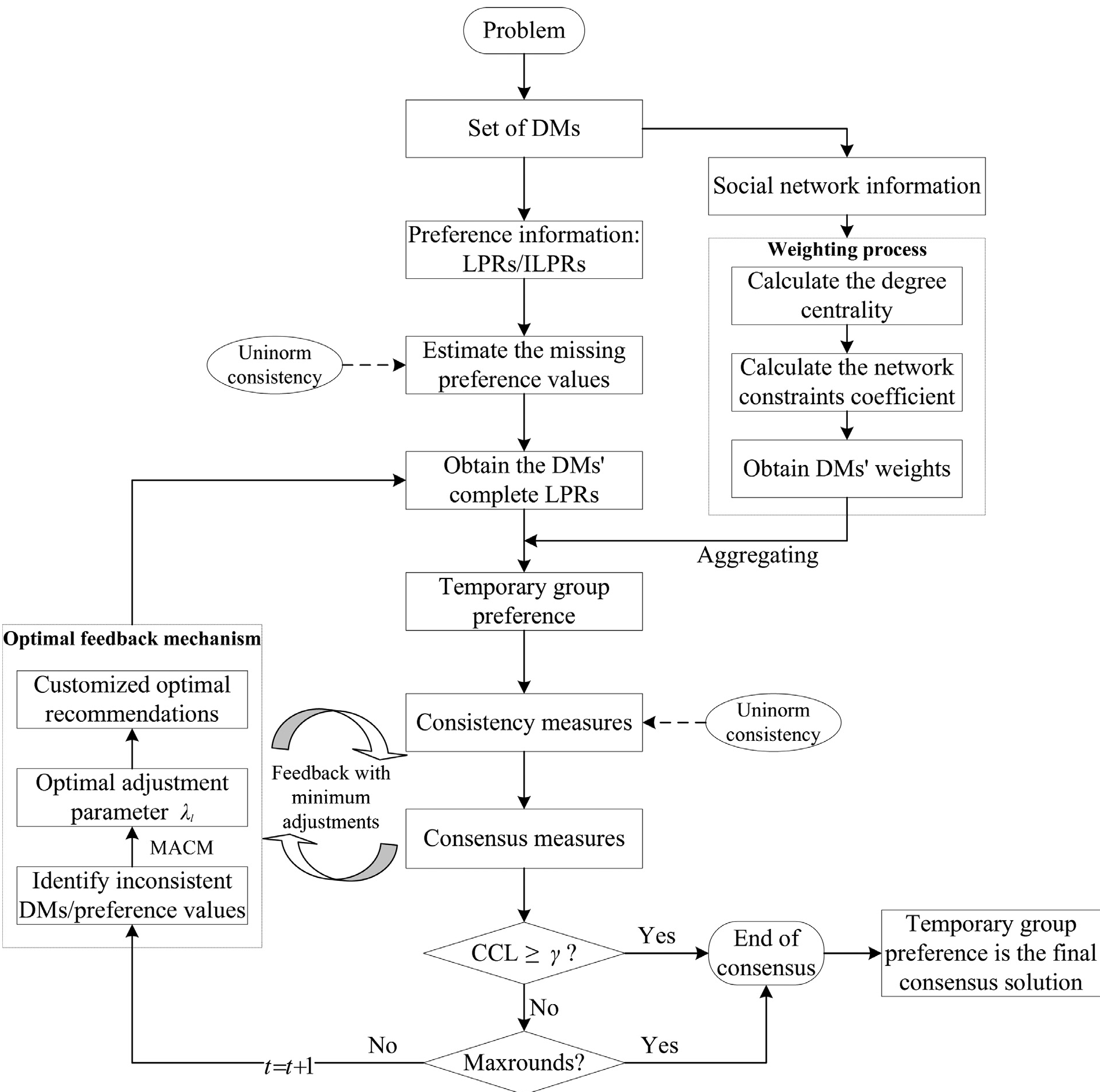 Fig 2. The proposed framework for consensus reaching in social networks.
2. The Minimum Adjustment Consensus Model (MACM)
When consensus is not met, the system identifies Inconsistent DMs. Instead of a global λ, the MACM solves an optimization problem:
- Objective: Minimize the total deviation (cost) from initial opinions.
- Constraints: Ensure the new group opinion meets the required consistency and consensus thresholds.
- Linearization: The authors cleverly transform non-linear absolute value constraints into a linear programming model, allowing for rapid solving via standard tools like LINGO.
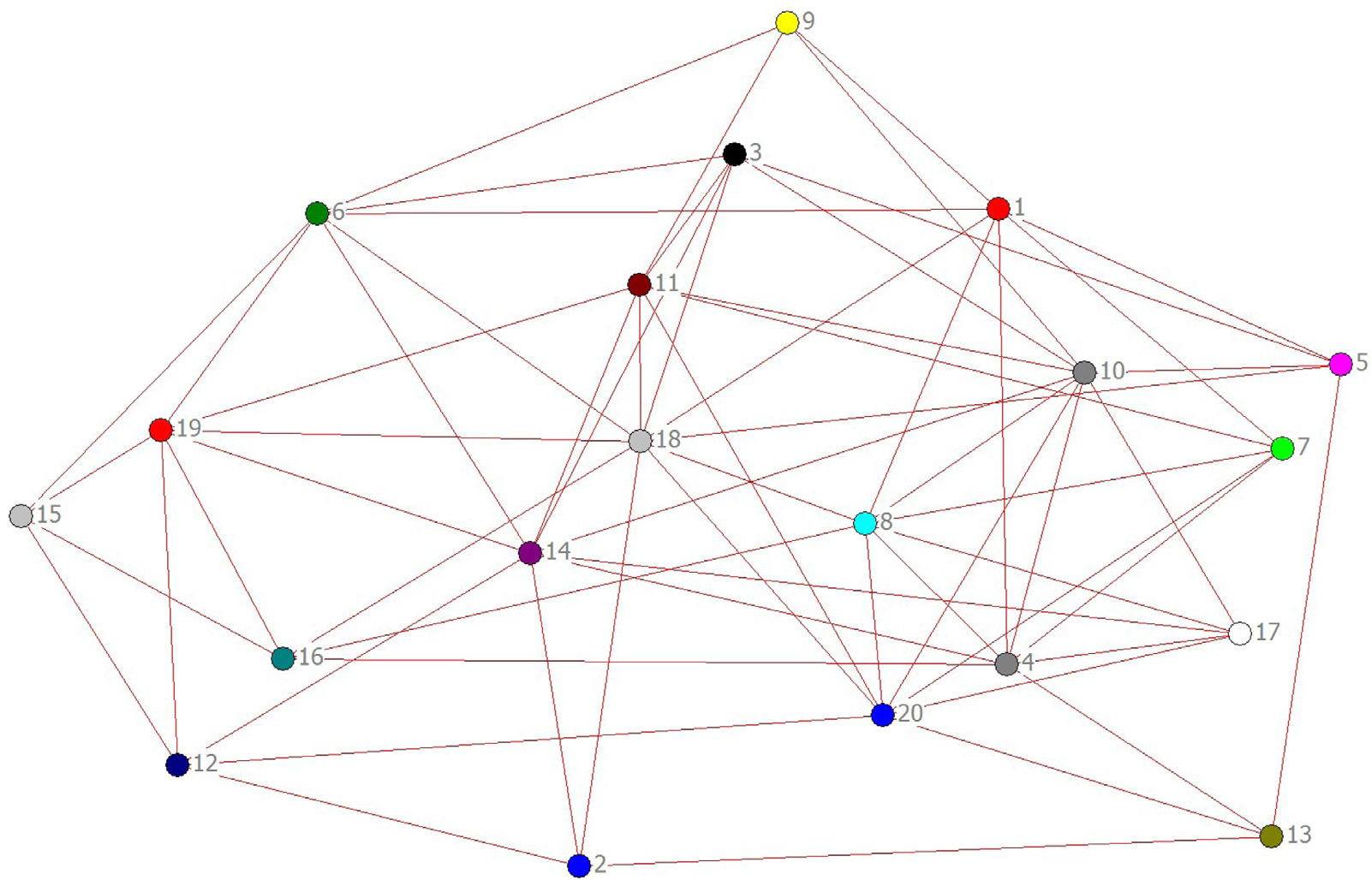 Fig 3. Visualization of the DMs' social network structure used in the application example.
Experiments & Results: Efficiency Gains
The model was tested on a case study involving 20 river chiefs in China's Taihu Lake Basin.
- Speed: The proposed model achieved consensus in a single round.
- Cost Efficiency: By personalizing the adjustment parameters (), the total cost was limited to 1.6532.
- Comparative Advantage: Traditional methods using a fixed resulted in a cost of 2.9279—an unnecessary 77% increase in "opinion adjustment cost."
 Table 6. Comparison showing that variable adjustments (our method) minimize rounds and costs compared to fixed λ values.
Critical Insight & Conclusion
The Power of the Bridge
The most striking takeaway is the validation of the "Strength of Weak Ties" in decision-making. DMs who aren't in the "inner circle" but bridge different groups are mathematically proven to be more critical for information diversity, and the model weights them accordingly.
Limitations & Future Work
The model currently assumes a static network structure. In reality, social ties evolve during the decision-making process. Future research should look into Opinion Dynamics, where the very act of reaching a consensus changes the trust relationships (edges) between decision-makers.
Final Takeaway
For organizations looking to scale group decisions, this paper provides the mathematical "glue" to connect social psychology (networks) with hard optimization (consensus costs).