
Mining Contrast Rules: Uncovering the "Hidden Symmetries" in Online Education
Mining interesting contrast rules for a web-based educational system
This paper introduces a framework for mining "Contrast Rules" within web-based educational systems like LON-CAPA. It proposes the MCR (Mining Contrast Rules) algorithm to identify significant performance disparities and behavior patterns between different student demographics or problem sets, even for low-support instances.
TL;DR
Educational data mining often suffers from the "needle in a haystack" problem—how do we find rare but vital patterns that explain why one group of students succeeds while another fails? This paper presents a formal framework for Contrast Rules, a technique designed to highlight the differences between population segments. By using the Mining Contrast Rules (MCR) algorithm, the researchers move beyond standard association rules to find actionable disparities in student performance and learning strategies.
The Motivation: Why Standard Association Rules Fail Educators
In a typical web-based educational system (like LON-CAPA at Michigan State University), we are swimming in data: logs of every mouse click, every homework attempt, and every time-stamped interaction.
Standard data mining often asks: "What items frequently go together?" (e.g., "Students who do Homework A also do Homework B"). However, educators need to know: "What makes the 'Passing' group different from the 'Failing' group?"
The technical challenge is twofold:
- The Support Paradox: Interesting behavioral differences are often infrequent. If you set a high support threshold, you miss the "gold." If you set it low, the algorithm explodes with redundant rules.
- Actionability: A rule like "Students who get 100% on everything usually pass" is statistically strong but useless. We need unexpected rules that challenge instructional assumptions.
Methodology: The Geometry of a "Contrast"
The authors define a Contrast Rule (CR) not as a single implication, but as a comparison between a Base Rule () and its Neighborhood ().
The MCR Algorithm
Instead of mining the entire dataset at once, the MCR algorithm follows a "Divide and Conquer" strategy:
- Target Partitioning: Split the data based on a target variable (e.g., Gender: Male vs. Female; Final Grade: Pass vs. Fail).
- Closed Itemset Mining: Use a very low minimum support to find "closed itemsets" (maximal sets of items that appear together), which reduces redundancy.
- Contrastive Ranking: Compare the rules found in the different partitions using three primary objective measures:
- Difference of Confidences: Highlighting where is much higher than .
- Difference of Proportions: Looking at vs .
- Chi-Square: Testing for statistical independence between attributes.
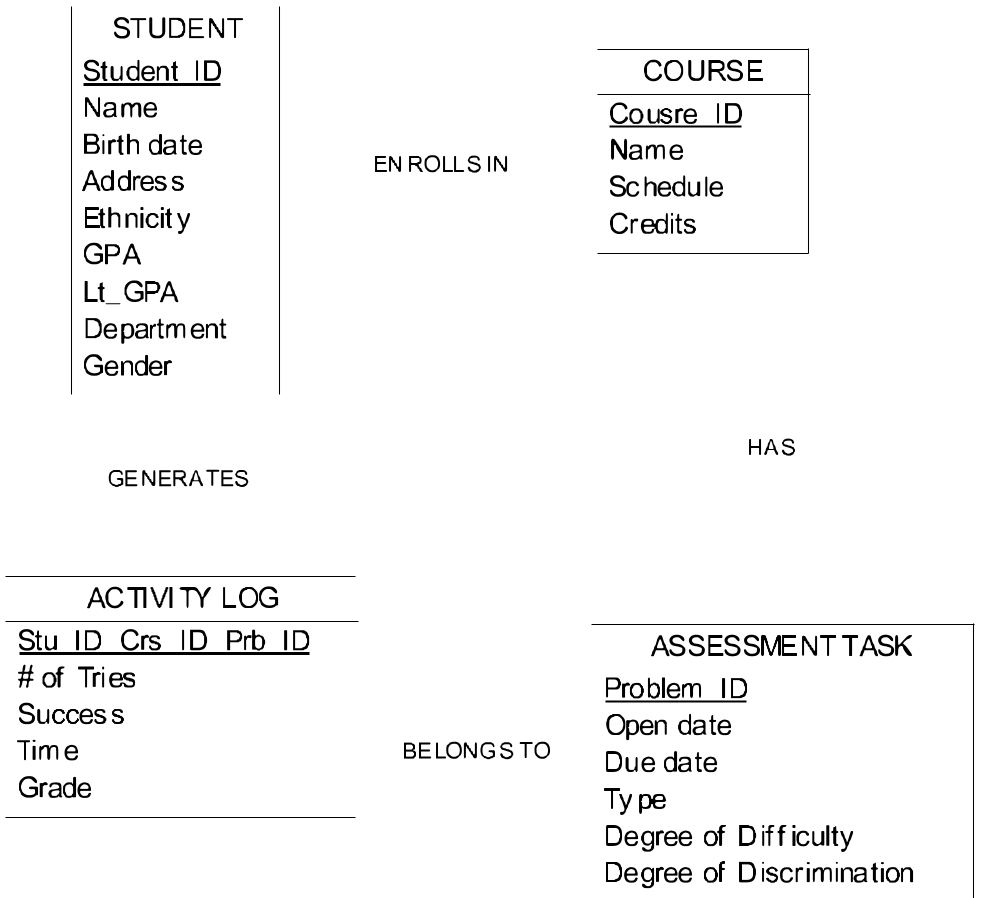 Figure 1: The MCR Algorithm workflow for discovering candidate rules.
Experimental Insights: What the Data Revealed
The researchers applied this to three undergraduate courses (Physics, Biology, and Chemistry). They categorized the results into Expected, Unexpected, and Unknown.
1. Validating Intuition (Expected)
The algorithm found that in Physics (LBS 271), success in homework problems had a confidence ratio of 12.7 compared to failure. While obvious, this validates that the LON-CAPA homework system is a reliable predictor of final exam success.
2. Behavioral Surprises (Unexpected)
One of the most intriguing findings came from the Biology dataset (BS 111). It showed that High-GPA female students were significantly more likely to have "Long Time Gaps" (>20 hours) between their first incorrect attempt and their final correct answer compared to their male counterparts.
- Interpretation: This suggests a difference in learning strategies—perhaps a more reflective or methodical approach to error correction among high-performing female students.
3. Actionable Intervention
In Chemistry (CEM 141), students with transfer GPAs in the [1.5, 2.0) range had a 92.3% confidence of failing. This provides a clear "Early Warning" signal for instructors to provide remedial support before the first midterm even occurs.
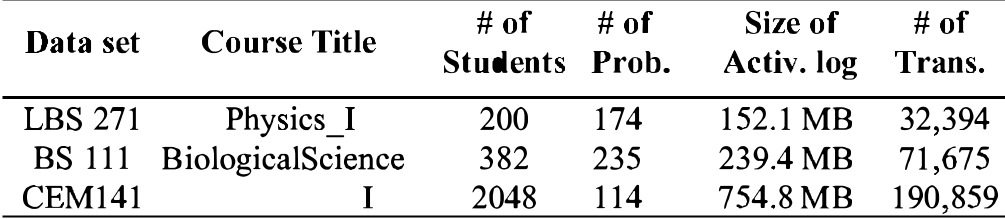 Figure 2: The scale of the datasets used, showing up to 190,000 student transactions.
Critical Analysis & Conclusion
The power of Contrast Rules lies in their Inductive Bias. By forcing the algorithm to look for differences rather than mere co-occurrences, it naturally filters out the "background noise" of a course.
Limitations:
- Discretization Dependency: The success of the mining depends heavily on how continuous variables (like GPA or Time) are "binned."
- Expert Bottleneck: "Unknown" rules still require a human-in-the-loop (ed-psychologists) to determine if a pattern is a profound pedagogical insight or just a data artifact.
The Takeaway for Tech Leaders: Mining for contrasts is a robust paradigm not just for education, but for any domain where group-specific behavior matters (e.g., A/B testing, user churn analysis, or medical diagnostics). It turns "Big Data" into "Comparative Insight."