
Mining the Evolution: Decoding Shifting Customer Behavior in Retail
Mining changes in customer behavior in retail marketing
This paper proposes a framework for "Change Mining" in retail customer behavior by integrating RFM (Recency, Frequency, Monetary) variables with demographic data. It introduces extended measures of similarity and unexpectedness to identify evolving association rules across different time periods, significantly enhancing the ability to detect shifting consumer trends.
TL;DR
In the hyper-dynamic retail landscape, understanding what a customer did is less important than understanding how their behavior is changing. This paper presents a robust "Change Mining" framework that bridges the gap between static association rules and dynamic market reality. By refining similarity and unexpectedness measures, the authors provide a mathematical lens to detect when loyal groups "perish" and new "unexpected" segments emerge.
The Dynamic Blind Spot: Why Static Mining Fails
Most retail managers rely on periodic data mining to find association rules (e.g., "People who buy beer also buy diapers"). However, in a real-world setting, these rules are not permanent. Market trends, seasonal shifts, and competitive actions cause these relationships to evolve.
The authors identify a critical limitation in existing research: while some methods could track changes, they were technically constrained to simple "1-to-1" product relationships. This paper breaks that barrier, allowing for the analysis of complex "basket-to-basket" shifts.
Methodology: The Synthesis of RFM and Association Rules
The researchers don't just look at what was bought; they look at who is buying using a multi-step pipeline:
1. The RFM-BCG Integration
Instead of treating all customers equally, the study uses RFM Scoring (Recency, Frequency, Monetary) to segment the database. They apply different weights to these variables—prioritizing Recency (current relevance) over Frequency and Monetary value. This clusters customers into four categories: Best Customers (Most Valuable), Frequent Buyers, Spenders, and Uncertain Customers.
2. Enhanced Rule Matching
The crux of the paper is the modification of Similarity () and Unexpectedness () formulas. Unlike previous models, these equations now account for multiple items in the consequent part of the rule, defined as:
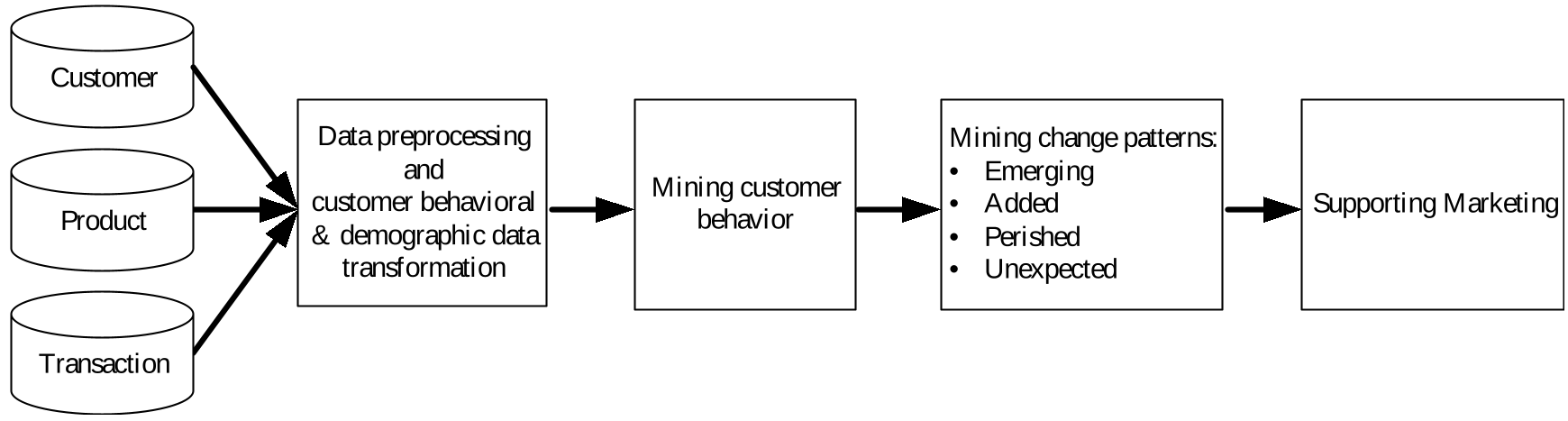 Figure 1: The proposed flowchart for change mining of customer behavior.
Identifying the Four Faces of Change
The system classifies every behavioral shift into one of four categories:
- Emerging Patterns: Rules that exist in both periods but show significant support growth. For example, the "Female Snack Foods" rule showed a 21.38% growth rate, indicating a strengthening trend.
- Added Patterns: Entirely new behaviors that didn't meet the threshold in the past but are now significant.
- Perished Patterns: Behaviors that were once reliable but have disappeared. The study found a "Male/High Frequency Snack Foods" rule that effectively vanished (), warning managers to stop wasting ad spend on this segment.
- Unexpected Changes:
- Unexpected Consequent: Same customer profile, different products (e.g., Male customers switching from snacks to vegetables).
- Unexpected Condition: Same product, different customer profile (the target market itself has shifted).
Experimental Insights & Results
Using the Foodmart dataset, the authors demonstrated the prototype's ability to visualize these transitions through an online query system.
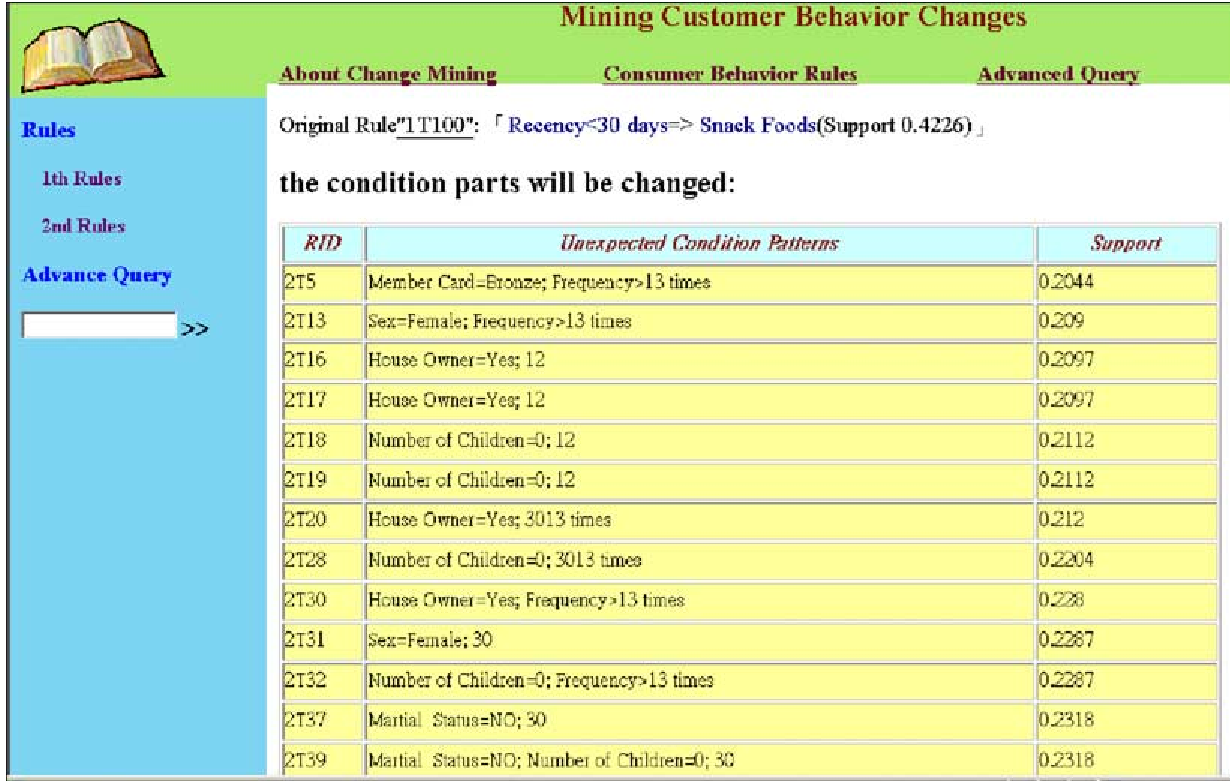 Table 1: Example of the system identifying Unexpected Condition Patterns for Snack Food purchases.
The results proved that "Best Customers" (Cluster 4) are the most volatile and require the closest monitoring through change mining to prevent churn and capitalize on new purchasing habits.
Critical Insight: Value-Driven Strategy
The true value of this work lies in Resource Reallocation. By identifying "Perished" patterns, a marketing manager can immediately halt failing campaigns. Conversely, "Unexpected Consequent" patterns act as an early warning system for product substitution trends.
Limitations & Future Outlook
While the weighted RFM approach is powerful, the selection of weights (5-3-2) remains somewhat subjective and based on domain expertise. Future iterations could benefit from automated weight optimization using machine learning. Additionally, as retail moves toward "Real-time" analytics, the time-stamped "period vs " approach may need to evolve into a continuous sliding-window analysis.
Conclusion
This paper serves as a bridge for retail businesses transitioning from basic descriptive analytics to Prescriptive Change Management. It turns data mining from a "history lesson" into a "strategic compass."