
Mining the Demand Chain: How Data Science Redefines Bicycle Innovation at GIANT
Mining Demand Chain Knowledge for New Product Development and Marketing
This paper proposes a data mining framework using the A-priori algorithm for Association Rule Mining to extract "demand chain knowledge" from customers and sales channels. Applied to the global bicycle brand GIANT, it transforms raw Mediterranean data into actionable knowledge patterns for New Product Development (NPD) and marketing strategies.
TL;DR
This study bridges the gap between manufacturing and consumer desire by applying the A-priori data mining algorithm to the bicycle industry. By shifting from a traditional Supply Chain view to a Demand Chain perspective, the researchers enabled GIANT to predict product failures and identify market segments with mathematical precision, transforming raw feedback into a blueprint for New Product Development (NPD).
Moving Beyond the "Data Dump": The Motivation
In the traditional "Manufacturer-Active" model, engineers focus on technical specs—lighter frames, smoother gears—often ignoring how the product is actually used or where it fails in the real world. This results in the Bullwhip Effect, where small changes in consumer demand cause massive fluctuations upstream.
The authors argue that most companies sit on "data dumps"—vast databases of customer complaints and sales records that are never translated into design improvements. The goal was to turn this "passive feedback" into "active knowledge."
Methodology: The A-priori Alchemy
The core of this research is the A-priori algorithm, a classic but powerful tool for Association Rule Mining. The logic is simple yet profound: if consumers who buy also frequently experience , then is a rule that designers must respect.
The Knowledge Loop
The researchers constructed a relational database spanning nine categories, including customer involvement, preferences, and maintenance history. They focused on three key metrics:
- Support: How often the pattern appears in the total dataset.
- Confidence: How often the rule is found to be true.
- Lift: The "interestingness" of a rule—how much more likely is given , compared to just occurring randomly.
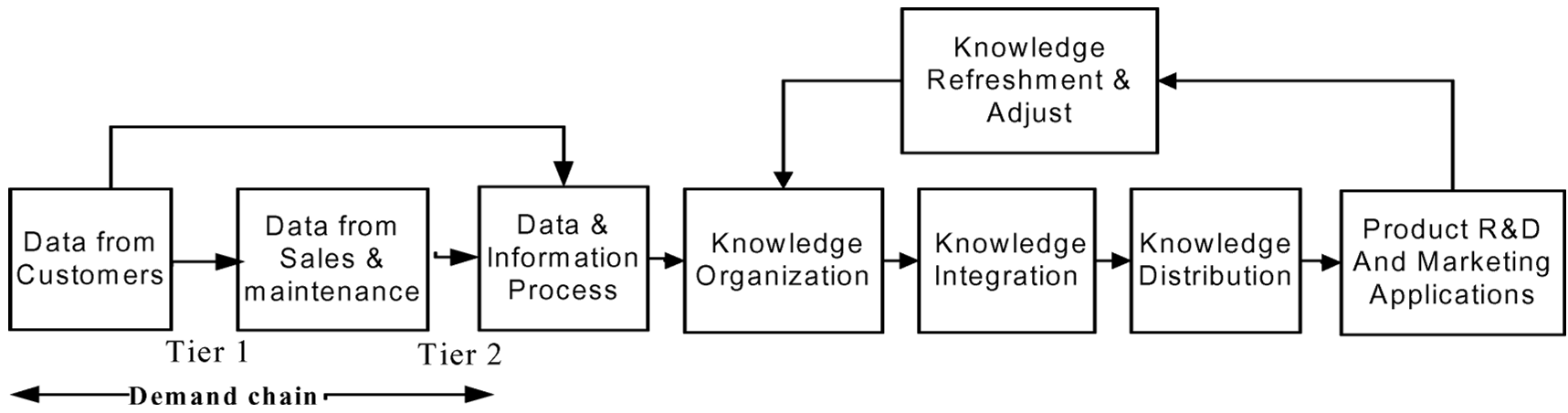 Fig 1. The flow of information processing to R&D and Marketing.
Key Patterns Uncovered
The study categorized findings into "Patterns" that directly impact the manufacturing floor:
1. The Safety Pattern (NPD Insights)
One of the most striking findings was Pattern A. The data revealed that women in Northern Taiwan, aged 20-29, with low product involvement, frequently suffered from "Saddle & Seat post" failures.
- Action: This isn't just a marketing stat; it’s a design directive. GIANT R&D must inspect the cushion chair shaft materials specifically for this demographic's bike models to prevent injury and brand erosion.
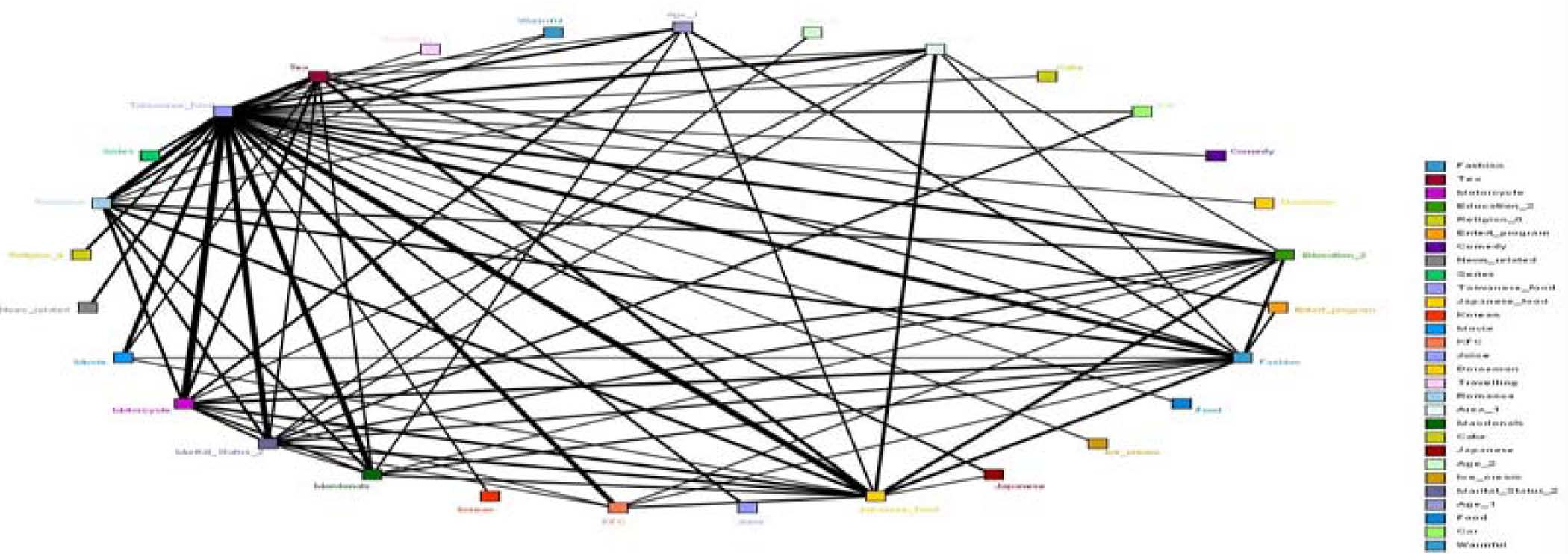 Fig 2. Visualizing the strength of relationships between specific parts and user demographics.
2. The Marketing Pattern
The research found that for Mountain Bikes (MTB) and Women's Bikes, the "Current Price" paid is a massive predictor of the "Future Price" willingness. With a Confidence of 73.1%, customers in the NT 3001-6000 range showed high loyalty to that specific price tier, allowing marketers to tailor electronic catalogs with surgical precision.
Experimental Evidence
The results were validated through a massive survey of 1,019 customers across 23 counties in Taiwan. By setting a minimum support threshold of 9.23% (the frequency of the rarest critical frame fault), the authors ensured that even "niche" but critical problems were captured.
| Rule | Lift | Support | Confidence | Consequent (Result) | Antecedent (Condition) |
|---|---|---|---|---|---|
| RA1 | 1.17 | 11.50% | 50.00% | Saddle & Seat Post Fault | North Area, Low Involvement, Female, 20-29 |
Critical Analysis & Conclusion
This paper illustrates a successful transition from pure manufacturing to a Knowledge-Service hybrid.
The Takeaway: Knowledge is an "intellectual asset." By integrating maintenance data (downstream) with R&D (upstream), GIANT successfully reduced the gap between "functional needs" and "customer wants."
Limitations & Future Work: While the A-priori algorithm is robust, it can be computationally expensive as databases grow. Future iterations would benefit from Real-time Stream Mining—where data from "smart bicycles" (IoT) feeds directly into the R&D cloud, allowing for "predictive maintenance" before a part even breaks.
Conclusion: The bicycle is no longer just a mechanical assembly of gears and rubber; in the age of the Demand Chain, it is a data-driven product that evolves based on the collective experience of its riders.