
Educational Data Mining: From Hidden Patterns to Predictive Pedagogy
Mining in Educational Data: Review and Future Directions
This paper provides a comprehensive review of Educational Data Mining (EDM) and Learning Analytics, specifically examining research trends between 2016 and 2019. It categorizes core methodologies—such as clustering, classification, and association rule mining—and explores the rising impact of Machine Learning and Deep Learning in predicting student performance and enhancing institutional decision-making.
TL;DR
Educational Data Mining (EDM) has evolved from simple rule-based sorting to a sophisticated field using Neural Networks and Machine Learning to predict student outcomes. This review maps the transition from manual data analysis to automated, "self-learning" systems that can identify at-risk students and provide unbiased grading, ultimately aiming to transform institutional effectiveness through data-driven insights.
Background: The Shift in the Educational Landscape
In the era of e-learning and digital classrooms, universities are drowning in data but starving for insights. The paper positions EDM as a bridge between raw data silos and strategic decision-making. Historically, the field was an "academic curiosity," but it has now become a central pillar for SOTA (State-of-the-Art) institutional management.
The Core Motivation: Why Traditional Methods Fall Short
The authors identify a critical bottleneck: Interpretability vs. Complexity.
- Early methods (Pre-2005): Mostly relied on Association Rule Mining. While easy to implement, it produced "noisy" outputs that non-technical educators couldn't use.
- The Modern Pain Point: There is a desperate need for "Unbiased Methods." Human grading and feedback are prone to subjectivity and fatigue. EDM offers a way to automate and standardize assessment across thousands of students simultaneously.
Methodology: The Tools of the Trade
The paper categorizes the EDM toolkit into several critical inductive biases:
1. Classification & Prediction
Using Decision Trees, SVMs, and Neural Networks to answer: "Will this student graduate?" or "What will their final score be?"
2. Clustering
Grouping students based on navigational patterns in e-learning platforms to identify similar behavior groups without requiring pre-labeled data.
3. Machine Learning & Neural Networks
The authors highlight the rise of Artificial Neural Networks (ANN) for time-series forecasting of student progress. Despite the "black box" criticism of ANNs, their predictive accuracy makes them indispensable for early warning systems.
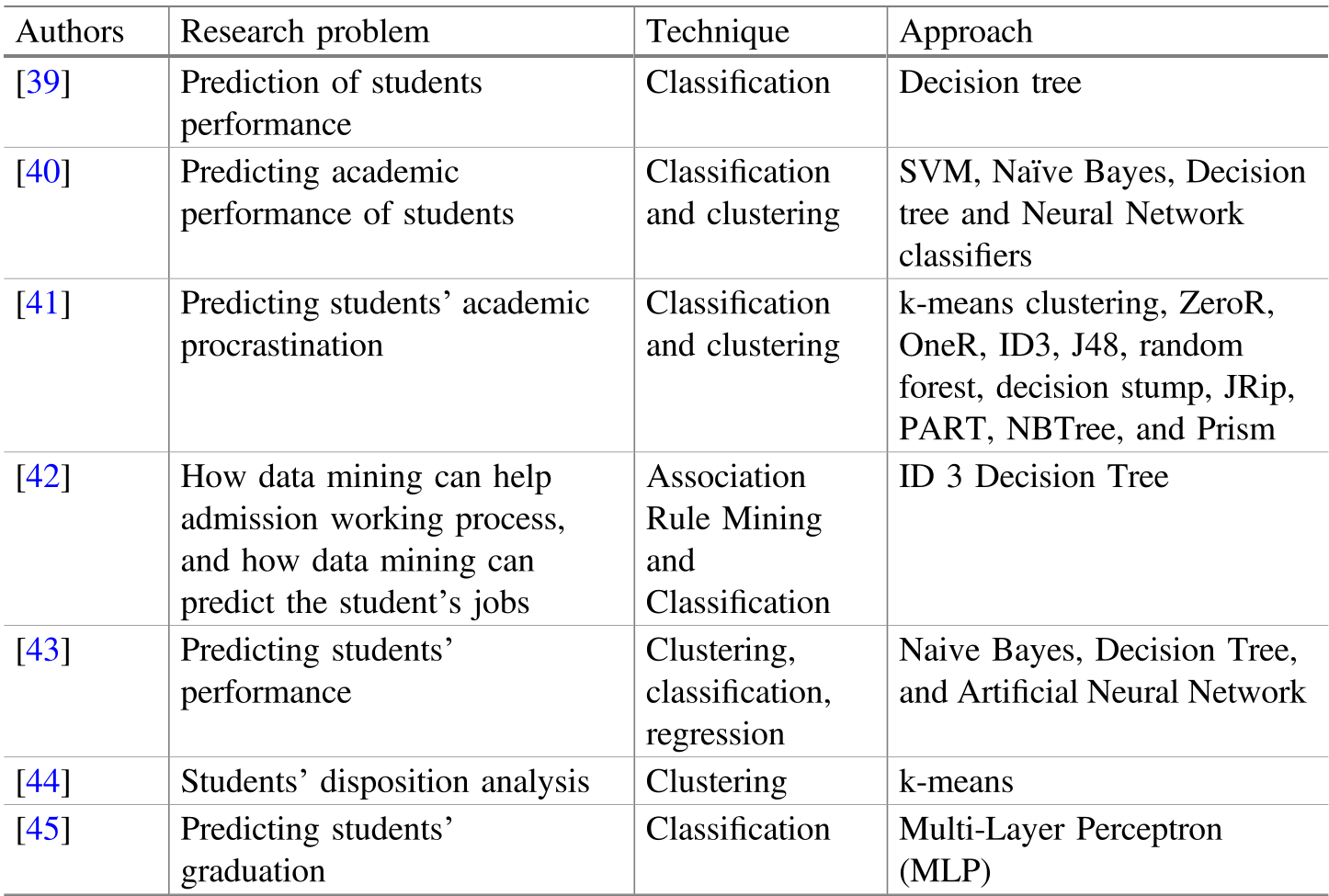 Figure 1: Comparison of various research problems and the ML techniques applied (2016-2019).
Key Insights from Experimental Reviews
The review synthesizes results from numerous studies (e.g., Durairaj et al., Okubo et al.) which demonstrate:
- Retention Improvement: By identifying "at-risk" variables (social, psychological, and environmental), institutions can intervene before a student drops out.
- Automated Grading: ML models like Multi-Layer Perceptrons (MLP) are being used to classify written assessments, significantly reducing teacher workload.
- Procrastination Tracking: Modern EDM can now predict academic procrastination by analyzing homework submission timestamps, not just the content of the work.
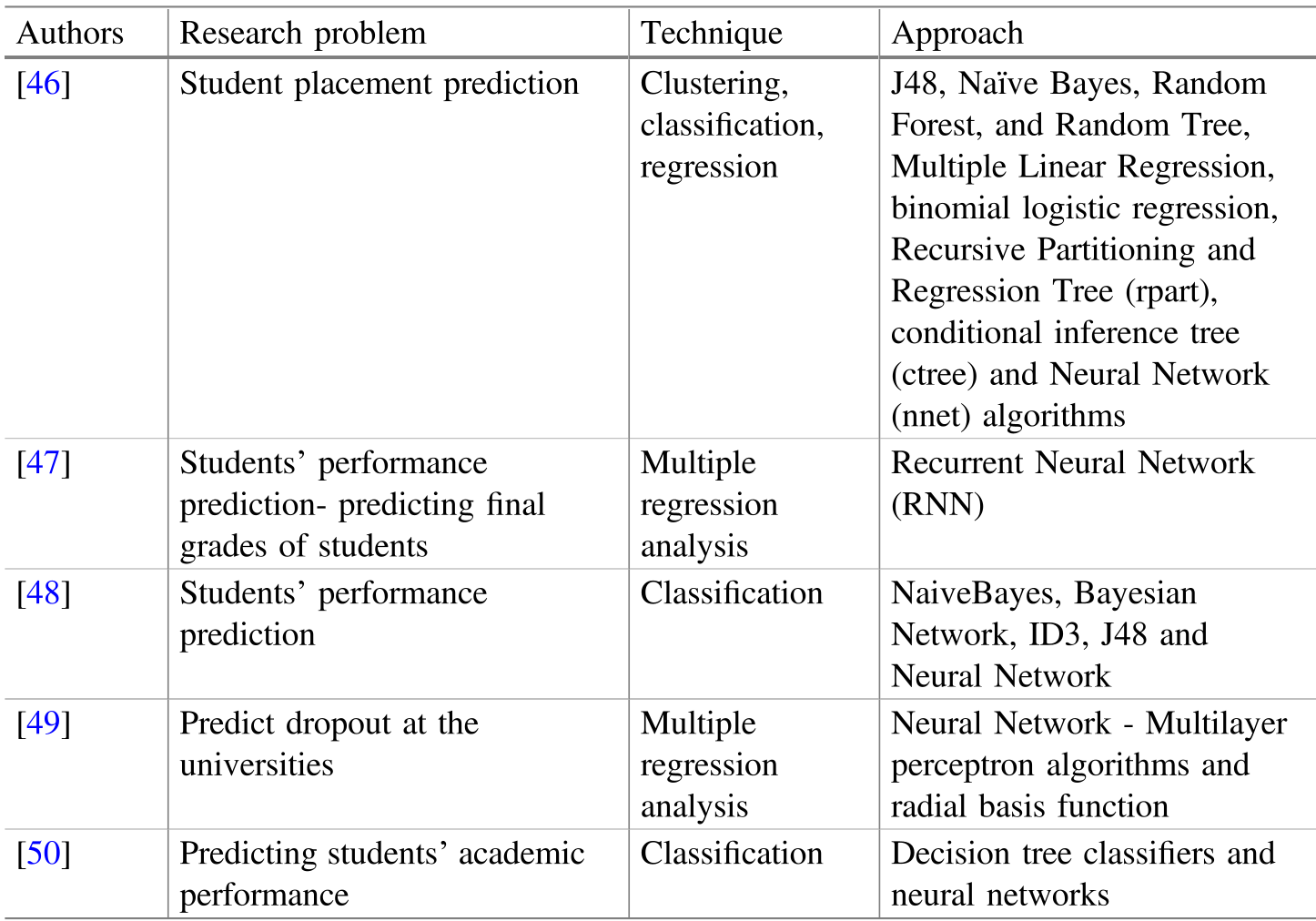 Figure 2: Advanced techniques like RNNs and Multiple Regression used for grade prediction and dropout analysis.
Critical Analysis & Future Outlook
While the paper celebrates the progress of EDM, it doesn't shy away from the challenges:
- The Interpretability Gap: Neural Networks provide high accuracy but low "explainability." Educators need to know why a student is flagged, not just that they are.
- Data Scarcity: There is a pressing need for larger, more adaptable, and public datasets to benchmark new algorithms.
- Hybridization: The next frontier is combining different DM techniques (e.g., Clustering + Classification) to create more robust ensembles.
Conclusion
This review serves as a roadmap for the "Imminent Event" of data-driven education. By moving toward Deep Learning and Learning Analytics, the educational sector is finally beginning to leverage its most valuable asset—data—to create a more personalized and successful experience for students worldwide.