
Decoding the Digital Self: Predicting Personality from Smartphone Metadata
Mining large-scale smartphone data for personality studies
2011-12-15
Summary
Problem
Method
Results
Takeaways
Abstract
This paper investigates the relationship between large-scale smartphone usage data and the Big-Five personality traits using multi-modal sensor logs. By analyzing 17 months of data from 117 users, the study proposes a supervised machine learning framework (SVM with RBF kernel) to automatically classify personality types, achieving performance superior to majority baselines.
## TL;DR
Can your smartphone usage patterns reveal who you are? This seminal study analyzes 17 months of continuous mobile data to prove that the Big-Five personality traits (Extraversion, Agreeableness, Conscientiousness, Emotional Stability, and Openness) are encoded in our digital footprints—from how often we check emails to our preference for silent modes.
## Background: Small Devices, Big Data
In the early 2010s, as smartphones transitioned from luxury items to daily necessities, researchers realized these devices offered a "new lens" into human psychology. Unlike traditional surveys, which suffer from "recall bias," smartphones provide objective, longitudinal data on social interactions and habits. This paper represents one of the first large-scale attempts to map these digital behaviors to the established **Big-Five** personality framework.
## The Core Problem: Beyond Subjectivity
Personality psychology has long struggled with scalability. Asking 1,000 people to answer 100 questions is expensive and intrusive. Furthermore, what people *say* they do often differs from what they *actually* do. The authors argue that by mining "privacy-sensitive" anonymous logs—such as Bluetooth scans and App usage—we can bypass human error and create automated, personalized mobile services.
## Methodology: The Multi-Modal Approach
The researchers didn't just look at calls; they looked at the *context* of life. They categorized data into five distinct streams:
* **Communication**: Frequency and duration of calls and SMS.
* **Social Proximity**: Bluetooth scans to estimate "crowdedness" or solitary environments.
* **Activity Profiles**: When and why users switch to "Silent," "Beep," or "Ascending" ringtone modes.
* **Application Usage**: Categorization of apps into Office, Internet, Games, and Media.
### Model Architecture and Classification
The study moved beyond mere correlation into **Supervised Learning**. Using a Support Vector Machine (SVM) with a Radial Basis Function (RBF) kernel, the authors treated personality prediction as a binary classification task (High vs. Low trait scores).
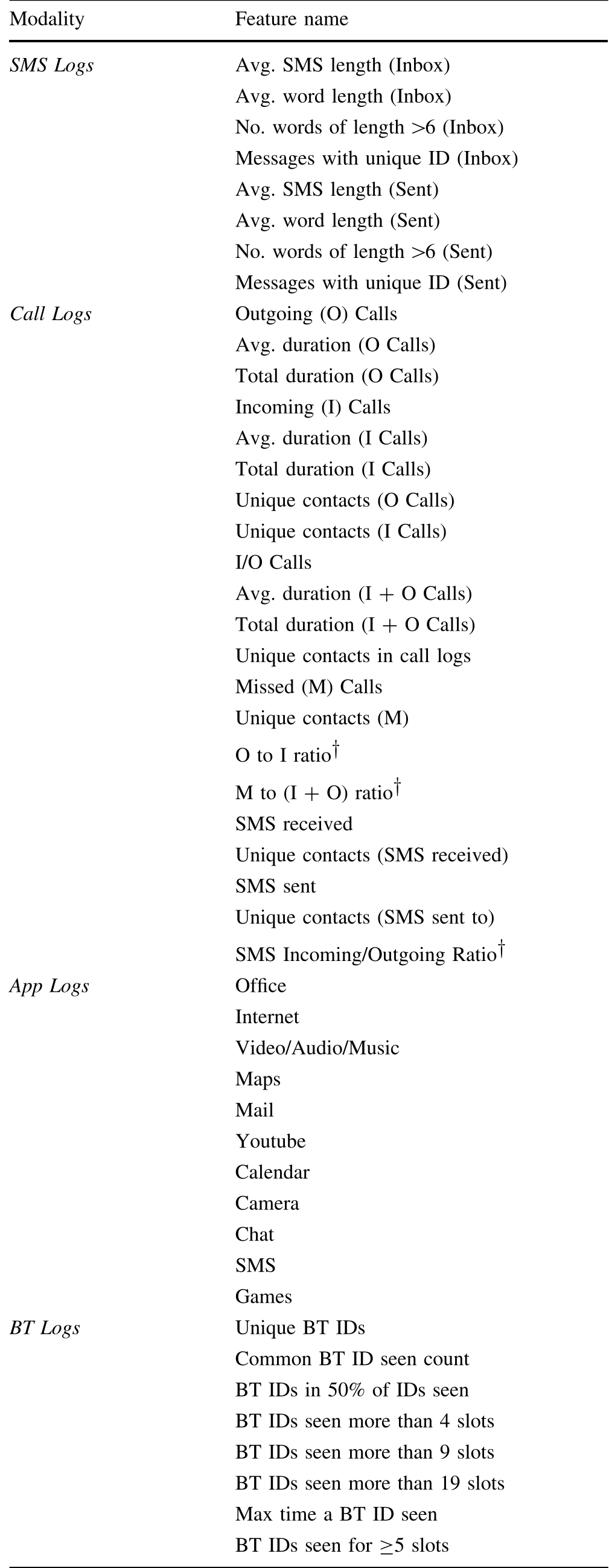
*Fig 1: The comprehensive feature set extracted from smartphone logs.*
## Key Insights: What Your Phone Says About You
### 1. The Extraversion Signal
Extraversion was strongly linked to social activity. Extraverts receive more calls and spend more time on them. Interestingly, they also showed lower usage of the Internet and Games—suggesting that their stimulation comes from real-world interaction rather than digital consumption.
### 2. Conscientiousness and Productivity
Highly conscientious individuals—those characterized as organized and reliable—were frequent users of the **Mail** app (professionalism) and showed a distinct avoidance of **YouTube** (discipline). They also tended to have a concentrated circle of contacts, preferring quality over quantity in their social network.
### 3. The Gender Factor
One of the paper's most significant contributions is its analysis of gender differences. For instance:
* **Agreeable men** communicate with a wider variety of unique contacts through voice calls.
* **Agreeable women** send longer and more frequent SMS messages, a trend that is actually *reversed* in men.
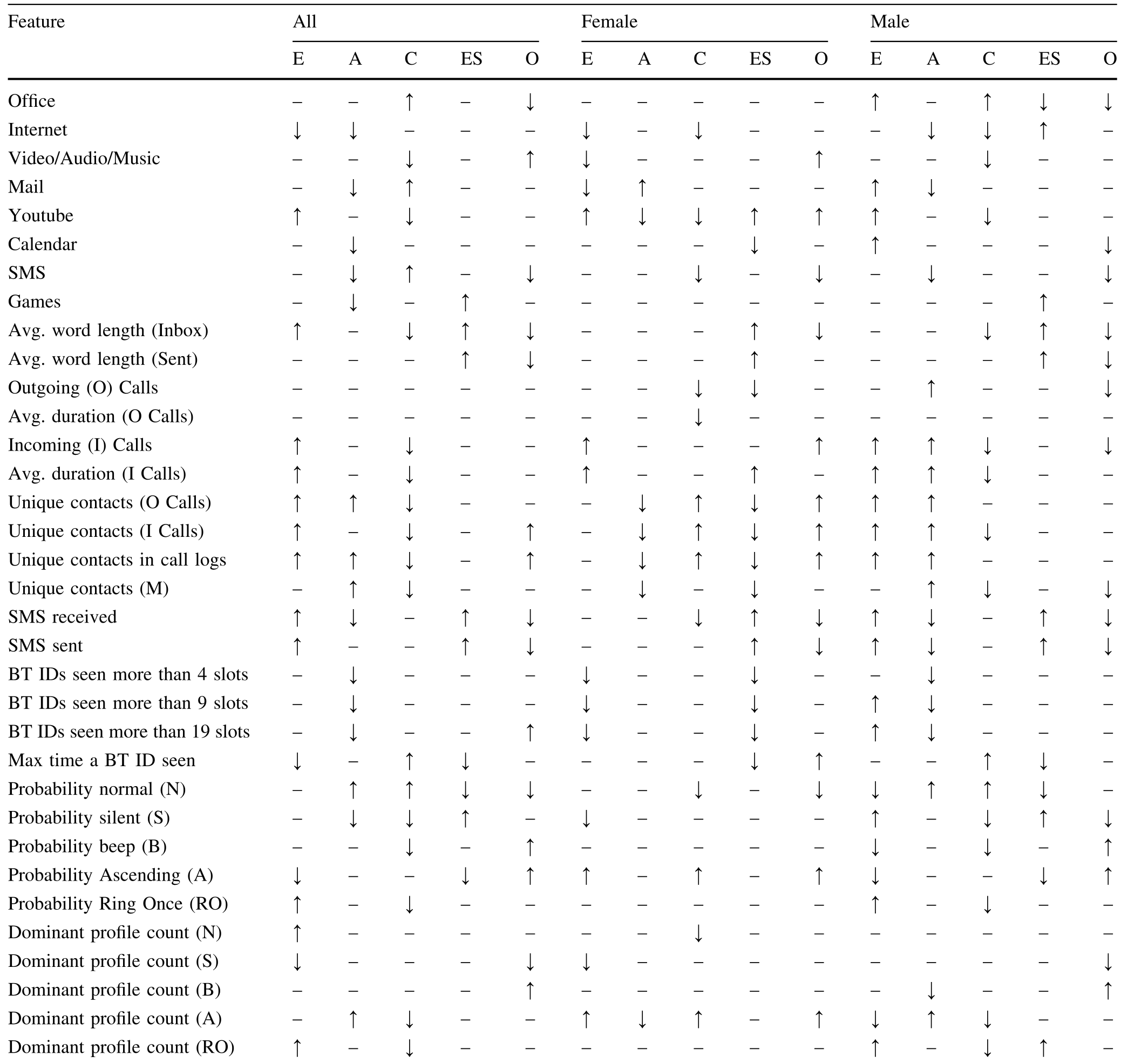
*Fig 2: Regression results highlighting the divergent behavioral patterns between genders.*
## Deep Insight: Why This Works
The reason smartphone data is so predictive is due to **Identity Claims** and **Behavioral Residue**. A "Silent" profile isn't just a setting; it’s a reflection of social conscientiousness. A frequent "Bluetooth proximity" count is a digital footprint of an extraverted lifestyle. The authors successfully bridge the gap between low-level sensor events and high-level psychological constructs.
## Conclusion and Future Outlook
While the study achieved F-measures significantly better than random chance (up to 0.83 for Agreeableness in men), it also acknowledged the difficulty of the task. Personality is complex, and "digital behavior" is only one facet.
**The Takeaway**: This work paved the way for modern "Socially Aware" computing. Today, these techniques are used in everything from mental health monitoring to personalized AI assistants. However, the authors correctly pivot toward the future: the integration of GPS and motion sensors (accelerometers) remains the next frontier in understanding the "mobile human."
### Limitations
* **Contextual Vacuum**: The data tells us *that* an application was used, but not *why*.
* **Sample Diversity**: All participants were in Switzerland, mostly university-educated, which may limit global generalizability.