
CAVE: Deep Mining of Mixed Data through Variance and Semantic Entropy
Mining of mixed data with application to catalog marketing
This paper introduces CAVE (Clustering based on Variance and Entropy), an incremental algorithm specifically designed for mining mixed datasets containing both numeric and categorical attributes. By integrating Distance Hierarchies with entropy measures, CAVE achieves superior clustering quality compared to traditional algorithms like k-modes and k-prototypes.
TL;DR
Clustering real-world data is notoriously difficult because datasets are rarely "pure"—they are a messy mix of numbers (age, income) and categories (occupation, favorite drink). CAVE (Clustering based on Variance and Entropy) solves this by using Distance Hierarchies to understand that some categories are "closer" than others, effectively bridging the gap between mathematical variance and semantic similarity.
Background: The "Coke vs. Pepsi" Problem
Traditional algorithms like k-modes or COOLCAT treat categorical values as discrete symbols. In their world, the difference between "Coke" and "Pepsi" (both soft drinks) is exactly the same as the difference between "Coke" and "Mocca" (a coffee). Technically, they use "simple matching": if values aren't identical, the distance is 1; if they are, it's 0.
This lack of nuance leads to counter-intuitive clusters. If your algorithm can't see that a software engineer is closer to a systems analyst than to a florist, your marketing segments will be blurred and ineffective.
Methodology: How CAVE Works
The core innovation of CAVE lies in its dual-engine objective function. It aims to minimize the Overall Expected Distance (ED) of clusters:
1. Numeric Part: Variance
For numbers, CAVE uses standard variance. It measures how spread out the values are from the cluster mean. Low variance equals a tight, high-quality cluster.
2. Categorical Part: Weighted Entropy ()
This is where the magic happens. Instead of simple entropy, which only looks at the frequency of values, CAVE introduces Distance Hierarchies.
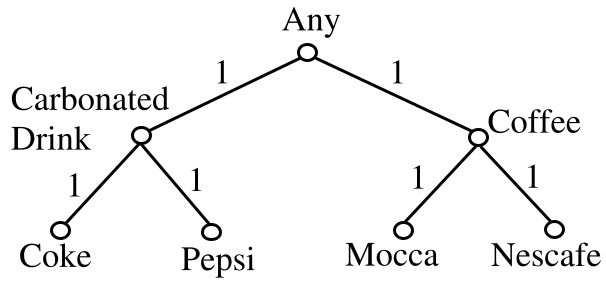
- Distance Calculation: The distance between two categories is the path length between them in a tree-like hierarchy (e.g., Coke Soft Drink Pepsi has a path of 2).
- Weighting: The entropy of a cluster is weighted by the mean distance of all pairs within it. If a cluster contains many semantically distant categories, its "Weighted Entropy" spikes, signaling a poor cluster.
Architecture and Scalability
CAVE is incremental. It starts by picking highly dissimilar points as "seeds" and then assigns new data points to the cluster that minimizes the total expected distance of the system.
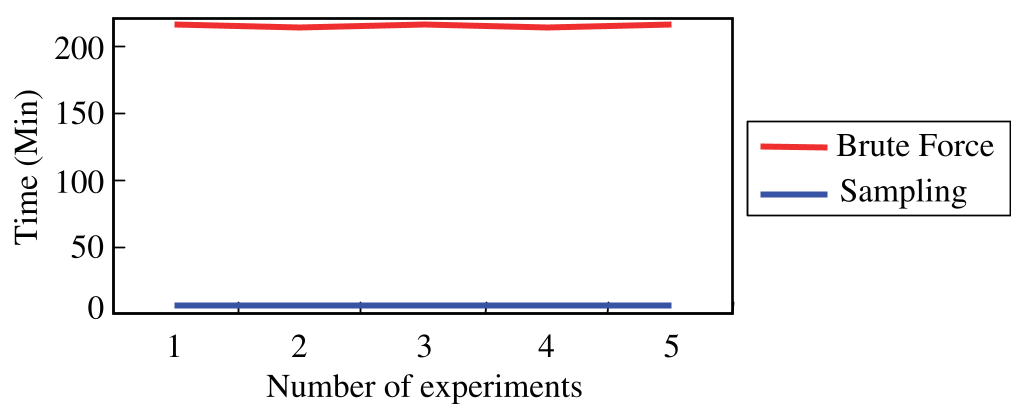
To handle massive datasets (like the 48,000+ records in the UCI Adult dataset), CAVE employs Chernoff Bounds for random sampling. By analyzing a mathematically optimized sample size, it identifies the initial cluster structure without scanning the whole database, leading to massive speedups.
Experiments & Real-World Impact
The researchers tested CAVE against k-prototypes ( the standard for mixed data) using the CV Index, a custom validity measure combining Category Utility (CU) and Variance.
| Method | Third-level CV | Second-level CV |
|---|---|---|
| CAVE | 0.771 | 0.779 |
| k-Prototypes | 0.749 | 0.639 |
As shown in the results, CAVE maintains high cluster quality even when categorical values are generalized (moving up the hierarchy).
Catalog Marketing Application
In a simulated marketing task, the researchers used CAVE to segment customers into 9 groups. By targeting the "richest" clusters identified by CAVE, they demonstrated a 25% profit increase compared to random selection. This proves that "semantic clustering" isn't just a theoretical exercise—it's a tool for precision business intelligence.
Critical Insight: Why it Matters
CAVE's biggest contribution is the formalization of Inductive Bias through Distance Hierarchies. While modern Deep Learning often tries to learn these relationships from scratch (vulnerable to noise), CAVE allows domain experts to "plugin" their knowledge.
Limitations: The algorithm's success heavily relies on the quality of the Distance Hierarchies. If the hierarchy is poorly constructed or unavailable for a specific domain, the weighted entropy loses its semantic edge.
Future Work
The next frontier for CAVE-like systems is Automated Hierarchy Discovery—using Large Language Models (LLMs) or knowledge graphs to generate these distance hierarchies automatically, removing the manual labor while keeping the semantic precision.