
Mining Optimal Utility Patterns: Empowering RFID Logistics with Genetic Algorithms
Mining Optimal Utility Incorporated Sequential Pattern from RFID Data Warehouse Using Genetic Algorithm
The paper proposes an optimized data mining system for RFID data warehouses called "Optimal Utility Incorporated Sequential Pattern Mining." It leverages a Genetic Algorithm (GA) to identify the most profitable sequential patterns from large-scale RFID tag movement data, achieving a high fitness score of 97.8%.
TL;DR
In the era of smart logistics, tracking the movement of goods is easy, but identifying profitable movement patterns is hard. This paper introduces a data mining framework that uses Genetic Algorithms (GA) and Fuzzy Rules to filter the noise out of RFID data warehouses, pinpointing the most valuable sequential patterns based on their economic utility rather than mere frequency.
Problem & Motivation: The "Pattern Explosion" Challenge
While Radio Frequency Identification (RFID) generates a wealth of movement data, traditional mining algorithms—like Apriori or PrefixSpan—often suffer from the "pattern explosion" problem. They return every frequent sequence, regardless of its relevance to business goals.
The authors argue that in a warehouse setting, a sequence isn't just a list of readers; it’s a representation of a product's journey. Previous work failed to answer: Which paths yield the highest profit? By shifting the focus from "Frequent" to "Optimal Utility," the researchers aim to provide warehouse managers with a pruned, highly relevant subset of data.
Methodology: The GA-Fuzzy Hybrid Core
The system follows a multi-stage pipeline:
- I-Dataset Generation: Cleaning and transforming raw RFID logs into structured sequences.
- Sequential Mining: Extracting patterns using a support threshold.
- Fuzzy Rule Induction: Converting these patterns into "If-Then" rules to describe movement nature.
- GA Optimization: Using an evolutionary approach to find the best rules.
The Fitness Function
The "secret sauce" of this paper is the fitness function (), which calculates the optimality of a chromosome (a set of rules) based on its frequency () and profit ():
This ensures that the GA doesn't just find the most common paths, but the paths taken by the most valuable items.
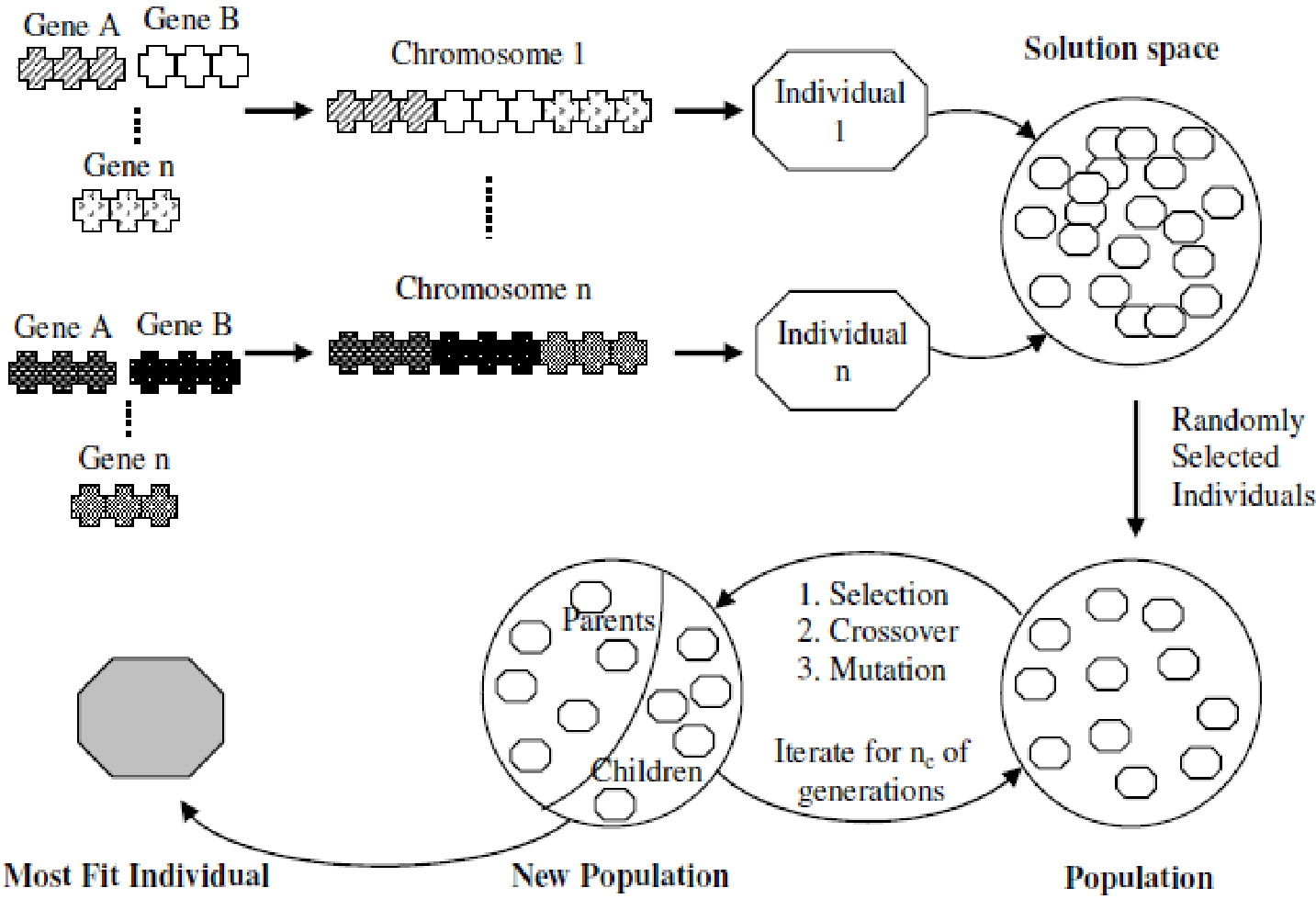 Figure 1: The Genetic Algorithm flow for optimizing sequential patterns.
Experiments & Results: Efficiency in Action
The study simulated a warehouse with 8 readers and 200 products per class across 6 categories (e.g., stationary goods). Using a crossover probability () of 0.4 and mutation () of 0.2, the GA converged over 50 iterations.
Performance Highlights:
- Optimal Fitness: The best chromosome achieved 97.8% fitness.
- Economic Impact: The best chromosome represented a profit of 229.0 Rs., whereas the average for other sequences was only 196.2 Rs.
- Comparative Dominance: As shown in the benchmarking tables, the top-tier rules clearly dominate the search space, proving the GA effectively isolated the "heavy hitters" in the dataset.
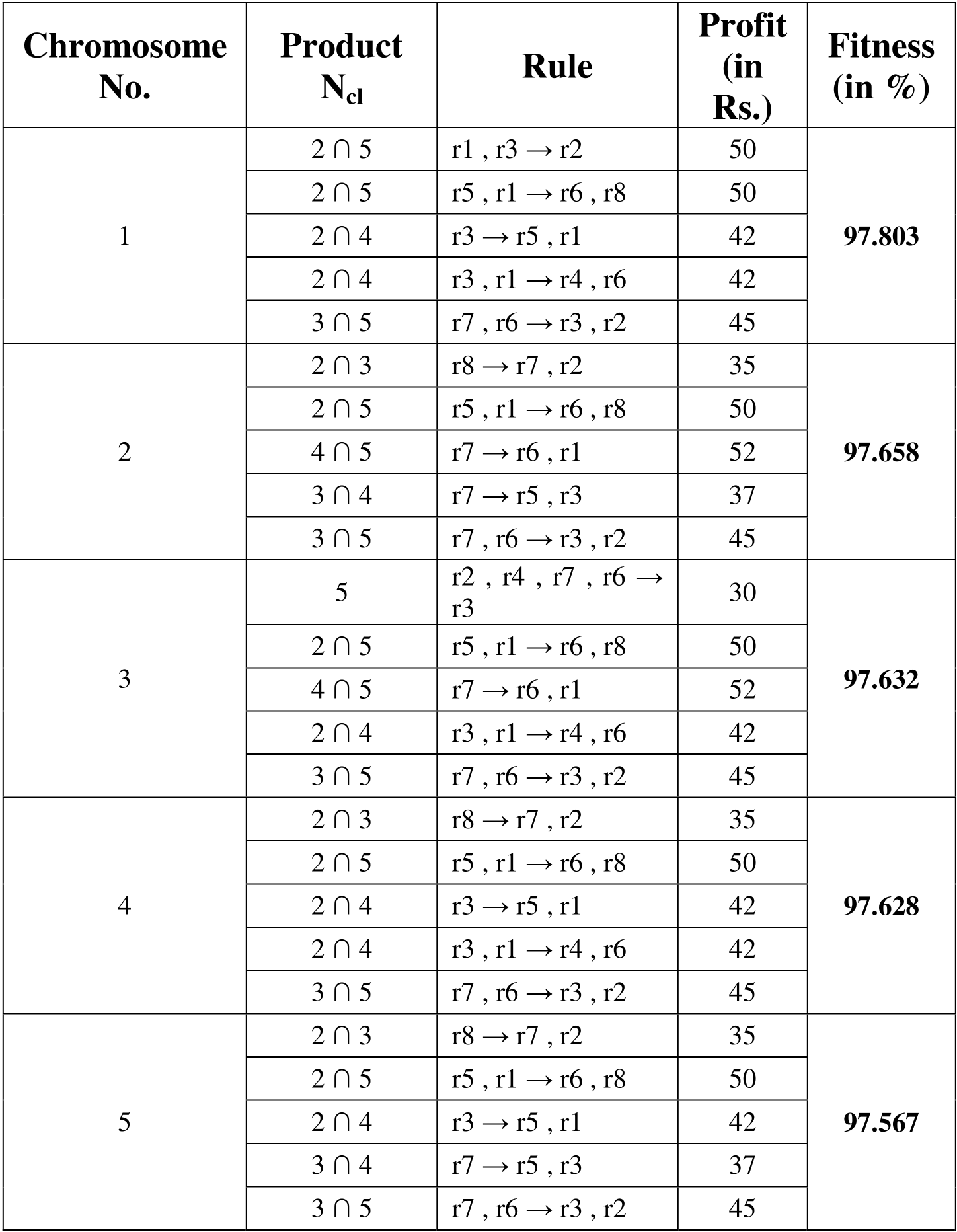 Table 1: Analysis of the top five chromosomes showing rule combinations and associated profits.
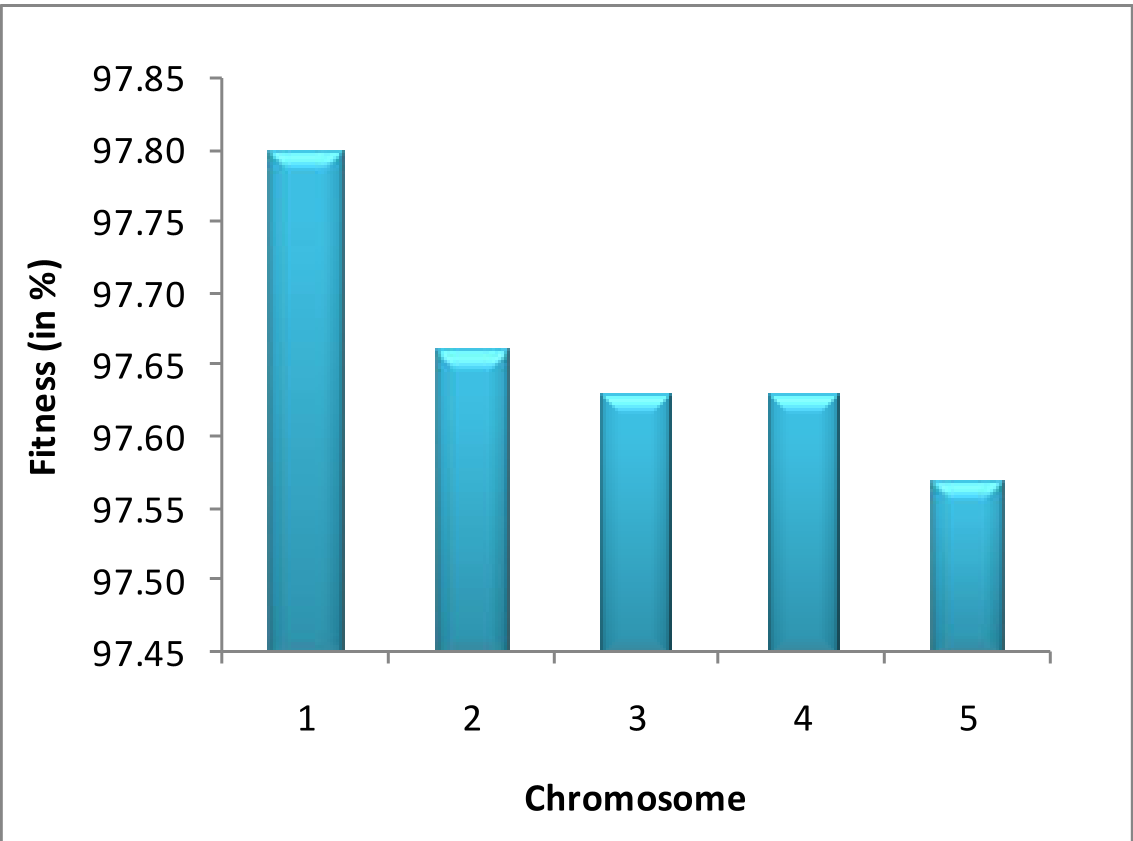 Figure 2: Profit and Fitness convergence over 50 iterations.
Critical Insight & Conclusion
By using GA, this method avoids the brute-force search that plagues local optimizers. The integration of utility transforms KDD (Knowledge Discovery in Databases) from a descriptive task ("what happened") into a prescriptive one ("what is most valuable").
Future Outlook: While the paper uses a stationary goods dataset, the logic is highly extensible to DNA sequence analysis or e-commerce clickstreams. However, the current model relies on predefined "product profits." Integrating real-time market fluctuations into the utility function would be a significant next step for dynamic supply chain environments.