
Mining Organizational Behaviors: Bridging the Gap Between Process and Social Structure in Smart Ports
Mining organizational behaviors in collaborative logistics chain: An empirical study in a port
This paper presents a hybrid framework combining Process Mining and Social Network Analysis (SNA) to uncover organizational behaviors in collaborative logistics chains. Applied to Guangzhou Port, the study utilizes the Heuristics Miner algorithm to map work delivery patterns and SNA metrics to quantify inter-organizational collaboration efficiency.
TL;DR
In modern global trade, ports are no longer single entities but complex ecosystems of agencies (rail, road, barge, business). This paper introduces a sophisticated synergy of Process Mining and Social Network Analysis (SNA) to map the "invisible" organizational behaviors in Guangzhou Port. By analyzing over 600,000 event records, the authors expose a critical disconnect: site operators work at high volumes but remain dangerously siloed from the broader collaborative network.
Problem & Motivation: The "Black Box" of Collaborative Logistics
Traditional organizational charts tell you how a port should work, but they rarely reflect how work is actually delivered. In a collaborative logistics chain, work delivery between organizations is a primary source of friction. When information or tasks "stall" between a rail agency and a port business office, costs spike and service quality drops. The complexity of these interactions—dynamic, heterogeneous, and high-frequency—makes them nearly impossible to analyze using manual observation.
The authors argue that we must look at Event Logs (the digital footprints in ERP systems) to see the "Ground Truth" of organizational collaboration.
Methodology: Synergy of Process and Social Mining
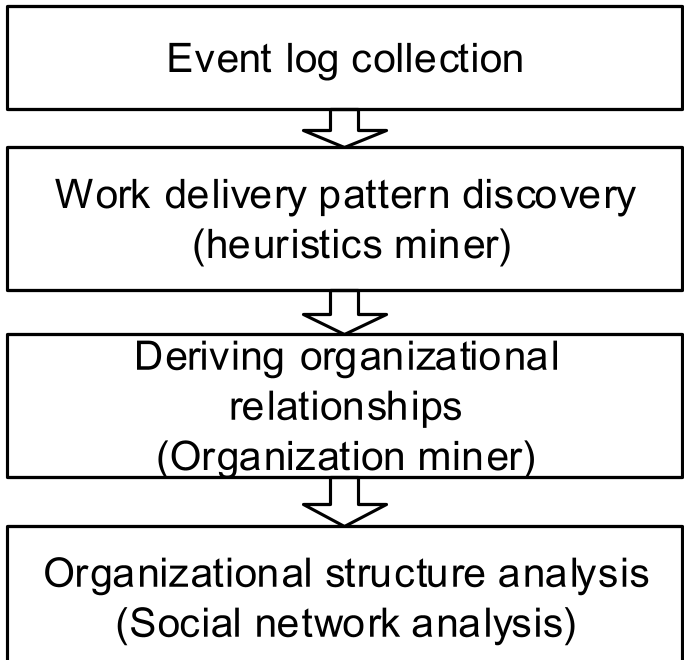
The research methodology follows a logical flow from raw data to structural insights:
- Event Log Collection: Extracting XES-formatted data from Port ERP systems (timestamps, task IDs, and performer IDs).
- Work Delivery Discovery: Utilizing the Heuristics Miner algorithm to visualize the actual sequence of tasks. This algorithm is chosen for its robustness in handling "noisy" real-world data.
- SNA Metrics: Bringing in mathematical rigor via Degree Centrality. This formula measures how many direct connections a participant has, serving as a proxy for their "collaboration power."
Empirical Evidence: The Guangzhou Port Case
The study analyzed 5,040 cases and 628,657 events. The findings reveal a startling asymmetry in how the port operates.
The Centrality Paradox
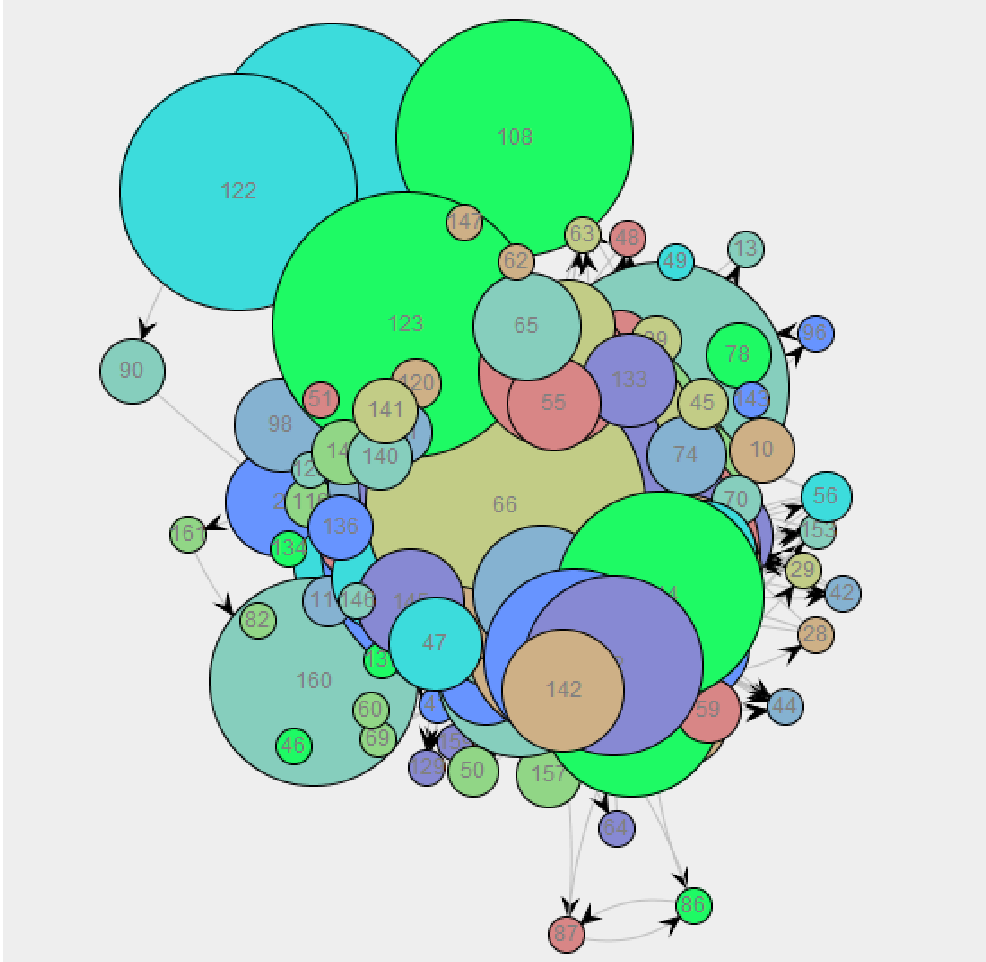
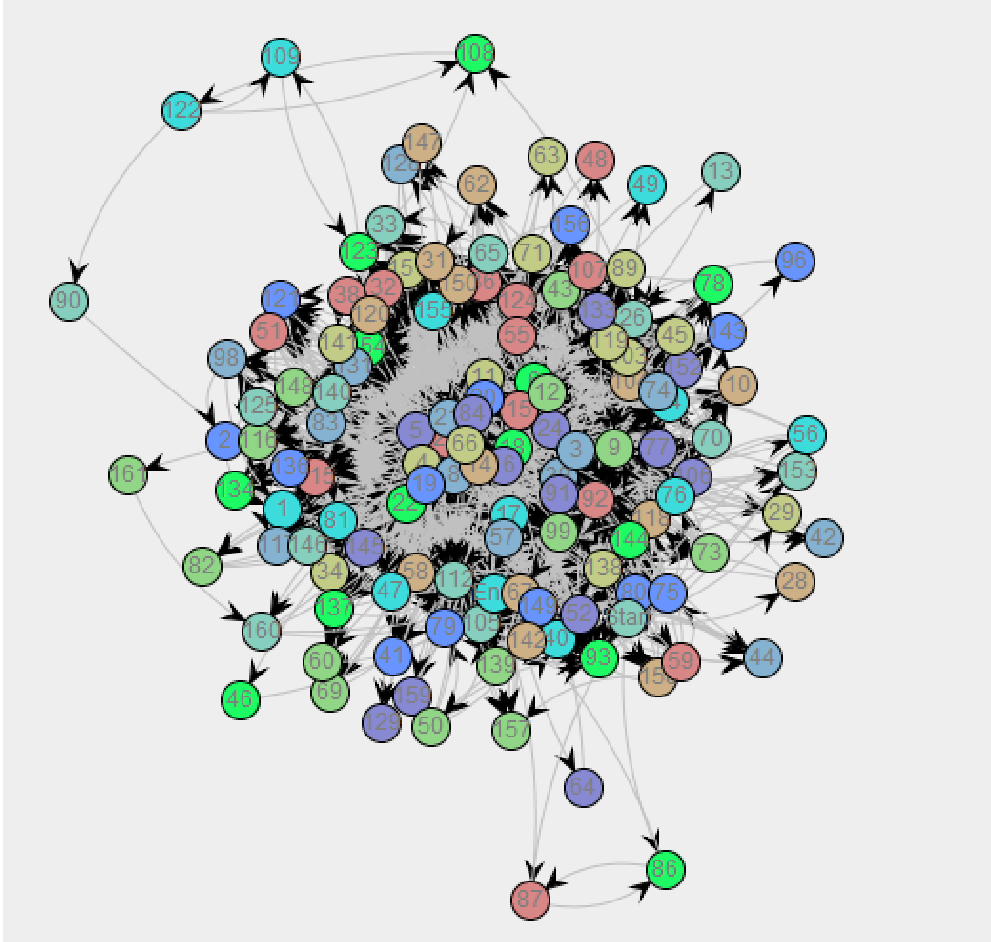
The data suggests that the "Port Business Agency" (central nodes 99, 66) acts as the nervous system of the hub, with high Degree Centrality (up to 87). However, the Site Operation Group (Participants 122, 108, 109) presents a paradox: they have the largest node sizes (meaning they perform a massive volume of weighing tasks) but have a centrality of only 2 to 4.
Insights from Work Delivery Patterns
The Heuristics Miner revealed that while planning activities (T2, T3) are relatively infrequent, the dependent weighing operations (T5, T8) occur over 100,000 times. Despite this dependency, transitions between different organizations are rare. For instance, only 10 out of 2,538 weighing creation events directly triggered inter-organizational planning updates, indicating a lack of horizontal integration.
Deep Insight & Conclusion
Takeaway
The core value of this research is proving that operational volume does not equal collaborative influence. Site operators are "islands of high productivity" that are socially isolated from the decision-making core. This isolation creates a "bottleneck risk" where site-level delays might not be communicated upstream until it is too late.
Limitations & Future Outlook
While the study provides a snapshot through Degree Centrality, it does not account for the temporal evolution of these networks. Future research could utilize Dynamic Network Analysis (DNA) to see how these organizational behaviors shift during peak cargo seasons. Nevertheless, this work provides a scalable blueprint for any port operator to audit their digital logs and identify where collaboration is failing.