
Mining Proximal Intelligence: Why Your Social Network is the Key to Better Decisions
Mining Proximal Social Network Intelligence for Quality Decision Support
This paper introduces a framework for mining proximal social network intelligence to enhance decision support in the leisure entertainment domain. By leveraging the "i-Bike" e-service, the method utilizes TF-IDF and Category Term Descriptor (CTD) algorithms to extract high-quality, context-aware recommendation data from User Generated Content (UGC).
TL;DR
Information overload often leads to poor decision-making. This paper argues that the solution lies in Proximal Social Network Intelligence. By mining the context and content of social relationships using specialized text-mining techniques like TF-IDF and CTD, the research shows how we can transform raw user feedback into high-quality decision support—specifically within the leisure and bicycle tourism sector.
Context is King: The Motivation
In the leisure industry, content has long been "monopolized" by business owners, often resulting in marketing-heavy, low-utility information. The author identifies a critical gap: traditional recommendation systems don't understand the Social Context—the culture, institutions, and specific circumstances surrounding a person.
The core insight is based on Proximity:
- Geographical Proximity: Physical closeness encourages communication.
- Psychological Proximity (Homophily): "People like to associate with similar others."
By focusing on these proximal relationships, the "i-Bike" service encourages users to share altruistic, high-quality "perceptual tags" that others in the same social circle can actually trust.
Methodology: Beyond Simple Keywords
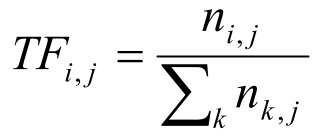
The paper moves away from simple counts of words. To extract true "intelligence," it employs two key algorithms to weight the importance of user-generated tags:
1. TF-IDF (Term Frequency-Inverse Document Frequency)
This standard but powerful tool ensures that common, meaningless words (like "good" or "food") are downweighted, while unique, descriptive words (like "Hakka" or specific trail names) receive higher importance.
2. CTD (Category Term Descriptor)
CTD is a more surgical approach. It doesn't just look at documents; it looks at Categories. It calculates the Inverse Category Frequency (ICF), which helps distinguish terms that are frequent within a specific niche (e.g., "steep climb" in a mountain biking category) vs. terms that appear everywhere.

The "i-Bike" Interaction Model
The proposed service follows a dual-path process:
- Contribution Process: Users share textual experiences after a tour.
- Acquisition Process: New users retrieve these mined "perceptual descriptions" to guide their next decision.
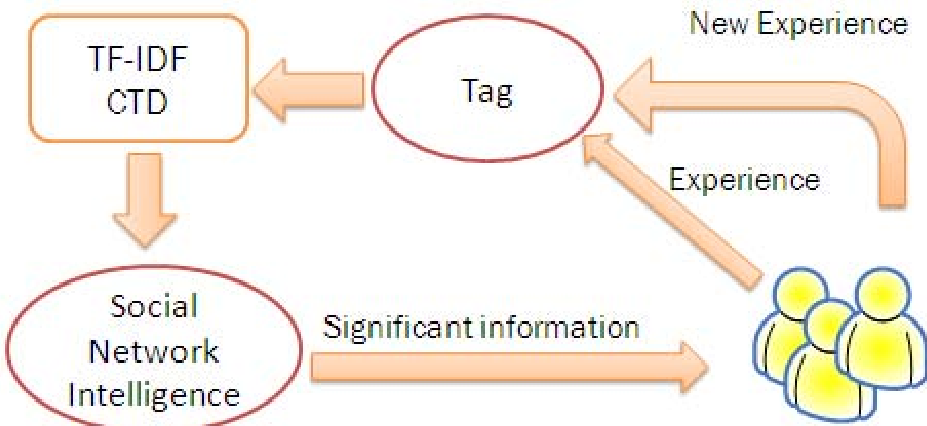
Fig 1. The loop of spontaneous experience sharing and knowledge retrieval.
Experimental Insights
The research evaluated the system based on Decision Quality Matrices, focusing on subjective measures like satisfaction and perceived usefulness.
- Finding: Both TF-IDF and CTD significantly outperformed the baseline "pure term frequency" (TF) method.
- Insight: Because CTD and TF-IDF account for the rarity and specificity of information, they provide more "remarkable perceptual data" that aids in making equitable decisions.
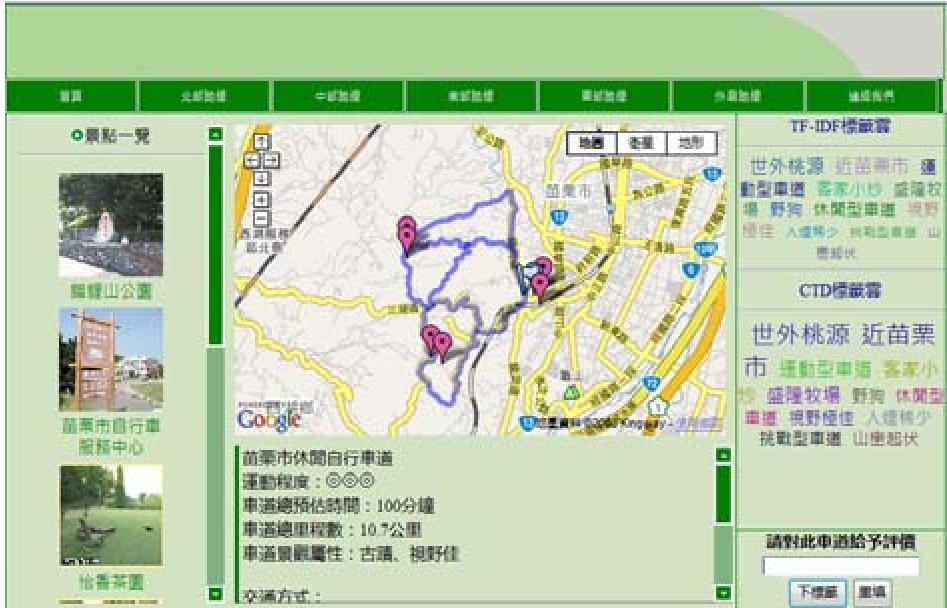
Fig 2. The architecture of a recommendation system fueled by social network intelligence.
Critical Analysis & Conclusion
Takeaway
The value of a social network isn't just in the connections, but in the intelligence those connections generate when properly filtered. Proximity acts as a psychological stimulus that overcomes the "free-rider" problem in social networks.
Limitations
While the paper demonstrates the effectiveness of TF-IDF and CTD, the difference between these two advanced methods was not statistically significant in this specific case study. Furthermore, the reliance on high participation rates (overcoming altruism barriers) remains a challenge for real-world scaling.
Future Outlook
The next frontier for this work is to analyze the "Social Utility" of this intelligence—essentially quantifying how much value is created for the community at large through these proximal digital interactions.