
Mining Social Networks: Beyond Links to Conceptual Conversations
Mining social network for extracting topic of textual conversations
This paper introduces a topic identification framework for textual conversations in social networks (e.g., Email, IM). It utilizes a hierarchical semantic dictionary mapped to a weighted directional graph to calculate the dependency between extracted keywords and potential topics, facilitating applications like targeted advertising.
TL;DR
While most social network analysis focuses on the "links" between people, this paper dives into the "content" of their conversations. By mapping a hierarchical dictionary to a weighted graph, the authors developed a system that can identify the core topic of noisy, informal emails and chats with ~57% accuracy, filtering out up to 76% of useless "noise" words in the process.
Academic Positioning: This work is a foundational bridging piece that moves from classical Information Retrieval (IR) towards semantic-aware Social Network Analysis (SNA).
The "Noise" Problem in Social Media
In 2008, as social networks like Instant Messengers and Emails exploded, researchers faced a wall: Noise. Unlike academic papers, chat room data is ungrammatical and full of slang. Existing methods like TF-IDF or "Topic Unigrams" (counting word frequency) often missed the forest for the trees. If a user mentions "Windows," are they talking about home renovation or an operating system? Contextualizing these keywords within a social graph was a non-trivial challenge.
Methodology: The Weighted Graph Approach
The authors' core insight was that words don't exist in a vacuum; they belong to hierarchical "families" of concepts.
1. The Hierarchical Dictionary
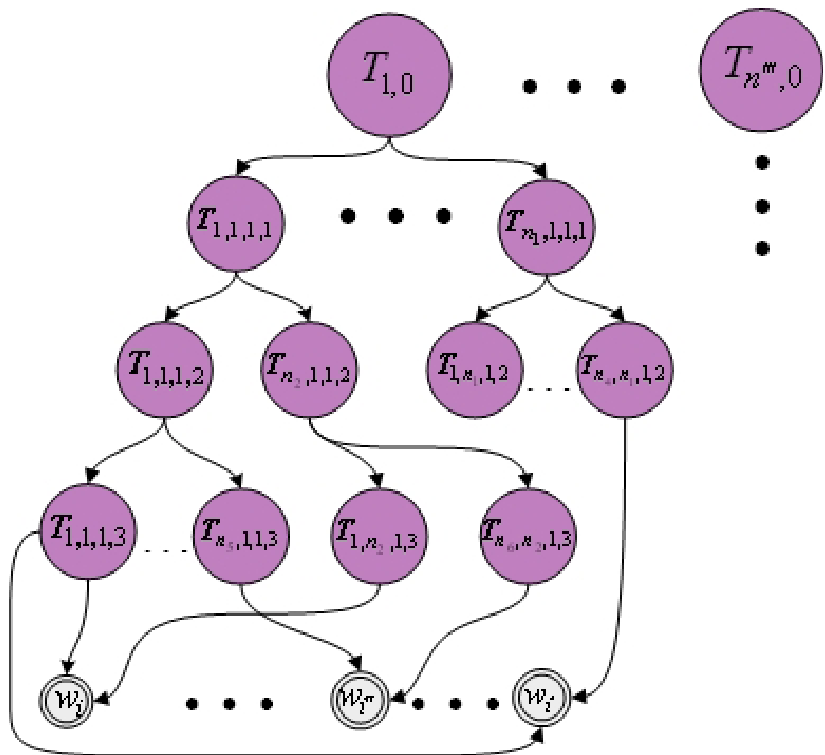
They built a dictionary (T for Topics, W for Words) structured in levels (Root → Level 1 → Level 2 → Level 3). For example, "Computer" (Root) leads to "Software" (Level 1), which might lead to "Operating System" (Level 2).
2. Graph Mapping and Mathematical Weighting
The dictionary is transformed into a directional graph . To determine how much a keyword belongs to a topic , they use two measures:
- Link Stability: How many different paths connect the word to the topic?
- Distance: How many "hops" are between them?
The formula effectively rewards keywords that have multiple, short paths to a specific concept: where is distance and is derived from the number of paths.
Handling the "Unknown"
One of the most practical contributions is the Dynamic Set. If a word isn't in the pre-defined dictionary, the system doesn't just crash. It assumes the unknown word is "homogenous" with the surrounding context and learns its probable topic affiliation over time—a precursor to modern embedding-based approaches.
Experimental Results
The model was tested on an archive of 870 commercial emails.
- Efficiency: By using a Filter Set, they removed general words (like "the", "and"), which accounted for a staggering 76.3% of the text.
- Accuracy: The system identified the correct topic in roughly 57.5% of cases. While this might seem low by modern Transformer standards, for a graph-lookup method in a noisy 2008 dataset, it represents a significant step over simple keyword matching.
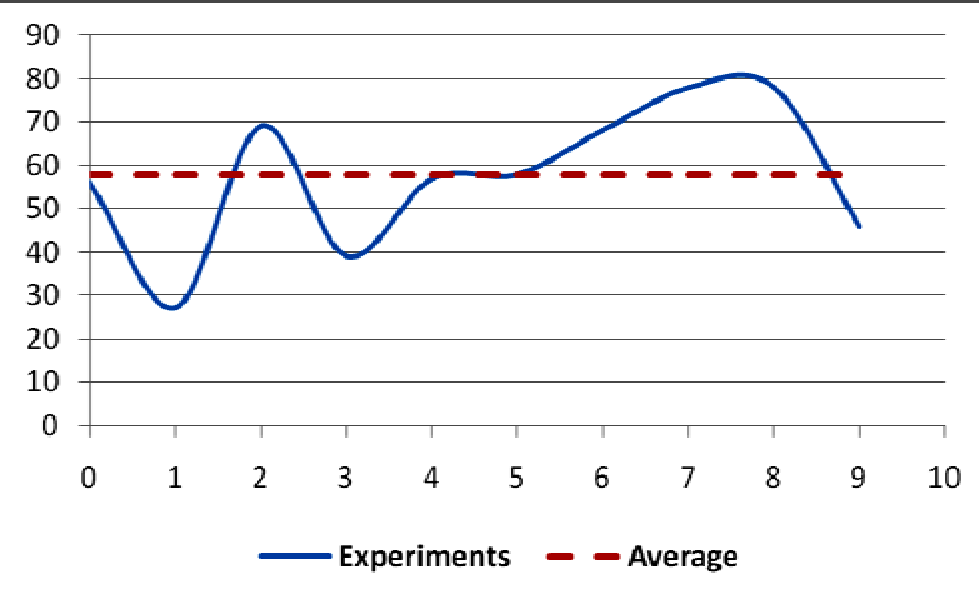 Figure: The consistency of the model across 10 different test sets shows a stable performance peak around 57%.
Critical Insight & Future Outlook
The Takeaway: The success of this model proved that hierarchical structural priors are incredibly powerful for denoising text. By knowing that "Java" is a subset of "Programming Languages," the model can resolve ambiguity that stumps flatter models.
Limitations: The model is heavily dependent on the "Pre-defined Dictionary." If the dictionary is incomplete, the accuracy drops. In a modern context, we would replace this manual dictionary with a dynamic Knowledge Graph or a Latent Space embedding (like BERT or GPT), but the underlying logic—using an external structure to guide topic extraction—remains a cornerstone of "Semantic Web" and "Neuro-symbolic AI" research today.