
GSG2I: Unmasking Hidden Tax Evasion Groups via Controller Interlock Networks
Mining Suspicious Tax Evasion Groups in a Corporate Governance Network
The paper introduces GSG2I, a graph-based method for identifying tax evasion groups in Corporate Governance Networks (CGN). By defining "controller interlock" and utilizing a colored weighted network model, it achieves a 237% improvement in hit rate compared to traditional board interlock methods while maintaining high identification precision.
TL;DR
Tax evasion is evolving. Instead of simple accounting fraud, corporations now use complex Interest Affiliated Transactions (IAT) governed by a hidden web of "Guanxi" (relationships). This paper introduces GSG2I, a framework that builds a Corporate Governance Network (CGN) to detect "Controller Interlocks." By analyzing a 7-year real-world dataset, the method increased evasion detection coverage (Hit Rate) by over 230% compared to traditional economic models.
Background: Beyond the Boardroom
In many economies, the real power lies not just with directors on paper, but with the ultimate controllers who manipulate multiple companies through layers of shareholding and management roles. Traditional "Board Interlock" analysis only looks at shared board members; however, this is too narrow. This paper argues that in the Chinese context, the Controller Interlock—the shared influence of specific individuals over common entities—is the actual engine behind coordinated tax evasion.
Methodology: The CGN and GSG2I Framework
The researchers transformed raw taxation and business data into a Colored and Weighted Network-based Model (CWNM).
1. The Corporate Governance Network (CGN)
The CGN is a heterogeneous graph where:
- Nodes are Persons (Legal persons, Directors, Shareholders) or Corporations.
- Edges represent Control Relationships (Actual control, shareholding, investment) or Trading Relationships.
- Weights represent the Interest Affiliated Degree (IAD).
2. The GSG2I Algorithm
The identification process follows two critical steps:
- Controller Interlock Pattern Recognition: Utilizing a parallel label propagation-based algorithm to find "InP-OutC" (Person-to-Corporation) walks. This allows the system to trace how a person influences a corporation through multiple intermediate entities.
- Suspicious Group Identification: By projecting the network onto a "P-projected graph," the system identifies instances where two different controllers share influence over one company and are involved in transactions that bridge different control clusters.
 Figure 1: Mathematical definition of the potential control relationship trail.
Experimental Insights: Real-World Impact
The study used a massive dataset from a Chinese province spanning 2009–2015, averaging nearly 2.9 million nodes per month.
Performance Boost
GSG2I was compared against the standard Board Interlock method. The results were striking:
- Hit Rate (Recall): GSG2I achieved a significantly higher hit rate, identifying a much larger portion of the ground-truth evasion cases (237% improvement).
- Precision: The Identification Precision consistently stayed around 77%, ensuring that the flags raised by the system were high-quality and actionable for tax authorities.
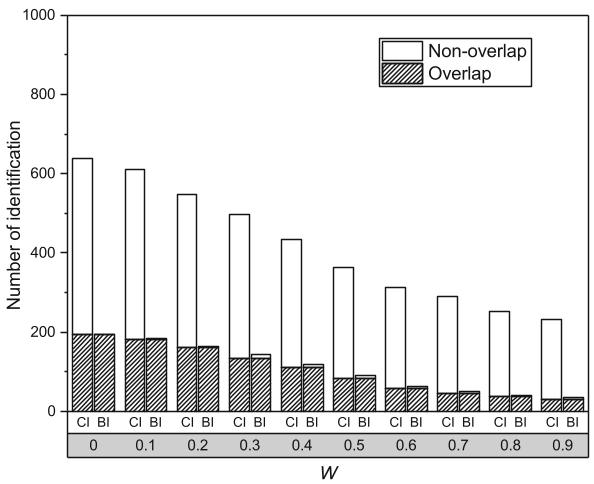 Figure 2: Analysis of Hit Rate and Precision across varying weight thresholds (Th).
The "Guanxi" Threshold
The researchers found that while total detection (Hit Rate) decreases as the "control threshold" (Th) increases, the Precision remains stable. This implies that once an interlock exists, the probability of evasion is high, regardless of whether the shareholding percentage is 30% or 60%.
Deep Insight & Conclusion
The core achievement of this paper is the mathematical formalization of "Guanxi" into a searchable graph pattern. By shifting the focus from corporate entities to human controllers and their multi-hop influence trails:
- Complexity is an asset: The very trails used to hide evasion become the features used to detect it.
- Scalability: The use of parallel label propagation makes it feasible to run this on "Big Data" scales (millions of nodes) monthly.
Takeaway: Effective tax regulation in the 21st century requires moving beyond individual audits toward Graph Intelligence. Understanding who controls what via whom is the only way to catch sophisticated evasion groups.
Future Outlook
While GSG2I is powerful, it currently relies on predefined patterns. The next step in this field likely involves Deep Graph Learning (GNNs) to automatically discover new, evolving evasion topologies that the authors might not have explicitly defined in their current pattern base.