
Mining Trust Relationships: Why Semantics Matter in Social Networks
Mining Trust Relationships from Online Social Networks
This paper proposes a semantic-based trust reasoning mechanism to automatically mine trust relationships from online social networks. By leveraging Semantic Web technologies (OWL/RDF) and domain ontologies, the method discovers implicit and category-specific trust relationships, achieving high precision in user interest identification and trust link inference.
TL;DR
In the era of information overload, trust is the currency of the web. This paper introduces a semantic-based reasoning mechanism that moves beyond simple "User A trusts User B" models. By using OWL/RDF and domain ontologies, the authors can automatically infer category-specific and implicit trust relationships with a 94.3% precision, unlocking the potential for much more accurate product recommendations and targeted marketing.
The Problem: The "Flat" Trust Trap
Most existing trust models suffer from two major flaws:
- Over-generalization: They assume if I trust you for movie advice, I also trust you for financial tips. In reality, trust is highly sensitive to the category.
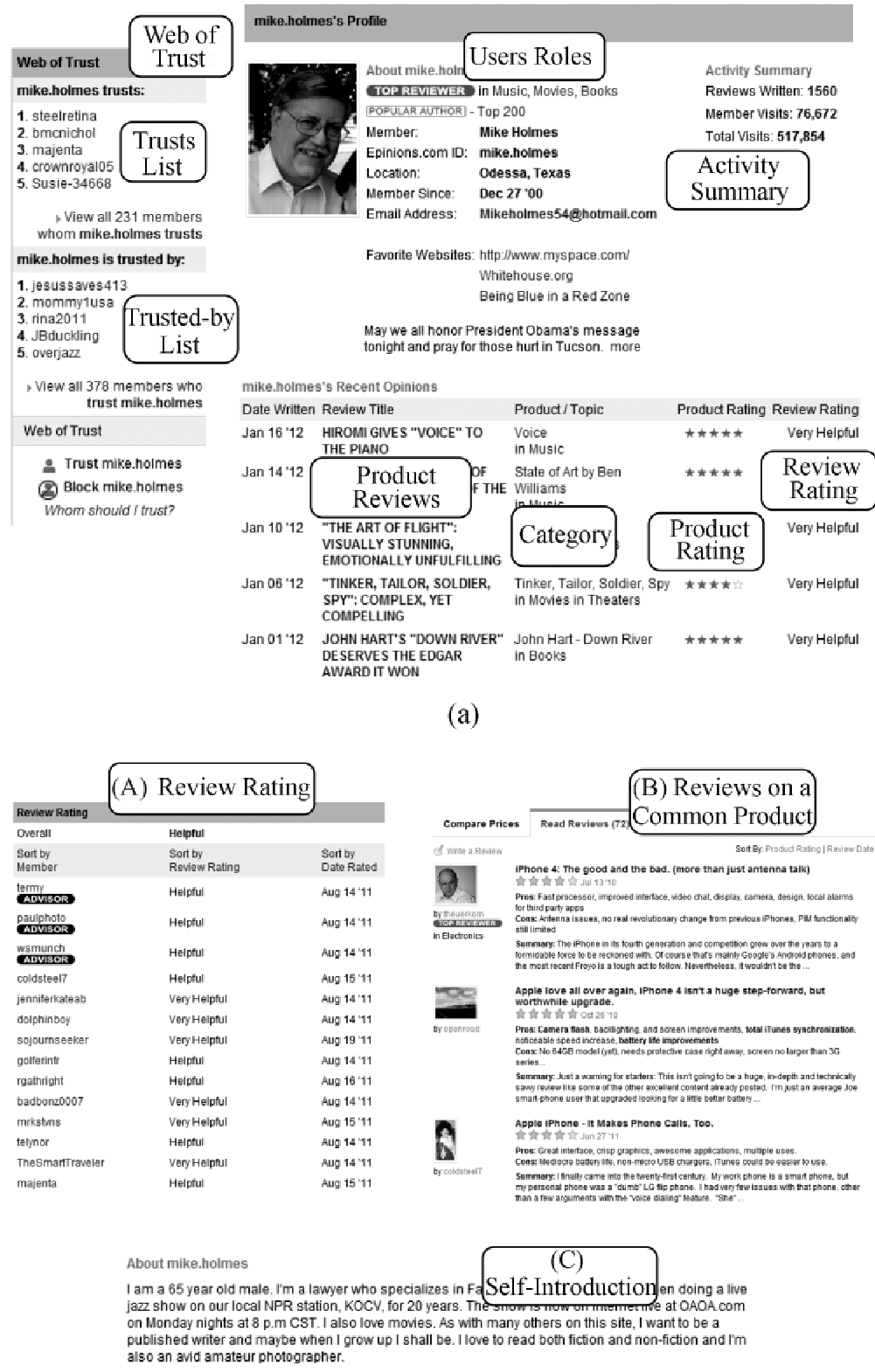
- Explicit Bias: They rely only on "Web of Trust" lists (explicit links). However, many users never bother to click "trust," even if they consistently find a reviewer’s content helpful. This "implicit" trust is a goldmine of untapped data.
Methodology: Giving Machines a "Brain" for Trust
The authors don't just use statistical patterns; they use Semantics.
1. Domain Ontology Construction
By extending standard ontologies like FOAF (people) and SIOC (communities), they created a framework where a machine knows that "Roman Holiday" is a "Comedy," which is a "Movie," which belongs to "Media."
2. N-ary Relations
Standard RDF handles binary relations (A trusts B). To solve the "Trust-in-Category" problem, the authors transformed these into N-ary relations, allowing the category attribute to be baked directly into the trust link.
3. Reasoning Patterns
- Role-based: If you are a "Top Reviewer" in Electronics, you are likely an authority.
- Behavior-based: If User A consistently rates User B's Movie reviews as "Very Helpful," an implicit trust link in the Movie category is inferred.
Experiments: Uncovering the Hidden Web
The researchers tested their system on real-world data from Epinions.
Identifying User Interests
The system analyzed user reviews and feedback to map their interests. The precision was staggering: 94.3%. This allows platforms to understand what a user cares about without asking them directly.
Explicit vs. Implicit Trust
One of the most striking findings was the gap between what users say (Explicit Trust) and what they do (Implicit Trust).
As shown in the graph above, the "grid" portions represent trust links that were only discovered through semantic reasoning. In many cases, the system identified up to 85% more trust relationships than were visible in the explicit web of trust.
Critical Insight & Future Impact
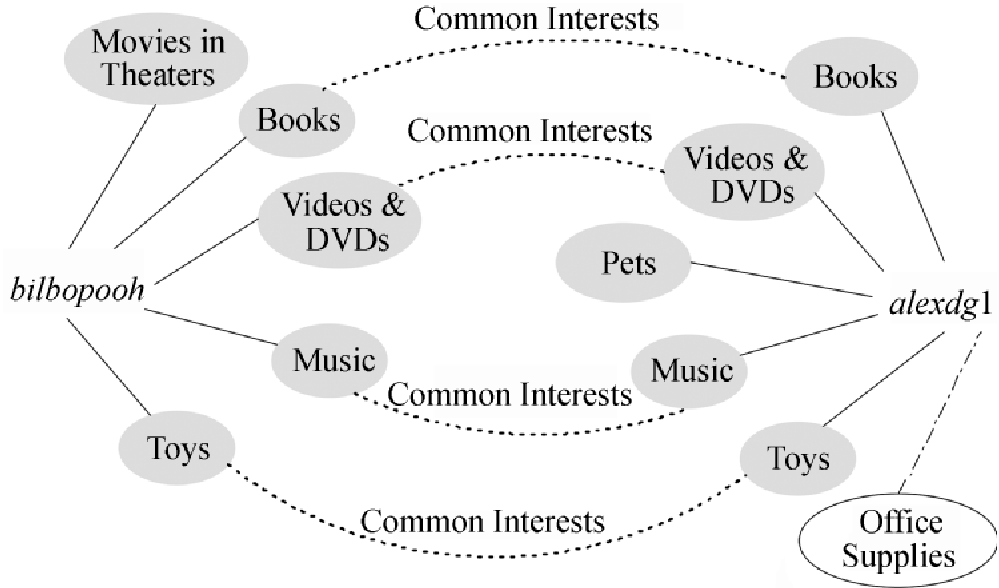
The true power of this research lies in its versatility. By using path expressions and ontologies, the system handles complex logical jumps (e.g., inferring a user's expertise in "Videos & DVDs" based on their reviews of "Comedies").
Takeaway for the Industry: If you are building a recommendation system, stop treating trust as a single 0/1 variable. By identifying who influences whom in what specific category, you can drastically reduce "recommendation noise" (spam) and increase the conversion rate of targeted promotions.
Limitations
The study focuses on structured data. The next frontier is unstructured data—using NLP to extract trust signals from the actual text of comments and reviews, which the authors identify as their primary future work.