
Mining Twitter for Suicide Prevention: A Multi-Dimensional Machine Learning Approach
Mining Twitter for Suicide Prevention
2014-01-01
Summary
Problem
Method
Results
Takeaways
Abstract
This paper presents an end-to-end framework for identifying individuals with suicidal tendencies on Twitter by collecting suspect messages based on a multidimensional vocabulary and applying machine learning classification. The study successfully implements a clinical interface for psychiatrists, achieving a peak classification accuracy of approximately 63.5% using a Naive Bayes approach.
## TL;DR
Suicide remains a premier global health challenge, claimimg thousands of lives annually. This research introduces a comprehensive pipeline to bridge the gap between social media activity and clinical intervention. By utilizing a specialized 9-topic vocabulary and machine learning classifiers, the authors developed a system that identifies high-risk "suspect" tweets with over 63% accuracy, providing psychiatrists with a dedicated interface for real-time monitoring.
## Problem & Motivation: The "Noise" of Digital Distress
Traditional suicide prevention relies on clinical reports and emergency department data—lagging indicators that often arrive too late. Social media, specifically Twitter, offers a "real-time" window into a user's mental state. However, the data is messy: 140-character limits (at the time of the study), slang, typos, and abbreviations render traditional medical NLP tools nearly useless.
The core challenge lies in **specificity**. Many people use the word "depressed" in a colloquial, non-suicidal context. The researchers sought to distinguish between generic sadness and high-risk suicidal behavior through a structured, language-independent framework.
## Methodology: From Lexicons to Classifiers
The research team followed a four-stage process:
1. **Vocabulary Engineering**: Moving beyond simple keywords, they identified 9 core themes—including *Cyberbullying*, *Anorexia*, and *Loneliness*—to create a 583-word seed vocabulary.
2. **Data Acquisition**: Using the Twitter API, they collected 6,000 "suspect" tweets and 30 "proven" cases (confirmed via newspaper reports).
3. **Feature Optimization**: They discovered that the "Depression" attribute was actually *noise*—it appeared too frequently in non-risky tweets. Removing it improved the performance of several classifiers.
4. **Clinical Integration**: Unlike purely academic models, this project produced an interface for health professionals to visualize risk levels and user statistics.
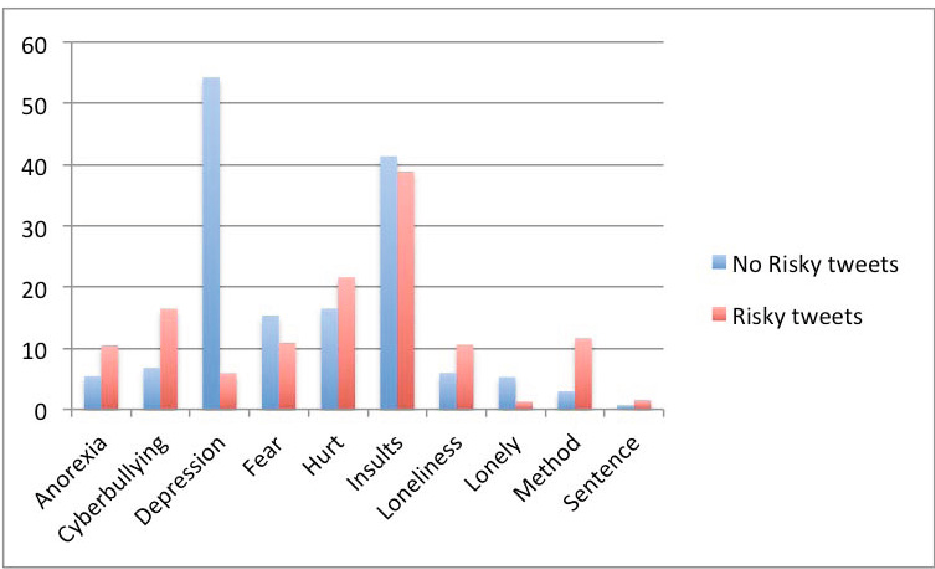
*Fig 1: Distribution of risk categories. Note the high prevalence of 'Insults' and 'Hurt' in high-risk profiles.*
## Experiments & Results: The Power of Naive Bayes
The researchers compared six different classifiers using WEKA. Interestingly, despite the rise of complex ensemble methods, **Naive Bayes (NB)** proved the most consistent.
| Dataset | Baseline | JRip | J48 | **Naive Bayes (NB)** | SMO (SVM) |
| :--- | :--- | :--- | :--- | :--- | :--- |
| 10-CV (Standard) | 47.33% | 55.37% | 57.14% | **63.27%** | 60.56% |
| 10-CV (Optimized) | 47.33% | 61.23% | 58.65% | **63.54%** | 60.66% |
By removing the "Depression" attribute, the **JRip** classifier saw a massive jump (from 55% to 61%), but Naive Bayes remained the SOTA for this specific task. This indicates that for short, sparse text like tweets, probabilistic models often outperform complex decision trees.
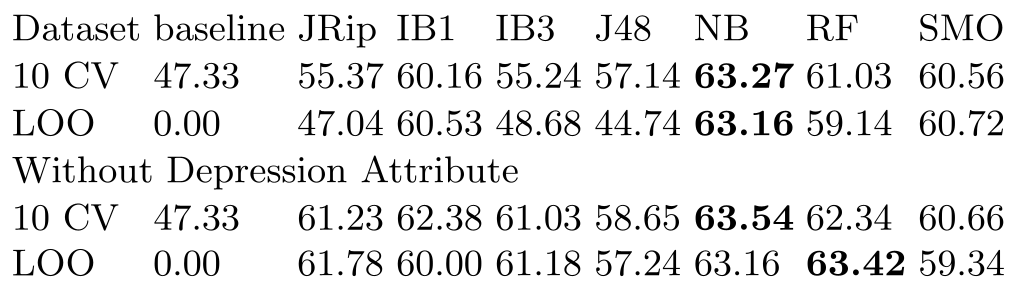
*Table 1: Comparative analysis of machine learning algorithms showing NB dominance.*
## Critical Analysis & Conclusion
### Takeaway
The study proves that automated screening of social media is technically feasible and clinically valuable. By focusing on specific sub-topics (like cyberbullying and anorexia) rather than just "depression," the system achieves a higher signal-to-noise ratio.
### Limitations & Future Work
* **Accuracy Ceiling**: While 63.5% is significantly above the baseline, it still leaves a margin for false positives/negatives that require human oversight.
* **Vocabulary Staticity**: The lexicon is currently manual; future iterations would benefit from dynamic expansion using word embeddings (e.g., Word2Vec) or synonyms.
* **Contextual Depth**: The study acknowledges that non-textual cues—such as a sudden spike in tweet frequency—are vital indicators that the current text-only model misses.
In conclusion, this work serves as an essential foundation for **digital psychiatry**, moving the field toward a proactive, rather than reactive, prevention model.