
MUPNL: Solving LBSN Data Sparsity with Multidimensional Cloud Models
Mining user preferences of new locations on location-based social networks: a multidimensional cloud model approach
The paper proposes MUPNL (Mining User Preferences of New Locations), a location recommendation framework that extends the two-dimensional cloud model into a multidimensional cloud model (M-BCG) to measure user similarity. By integrating multi-attribute user preferences, behavior sequences under varied time contexts, and social ties into a distributed Collaborative Filtering (CF) algorithm, it achieves SOTA performance on the Yelp dataset using MapReduce.
TL;DR
Recommending a new restaurant or point-of-interest (POI) is difficult because user-location matrices are notoriously sparse. This paper introduces MUPNL, a framework that uses multidimensional cloud models to bridge the gap between vague qualitative preferences and hard quantitative data. By analyzing check-ins through the lens of entropy and distribution rather than simple overlaps, and parallelizing the process via MapReduce, the authors achieve a massive jump in recommendation precision (up to 0.84 on the Yelp dataset).
The Core Challenge: The Sparsity Wall
In Location-Based Social Networks (LBSNs), traditional Collaborative Filtering (CF) hits a "sparsity wall." Most users only visit a tiny fraction of available venues. Even friends share less than 10% of their location history. Furthermore, user ratings are fuzzy: a 4-star review from a "harsh" critic might mean more than a 5-star from a "lenient" one. Current models fail because they treat these interactions as discrete, exact matches rather than behavioral distributions.
Methodology: The Multidimensional Cloud
The authors' primary contribution is the shift from 1D/2D cloud models to an m-dimensional cloud model.
1. Conceptualizing "Fuzziness"
A Cloud Model is defined by three characters:
- Expected Value (Ex): The typical value of a preference (the coordinate/rating).
- Entropy (En): Represents the uncertainty/spread of the preference.
- Hyper-entropy (He): The uncertainty of the entropy itself (the "randomness" of the dispersion).
2. Multi-aspect Fusion
Instead of just looking at ratings, MUPNL looks at:
- Preference Similarity: Using 9 distinct categories (Food, Nightlife, etc.) to build a categorical preference vector.
- Behavioral Similarity: Segmenting check-in data into temporal slots (Workdays vs. Weekends) and using Longitude/Latitude as cloud droplets to find spatial clusters.
- Social Ties: Using an Entropy Weight Method to dynamically balance the importance of common friends vs. common locations.
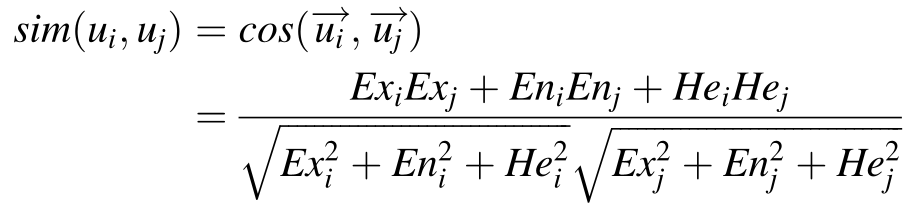 The similarity is calculated using a specialized cosine similarity function adapted for the (Ex, En, He) triplets.
Distributed Power: MapReduce Implementation
Calculating similarity matrices for millions of users is computationally prohibitive. The authors parallelize the MUPNL algorithm using the MapReduce framework. By partitioning users by categories and time contexts in the Map phase, the Reduce phase can calculate similarities in parallel, significantly reducing wall-clock time.
Experimental Mastery
The study utilizes the Yelp Academic Dataset, involving over 250k users and 1.1 million reviews.
Accuracy Gains
The results are striking when compared to baseline social/geographical models like USG and iGSLR:
- Precision: MUPNL reached 0.8485, compared to USG's 0.5654.
- Recall: A significant boost to 0.1325, proving it finds more relevant locations despite sparse data.
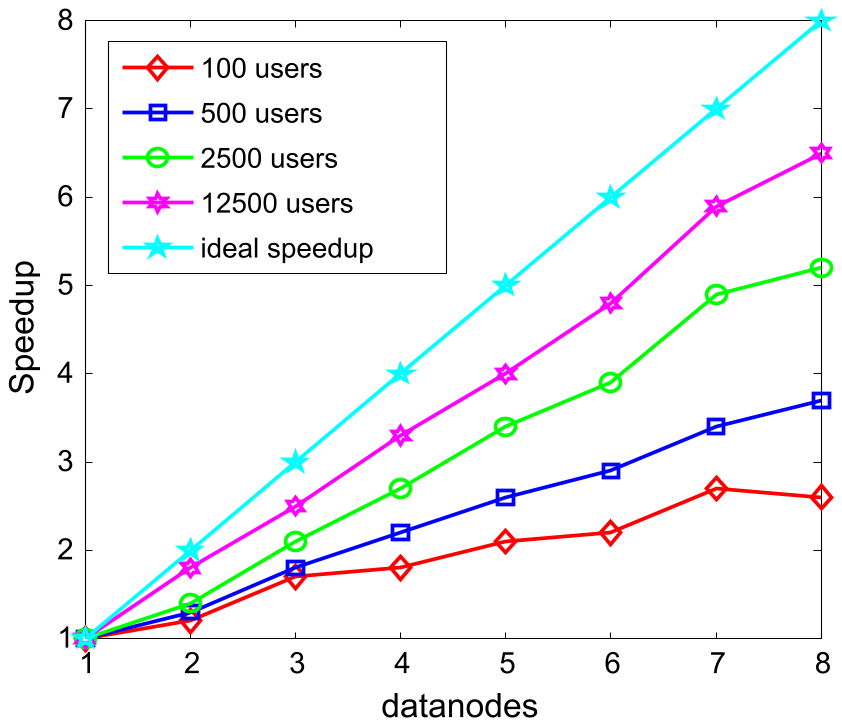 Figure 1: Performance gains in RMSE and MAE as the decay parameter k is optimized.
Critical Insight & Conclusion
The real "aha!" moment of this paper is the validation of cosine similarity in multidimensional cloud spaces. By proving that the vector of cloud characteristics can be treated as a unified high-dimensional feature, the authors allow CF to operate on "soft" behavioral signatures rather than "hard" location IDs.
Limitations: While powerful, the model relies on a predefined categorical structure (the 9 categories). A more dynamic, hierarchical tree (as suggested by the authors for future work) would likely enhance the model's ability to handle fine-grained niche preferences (e.g., distinguishing "Vegan Thai" from "Italian").
Final Takeaway: For AI engineers, this work emphasizes that when data is sparse, stop looking for matches and start looking for distributional similarities.