
miRClassify: Breaking the Homology Barrier in miRNA Family Annotation
miRClassify: An advanced web server for miRNA family classification and annotation
The paper introduces miRClassify, an advanced web server for miRNA family classification and functional annotation. It utilizes a hierarchical Random Forest (RF) model to identify pre-miRNAs and assign them to specific families based on primary sequence k-gram features, achieving reliable classification regardless of sequence or structural homology.
TL;DR
Predicting the family of a newly discovered microRNA (miRNA) is essential for understanding its physiological role, yet sequence-based searches often fail when evolutionary conservation is low. miRClassify is a specialized web server that uses a Hierarchical Random Forest model and 6-gram features to classify miRNAs into families with high precision, even when sequence similarity is nearly non-existent.
Background: Why Homology Isn't Enough
In the world of RNA biology, family members share functional traits but don't always look alike in their primary sequence. Existing tools like miRBase and Rfam rely heavily on seed region similarity or manual curation. When researchers find a novel miRNA through techniques like RT-PCR, they often hit a wall:
- Inadequate Homology: Distantly related sequences share no significant alignment.
- Data Imbalance: 10% of miRNA families contain over 65% of all known sequences, leading to biased machine learning models.
- Annotation Gap: There is a lack of direct links between a secondary sequence and its potential medical implications in databases.
Methodology: The Hierarchical Approach
The core innovation of miRClassify lies in its cascade classification strategy. Instead of one massive multi-class classifier—which would struggle with "needle in a haystack" small families—the authors built a three-layer pipeline.
1. Feature Engineering (The 6-Gram Insight)
The team compared various feature extraction methods, ranging from 3-grams to 6-grams, as well as complex 32-dimensional structural features. They found that 6-grams (representing 4,096 possible combinations of 6-nucleotide strings) provided the best "bio-signature" for family membership.
2. The Multi-Layer Random Forest
The architecture functions like a filter:
- Layer 1: Handles the 19 largest families (top-tier frequency).
- Layer 2: Handles the next 99 largest families.
- Layer 3: Handles all remaining smaller, diverse families.
 Figure 1: The hierarchical classification workflow.
Performance & Results
The Random Forest (RF) model consistently outperformed Support Vector Machines (SVM) and standard Decision Trees, particularly in the challenging third layer where data is sparsest.
| Feature Set | First Layer Acc (%) | Second Layer Acc (%) | Third Layer Acc (%) |
|---|---|---|---|
| 6-grams | 95.14 | 85.56 | 69.59 |
| Xue's (32D) | 90.20 | 75.05 | 51.98 |
The integration of Boosting further nudged the accuracy upward, though the authors opted for a pure RF implementation on the web server to maintain the blistering inference speed required for high-throughput biological research.
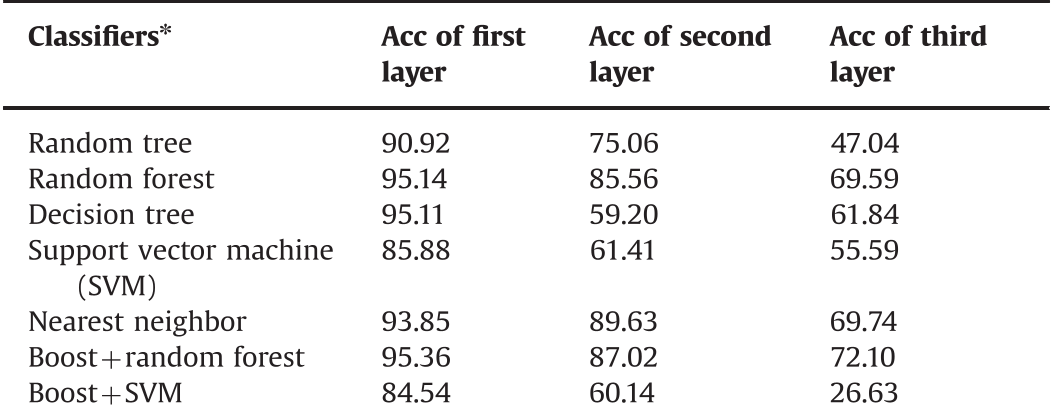 Figure 2: miRClassify vs. other classical ML algorithms.
Academic Insight: Beyond the Code
The brilliance of miRClassify isn't just the math—it's the medical context. By mining PubMed, the server maps miRNA families to specific diseases (e.g., the miR-17-92 family’s link to lung cancer). This transforms a raw sequence into a potential diagnostic lead.
Limitations and Future Work
While miRClassify excels at classifying pre-miRNA sequences, it currently cannot:
- Extract miRNAs directly from long, raw genomic DNA segments.
- Precision-point the "mature" part of the sequence from the precursor automatically.
These remain the next frontiers for the Xiamen University team.
Conclusion
miRClassify represents a significant step forward in miRNA research. By moving away from rigid sequence alignment and toward probabilistic ensemble learning, it allows biologists to identify the functional "family tree" of a sequence based on its inherent nucleotide patterns.
Paper Reference: Zou, Q., et al. (2014). miRClassify: An advanced web server for miRNA family classification and annotation. Computers in Biology and Medicine.