
The Misgendering Machines: Why Automatic Gender Recognition Fails Trans Lives
8252_The Misgendering Machines TransHCI Implications of Automatic Gender Recognition.
The paper "The Misgendering Machines" provides a critical content analysis of Automatic Gender Recognition (AGR) technology and its adoption within Human-Computer Interaction (HCI) research. It reveals that AGR consistently operationalizes gender as a binary, immutable, and physiological trait, which inherently erases transgender perspectives and poses significant socio-technical risks.
TL;DR
Automatic Gender Recognition (AGR) is more than just a technical challenge—it is a socio-technical imposition. This seminal paper by Os Keyes explores how AGR research and Human-Computer Interaction (HCI) ignore the existence of transgender people by encoding a binary, physiological model of gender into algorithms. The result? "Misgendering machines" that risk automating discrimination and violence.
The Core Conflict: Invisibility as a Design Feature
Historically, Western society has conflated gender (a social role) with sex (a biological category). While the social sciences have moved toward a "trans-inclusive" view—where gender is fluid, non-binary, and self-defined—the world of Computer Vision has largely remained stuck in the 19th century.
The author identifies a "traditional model" of gender dominant in technical research:
- Binary: You are either a "man" or a "woman."
- Immutable: You cannot change your category.
- Physiological: Gender is "written" on the face or body.
For trans and non-binary individuals, these assumptions aren't just inaccurate; they are an erasure of their very existence.
Methodology: Auditing the Academic Mindset
Keyes performed a deep content analysis on two fronts:
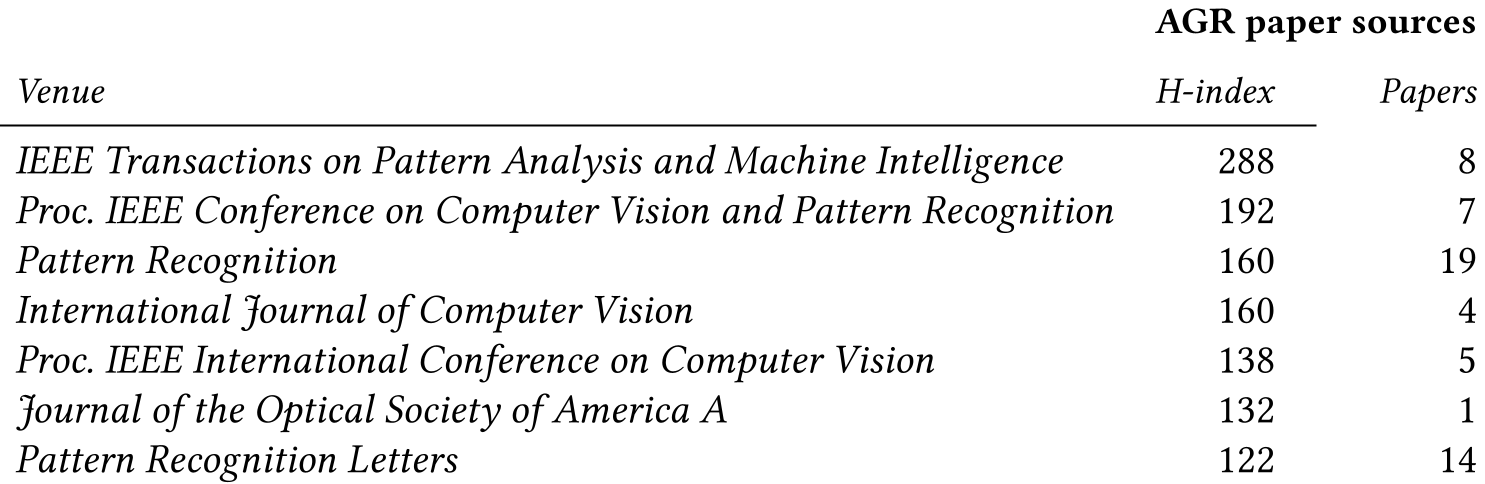
- AGR Technical Papers: 58 papers from top-tier venues like CVPR and IEEE TPAMI.
- HCI Applications: 12 papers where HCI researchers used AGR as a "black box" tool to analyze social media or user demographics.
Insights: The Results of Erasure
The findings confirm a staggering lack of nuance. In the technical AGR community, nearly 95% of papers viewed gender through a binary lens. Even in HCI—a field that prides itself on being human-centered—there was a "pronounced silence" on the ethics of these tools.
| Metric | Focused on Gender | No Gender Focus | Overall |
|---|---|---|---|
| Binary | 92.9% | 96.7% | 94.8% |
| Immutable | 71.4% | 73.3% | 72.4% |
| Physiological | 82.1% | 40% | 60.3% |
Experimental results show that even when researchers try to "validate" these tools, they often ignore the 15-20% error rate where the algorithm's guess contradicts the user's self-identity.
The Dangers of Deployment: From Billboards to Bathrooms
The paper moves beyond academic critique to practical harm. When AGR is used in physical access control (e.g., smart locks for bathrooms), it enables "gender policing."
- If a trans person's physiology doesn't "match" the algorithm's training data, the system may trigger a security alert.
- In the worst cases, this leads to the intervention of police—a group that disproportionately targets trans people of color.
Even in "soft" applications like targeted advertising, being misgendered by a billboard reinforces social stigma. It tells the user: "The system does not see you as you are."
Future-Proofing HCI: Recommendations for a Better Path
Keyes concludes with a call to action for the research community:
- Avoid AGR: There is no such thing as "trans-inclusive" non-consensual gender inference. If you must study gender, use self-disclosed data.
- Define Your Terms: Stop treating "gender" as a self-evident binary. Researchers must explicitly state their operationalization and acknowledge its limitations.
- Search for Proxies: Does an advertiser need to know "gender," or do they actually care about "product interest"? Focus on the latter.
Critical Analysis & Conclusion
This paper serves as a "hermeneutics of suspicion" for modern AI. It highlights that algorithms are never neutral; they are mirrors of the assumptions held by their creators. The "Misgendering Machines" are a warning that without active, intentional inclusion of trans perspectives, our automated future will simply be an automated version of our current prejudices.
Takeaway: Technology that attempts to define someone from the outside will always fail those who define themselves from the within.